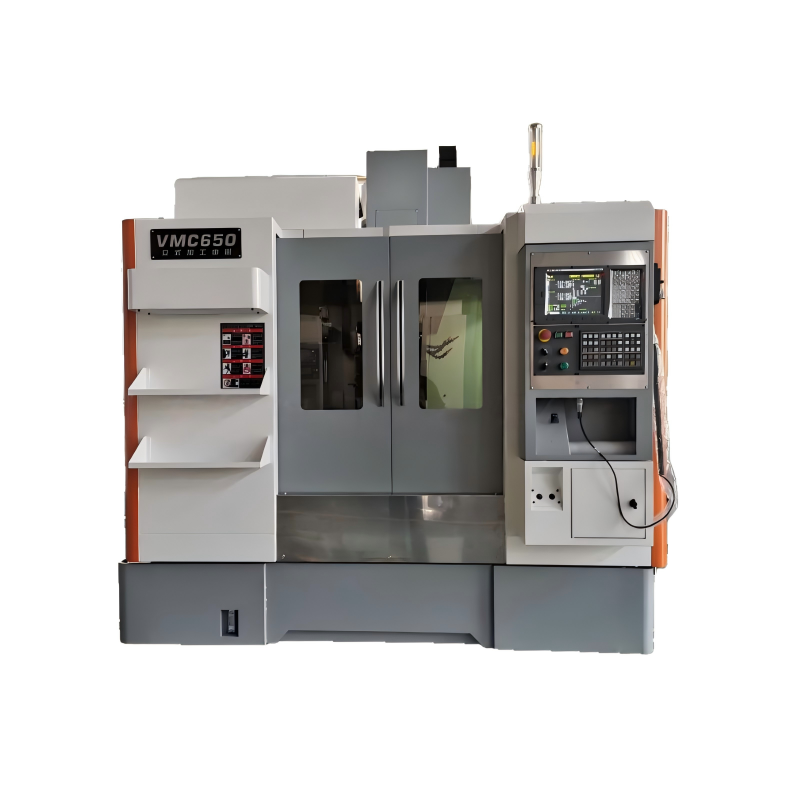
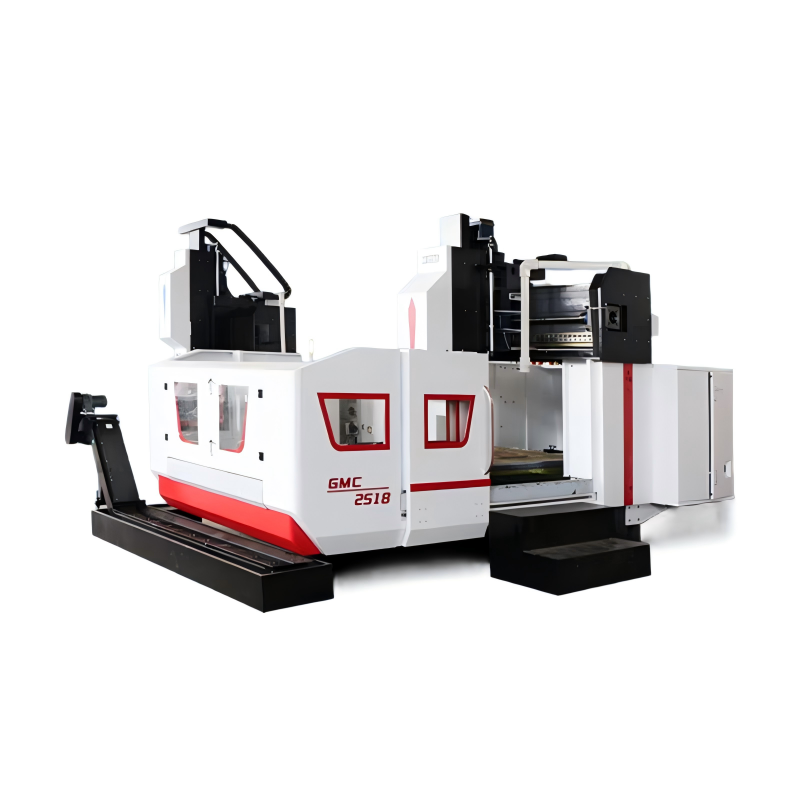
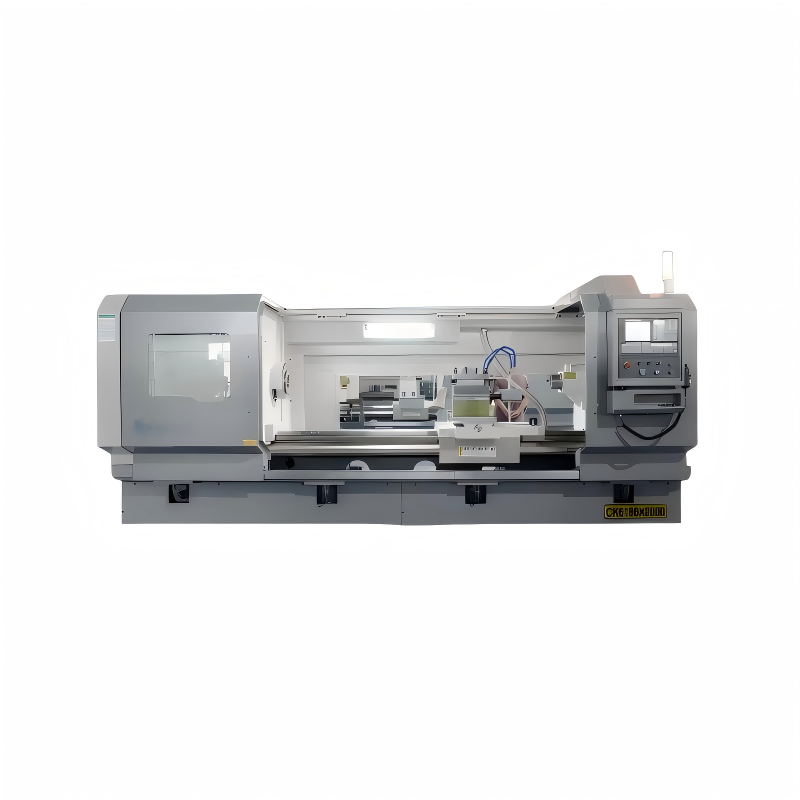
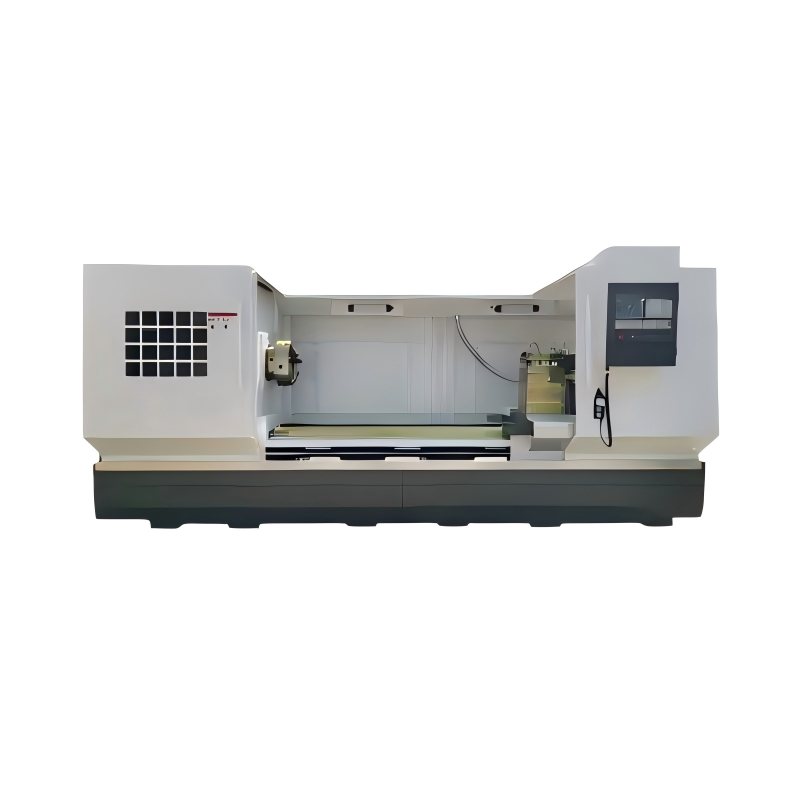
In the realm of precision manufacturing, the integration of advanced machinery such as Small VMC for Workshop and CNC lathes is pivotal. These machines not only enhance productivity but also ensure high-quality output. One of the key factors that contribute to the reliability and trustworthiness of these machines is the SGS certification. This report delves into how SGS certification enhances trust in your CNC Lathe, exploring its impact on performance, quality, and market perception.
SGS certification is a globally recognized standard that ensures the consistent performance of machinery. For a CNC lathe, this means that the machine will operate at optimal levels, producing parts with high accuracy and repeatability. The rigorous testing and evaluation process conducted by SGS include a thorough examination of the machine's components, software, and overall functionality. This ensures that the CNC lathe meets the highest standards of performance, which is crucial for maintaining production efficiency and reducing downtime.
Small VMC for Workshop, for instance, can benefit from SGS certification by ensuring that the vertical Machining Center operates smoothly and consistently. This consistency is essential for small workshops where precision and reliability are paramount. By adhering to SGS standards, manufacturers can guarantee that their machines will perform reliably over time, providing a solid foundation for long-term success.
Quality assurance is another critical aspect that SGS certification addresses. When a CNC lathe is certified by SGS, it undergoes a comprehensive assessment to ensure that it meets the required quality standards. This includes evaluating the machine's ability to produce parts within specified tolerances, the durability of its components, and the overall build quality. By meeting these stringent criteria, the CNC lathe can deliver superior results, thereby enhancing the quality of the final products.
For a Small VMC for Workshop, quality assurance is particularly important. These machines are often used in environments where space and resources are limited, and every part produced must meet the highest standards. SGS certification provides an additional layer of assurance, giving workshop owners confidence that their investment in a VMC will yield high-quality results. This, in turn, can lead to increased customer satisfaction and a stronger reputation in the market.
One of the most significant benefits of SGS certification is the boost it provides to a company's market credibility. In today's competitive landscape, customers are increasingly looking for reliable and trustworthy machinery. An SGS-certified CNC lathe carries a mark of quality and reliability that can set a manufacturer apart from its competitors. This certification serves as a powerful endorsement, assuring potential buyers that the machine has been independently verified and meets the highest industry standards.
For a Small VMC for Workshop, having SGS certification can be a game-changer. It not only enhances the machine's marketability but also builds trust with potential buyers. Workshops that invest in SGS-certified equipment can position themselves as leaders in quality and reliability, attracting more customers and fostering long-term business relationships. This, in turn, can lead to increased sales and a stronger market presence.
SGS certification also plays a vital role in facilitating international trade. In a globalized economy, manufacturers often need to export their products to different countries. Each country may have its own set of regulations and standards, making it challenging to navigate the international market. SGS certification simplifies this process by providing a universally recognized standard that is accepted across multiple regions.
For a CNC lathe, this means that the machine can be sold and used in various markets without the need for additional certifications or compliance checks. This can significantly reduce the time and cost associated with entering new markets. Similarly, a Small VMC for Workshop that is SGS-certified can be easily exported, opening up new opportunities for growth and expansion. This global recognition can be a significant advantage for manufacturers looking to expand their reach and tap into new markets.
Customer confidence is a critical factor in the success of any manufacturing operation. SGS certification helps to build and maintain this confidence by providing a clear and transparent verification of the machine's quality and performance. When customers see that a CNC lathe is SGS-certified, they can be assured that the machine has undergone rigorous testing and meets the highest industry standards.
For a Small VMC for Workshop, this level of transparency and assurance can be particularly valuable. Customers who are investing in a VMC for their workshop need to be confident that the machine will perform as expected and deliver high-quality results. SGS certification provides this assurance, helping to build trust and loyalty among customers. This, in turn, can lead to repeat business and positive word-of-mouth, further enhancing the reputation of the manufacturer.
In conclusion, SGS certification is a powerful tool that enhances trust in CNC lathes and other advanced machinery like the Small VMC for Workshop. By ensuring consistent performance, enhancing quality assurance, boosting market credibility, facilitating international trade, and improving customer confidence, SGS certification provides a comprehensive framework for excellence. Manufacturers and workshop owners who invest in SGS-certified equipment can enjoy numerous benefits, including improved productivity, higher quality output, and a stronger market presence. As the manufacturing industry continues to evolve, the importance of SGS certification will only continue to grow, making it an essential consideration for all stakeholders.
 22/06/2026
Vertical Machine Centers (VMCs) have emerged as a pivotal tool in the modern manufacturing landscape, particularly for workshops that require high precision and flexibility. This report explores how small VMCs are shaping the future of precision machining
Read More22/06/2026In the evolving landscape of workshop technologies, one innovation stands out for its potential to revolutionize small-scale manufacturing and prototyping: the Small VMC (Vertical Machining Center). This technology is not just a step forward but a leap to
Read More22/06/2026In the modern workshop, efficiency and versatility are key. A small VMC (Vertical Machining Center) can significantly enhance these aspects by providing a compact yet powerful solution for various machining tasks. This report delves into how customizing y
Read More22/06/2026When it comes to equipping a modern workshop with the right tools, one piece of machinery that stands out for its versatility and precision is the Small VMC (Vertical Machining Center). These compact yet powerful machines have become indispensable in vari
Read More21/06/2026In the realm of modern manufacturing, the integration of advanced machinery is key to achieving high-quality output and efficient production processes. One such piece of equipment that has gained significant attention in workshops across various industrie
Read More21/06/2026In the ever-evolving landscape of modern manufacturing, the integration of advanced machinery is crucial for maintaining a competitive edge. One such piece of equipment that has gained significant traction in small to medium-sized workshops is the Small V
Read More21/06/2026When it comes to outfitting a workshop with the right machinery, choosing a Small VMC (Vertical Machining Center) is a critical decision. These machines are not only versatile but also essential for precision work in various industries, from automotive pa
Read More20/06/2026Exploring the Versatility of a Small VMC for Workshop EnvironmentsIn the realm of hobbyist machining, the small VMC (Vertical Machining Center) has emerged as an indispensable tool. This section delves into the versatility offered by such machines, making
Read More20/06/2026In the contemporary landscape of manufacturing and prototyping, workshops are increasingly becoming hubs of innovation and efficiency. A key enabler in this transformation is the introduction of advanced machinery, with the Small VMC (Vertical Machining C
Read More20/06/2026In the world of modern workshops, precision and efficiency are paramount. The integration of advanced machinery has become a critical factor in achieving these goals. One such piece of equipment that stands out for its versatility and capability is the Sm
Read More19/06/2026In the realm of manufacturing and small-scale production, the integration of a Small VMC (Vertical Machining Center) into a workshop can significantly boost productivity. This report delves into the practical aspects and strategic approaches for enhancing
Read More19/06/2026IntroductionThe integration of a Small VMC (Vertical Machining Center) into your personal workshop can significantly elevate the quality and efficiency of your projects. This guide aims to provide an in-depth look at setting up a Small VMC, ensuring it is
Read More19/06/2026In the realm of precision machining, the choice of machinery plays a pivotal role in determining both the quality and efficiency of the final product. A Small VMC for Workshop, or Vertical Machining Center, is an increasingly popular option due to its ver
Read More18/06/2026In today’s fast-paced manufacturing environment, the need for efficient and versatile machinery is more critical than ever. One such piece of equipment that has gained significant popularity among small to medium-sized workshops is the Small VMC (Vertical
Read More18/06/2026In the world of machining, choosing the right small VMC (Vertical Machining Center) for your workshop is a decision that can significantly impact productivity and efficiency. This article will guide you through the key considerations and steps to ensure y
Read More18/06/2026In the realm of home workshops, having the right tools can make all the difference. One such tool that has gained significant attention is the Small VMC (Vertical Machining Center). This article explores the benefits of integrating a Small VMC into your h
Read MoreOur professional sales team is always ready to assist you.