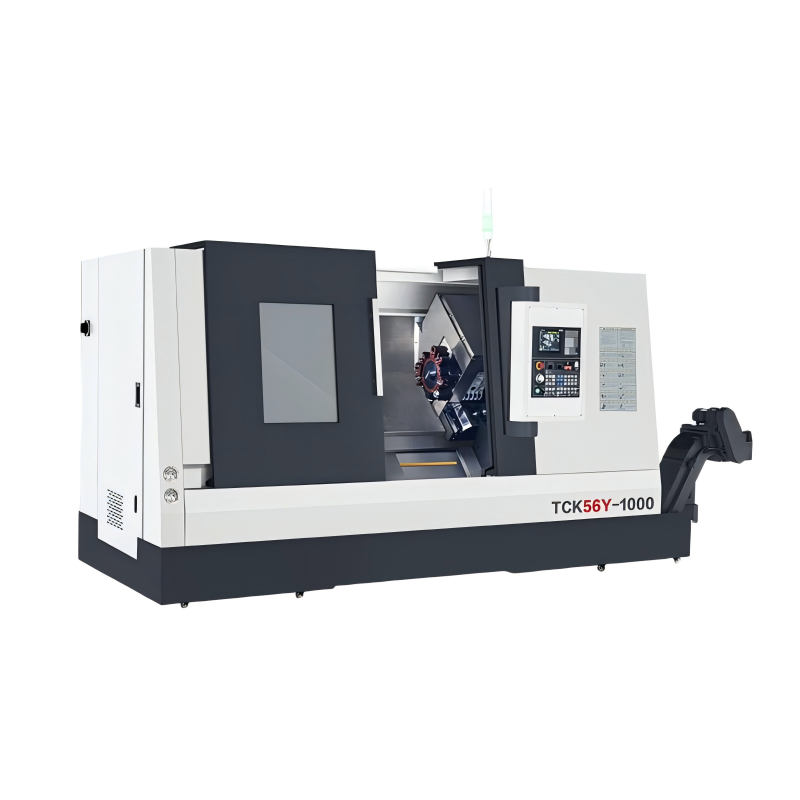
Choosing the right 2-Axis CNC Turning Center for your specific needs can be a daunting task, especially with the plethora of options available on the market. A 2-Axis CNC Turning Center is a critical piece of equipment in many manufacturing and engineering environments, providing precision and efficiency in the production of cylindrical parts. This article will guide you through the essential factors to consider when making this important decision.
The first step in selecting a 2-Axis CNC Turning Center is to thoroughly understand your production requirements. This includes evaluating the types of materials you will be working with, the complexity of the parts, and the volume of production. For instance, if you are primarily working with softer materials like aluminum, a less powerful machine may suffice. However, if you are dealing with harder materials such as stainless steel or titanium, you will need a more robust 2-Axis CNC Turning Center with higher torque and rigidity.
Additionally, consider the size and shape of the parts you will be producing. The machine's capacity, including the maximum workpiece diameter and length, should be compatible with your largest and most complex parts. Understanding these requirements will help you narrow down the options and ensure that the 2-Axis CNC Turning Center you choose can handle your workload efficiently.
Once you have a clear understanding of your production needs, the next step is to evaluate the specifications and features of the 2-Axis CNC Turning Center. Key specifications to look at include spindle speed, power, and tooling capabilities. Spindle speed, measured in revolutions per minute (RPM), affects the surface finish and cutting efficiency. Higher RPMs are generally better for achieving smoother finishes and faster material removal rates, but they also require a more stable and rigid machine structure.
Power, typically measured in horsepower (HP), is another critical factor. More powerful spindles can handle tougher materials and larger cuts, but they also consume more energy and may generate more heat. Tooling capabilities, such as the number of tools the machine can accommodate and the ease of tool changes, are also important. A 2-Axis CNC Turning Center with a larger tool magazine and an automatic tool changer (ATC) can significantly increase productivity by reducing setup times and minimizing downtime.
In today’s competitive manufacturing environment, automation and integration capabilities are becoming increasingly important. A 2-Axis CNC Turning Center that can be easily integrated into your existing production line and automated processes can provide significant advantages in terms of efficiency and cost savings. Look for machines that support advanced control systems, such as those with built-in networking capabilities, which allow for seamless communication with other machines and systems in your facility.
Automation features, such as bar feeders and part catchers, can further enhance productivity by allowing continuous operation without the need for frequent manual intervention. Additionally, consider the software and programming capabilities of the 2-Axis CNC Turning Center. User-friendly software and easy-to-use interfaces can reduce training time and minimize errors, leading to faster setup and more consistent results.
Maintenance and support services are often overlooked but are crucial for ensuring the long-term reliability and performance of your 2-Axis CNC Turning Center. Regular maintenance, including lubrication, calibration, and inspection, is necessary to keep the machine running smoothly and prevent unexpected breakdowns. When evaluating different machines, inquire about the availability of spare parts, the frequency of required maintenance, and the ease of performing routine tasks.
Additionally, consider the quality of customer support provided by the manufacturer. A reliable support network, including technical assistance, training, and on-site service, can make a significant difference in addressing any issues that may arise. Look for manufacturers with a strong reputation for customer service and a proven track record of supporting their products over the long term.
Finally, it is essential to consider your budget and the total cost of ownership (TCO) when choosing a 2-Axis CNC Turning Center. The initial purchase price is just one component of the overall cost. Other factors, such as installation, training, maintenance, and energy consumption, should also be factored into your decision. A more expensive machine with lower operating costs and higher reliability may be a better investment in the long run compared to a cheaper option that requires frequent repairs and has higher operational expenses.
To get a comprehensive view of the TCO, request detailed cost estimates from the manufacturers, including all associated costs. Compare these estimates to determine which 2-Axis CNC Turning Center offers the best value for your investment. Additionally, consider financing options and potential tax incentives that may be available for purchasing new machinery, as these can help offset the initial cost.
By carefully considering these factors, you can select a 2-Axis CNC Turning Center that meets your specific needs and helps you achieve your production goals. Whether you are looking to improve efficiency, expand your capabilities, or simply replace an aging machine, taking the time to evaluate your options will pay off in the long run.
 24/06/2026
In the modern manufacturing landscape, 2-Axis CNC Turning Centers have become indispensable tools for achieving high-volume production with precision and efficiency. These machines are designed to handle a wide range of materials and can produce complex p
Read More24/06/2026In the realm of precision manufacturing, the role of 2-Axis CNC Turning Centers cannot be overstated. These advanced machines are pivotal in producing high-accuracy components for a wide range of industries, from automotive to aerospace. This report delve
Read More24/06/2026The evolution of manufacturing technology has led to the development of advanced machinery that can produce high-precision parts with minimal human intervention. One such machine is the 2-Axis CNC Turning Center, which plays a crucial role in modern manuf
Read More23/06/2026In the realm of modern manufacturing, precision and efficiency are paramount. A 2-Axis CNC Turning Center is a critical tool that allows manufacturers to achieve these goals with unparalleled accuracy. This technical report delves into the intricacies of
Read More23/06/2026In the realm of precision machining, the 2-Axis CNC Turning Center stands out as a versatile and efficient solution for a wide range of manufacturing applications. This technology has revolutionized the way parts are produced, offering numerous advantages
Read More23/06/2026The manufacturing industry has witnessed a remarkable transformation over the past few decades, with advancements in technology playing a pivotal role. One such technological marvel that has significantly impacted the sector is the 2-Axis CNC Turning Cent
Read More23/06/2026Understanding the Basics of 2-Axis CNC Turning CentersThe advent of Computer Numerical Control (CNC) technology has revolutionized the manufacturing industry, enabling greater precision, efficiency, and flexibility in production processes. Among the vario
Read More22/06/2026In the world of precision manufacturing, the 2-Axis CNC Turning Center stands out as a versatile and indispensable tool. This technology has revolutionized the production processes for many industries, offering an efficient and accurate method to shape ma
Read More22/06/2026In the realm of precision machining, the 2-Axis CNC Turning Center stands out as a powerful tool for enhancing productivity and efficiency. This report delves into the capabilities, advantages, and applications of the 2-Axis CNC Turning Center, providing
Read More22/06/2026Introduction to 2-Axis CNC Turning CentersA 2-Axis CNC (Computer Numerical Control) turning center is a type of machine tool used for shaping metal, plastic, and other materials. This device operates along two axes, the X-axis and the Z-axis, which are cr
Read More22/06/2026In the realm of precision machining, 2-Axis CNC Turning Centers stand out as versatile and efficient tools for producing high-quality parts. This report delves into the capabilities of these machines, exploring their advantages, applications, and the tech
Read MoreOur professional sales team is always ready to assist you.