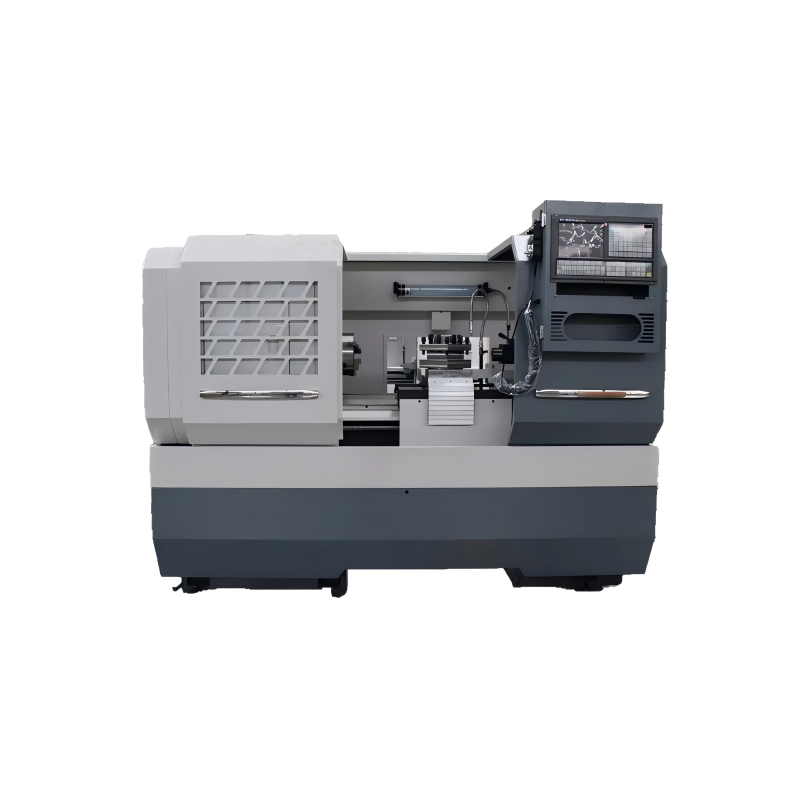
In the realm of industrial metalworking, advancements in machinery have significantly shaped the efficiency and precision with which tasks are executed. One such innovation that has made a notable impact is the 2-Axis Slant Bed CNC Lathe. This article delves into how this particular type of lathe has transformed the industry, focusing on its operational benefits, technological features, and overall influence on productivity.
The 2-Axis Slant Bed CNC Lathe stands out for its ability to deliver high levels of precision and accuracy. The slanted bed design allows for better chip evacuation, reducing the risk of chip re-cutting, which can compromise the quality of the workpiece. Additionally, the 2-axis configuration, which typically includes X and Z axes, provides stable and controlled movement, ensuring that parts are machined to exact specifications. This level of accuracy is particularly beneficial in industries where tight tolerances are critical, such as aerospace and automotive manufacturing. The use of advanced control systems further enhances the machine's ability to maintain consistent performance, making it an indispensable tool for achieving high-quality results.
One of the most significant advantages of the 2-Axis Slant Bed CNC Lathe is its contribution to increased efficiency and productivity. The slant bed design not only improves chip management but also facilitates easier access to the work area, allowing for quicker setup and changeover times. This is especially advantageous in high-volume production environments where minimizing downtime is crucial. Moreover, the integration of automated features, such as automatic tool changers and programmable controls, enables continuous operation with minimal human intervention. As a result, manufacturers can achieve higher output rates while maintaining consistent quality, leading to improved overall productivity and cost-effectiveness.
The 2-Axis Slant Bed CNC Lathe offers a high degree of flexibility and versatility, making it suitable for a wide range of applications. The machine can handle various materials, including metals like steel, aluminum, and brass, as well as non-metallic materials. Its adaptability is further enhanced by the ability to perform multiple operations, such as turning, threading, and facing, all within a single setup. This reduces the need for additional machines and streamlines the production process. Furthermore, the CNC (Computer Numerical Control) technology allows for easy programming and modification of machining parameters, enabling quick adjustments to meet changing production requirements. This flexibility is particularly valuable in industries where product designs frequently evolve or where there is a need to produce a diverse range of components.
Maintenance is a critical aspect of any industrial machinery, and the 2-Axis Slant Bed CNC Lathe is designed to minimize maintenance needs while ensuring long-term reliability. The slant bed design helps in preventing the accumulation of chips and debris, which can cause wear and tear on the machine. This, combined with robust construction and high-quality components, contributes to the lathe's durability and longevity. Regular maintenance, such as lubrication and cleaning, is still necessary, but the overall frequency and complexity of these tasks are reduced. This translates to lower maintenance costs and less downtime, ultimately enhancing the machine's value and return on investment.
The 2-Axis Slant Bed CNC Lathe is not just a standalone piece of equipment; it can be seamlessly integrated into modern manufacturing systems. Many of these lathes come equipped with advanced communication protocols, such as Ethernet and USB, allowing for easy data exchange and integration with other machines and systems. This connectivity enables real-time monitoring and control, facilitating the implementation of Industry 4.0 principles. For example, predictive maintenance and remote diagnostics can be performed, helping to identify and address potential issues before they lead to costly breakdowns. Additionally, the ability to connect to enterprise resource planning (ERP) and manufacturing execution systems (MES) ensures that production data is accurately captured and utilized for continuous improvement.
In conclusion, the 2-Axis Slant Bed CNC Lathe has had a profound impact on industrial metalworking. Its enhanced precision, increased efficiency, flexibility, reduced maintenance, and seamless integration with modern manufacturing systems make it a vital asset for any production facility. As the industry continues to evolve, the 2-Axis Slant Bed CNC Lathe will likely remain at the forefront of innovation, driving productivity and quality in metalworking operations.
 29/06/2026
Introduction to 2-Axis Slant Bed CNC LatheThe 2-Axis Slant Bed CNC Lathe represents a significant advancement in the field of precision machining. This type of lathe is designed to deliver superior results through its unique construction and operational c
Read More28/06/2026The evolution of machining technology has witnessed significant advancements, with the 2-Axis Slant Bed CNC Lathe standing out as a pivotal innovation. This comprehensive guide delves into the intricacies of this machinery, offering insights into its desi
Read More28/06/2026In the realm of precision machining, a 2-Axis Slant Bed CNC Lathe stands out as an indispensable tool for achieving high accuracy and efficiency in manufacturing processes. This comprehensive guide aims to provide a detailed overview of operating such a m
Read More27/06/2026The advent of the 2-Axis Slant Bed CNC Lathe has revolutionized the metalworking industry, offering unparalleled precision and efficiency. This advanced machine combines the benefits of a slanted bed design with the capabilities of a 2-axis system, making
Read More27/06/2026Understanding the 2-Axis Slant Bed CNC Lathe: An OverviewThe 2-Axis Slant Bed CNC Lathe represents a significant advancement in machining technology, offering manufacturers increased precision and efficiency. Unlike traditional lathes, which are often lim
Read More26/06/2026The 2-Axis Slant Bed CNC Lathe is a highly specialized machine designed for precision machining of cylindrical parts. This type of lathe offers several advantages over traditional lathes, including improved chip evacuation, better access to the workpiece,
Read More26/06/2026Understanding the Importance of Machine Stability in 2-Axis Slant Bed CNC LathesIn the realm of precision machining, a 2-Axis Slant Bed CNC Lathe stands out as an essential tool for manufacturers aiming to achieve high accuracy and efficiency. The design
Read More25/06/2026Understanding the 2-Axis Slant Bed CNC LatheThe 2-Axis Slant Bed CNC Lathe represents a significant leap in the precision machining industry, offering enhanced capabilities for manufacturing processes. This type of lathe is designed with a slanted bed tha
Read More25/06/2026The 2-Axis Slant Bed CNC Lathe has become an indispensable tool in the field of precision machining, offering a combination of speed, accuracy, and versatility that traditional lathes cannot match. This article delves into the role of the 2-Axis Slant Bed
Read More24/06/2026The 2-Axis Slant Bed CNC Lathe is a cornerstone in the world of high-volume production, offering precision, efficiency, and versatility. This report delves into the role of this machine in modern manufacturing environments, highlighting its advantages, ap
Read More24/06/2026The 2-Axis Slant Bed CNC Lathe is a specialized machine tool designed for high-precision and efficient machining of cylindrical parts. This article aims to provide an in-depth understanding of the design principles, operational mechanisms, and the unique
Read More23/06/2026Understanding the 2-Axis Slant Bed CNC LatheThe 2-Axis Slant Bed CNC Lathe is a critical piece of machinery in modern manufacturing, offering precision and efficiency that traditional lathes cannot match. This section will delve into what exactly a 2-Axis
Read More23/06/2026As manufacturing processes continue to evolve, the integration of advanced machinery such as the 2-Axis Slant Bed CNC Lathe has become increasingly critical. This equipment is designed to enhance productivity and precision, making it an indispensable tool
Read More22/06/2026The 2-Axis Slant Bed CNC Lathe represents a significant advancement in the field of precision manufacturing. This technology has revolutionized how components are machined, offering unparalleled accuracy and efficiency. In this report, we will explore the
Read More22/06/2026In the realm of modern manufacturing, precision and efficiency are paramount. Among the various types of CNC lathes available, the 2-Axis Slant Bed CNC Lathe stands out as a versatile and powerful tool. This article delves into the advantages of the 2-Axi
Read MoreOur professional sales team is always ready to assist you.