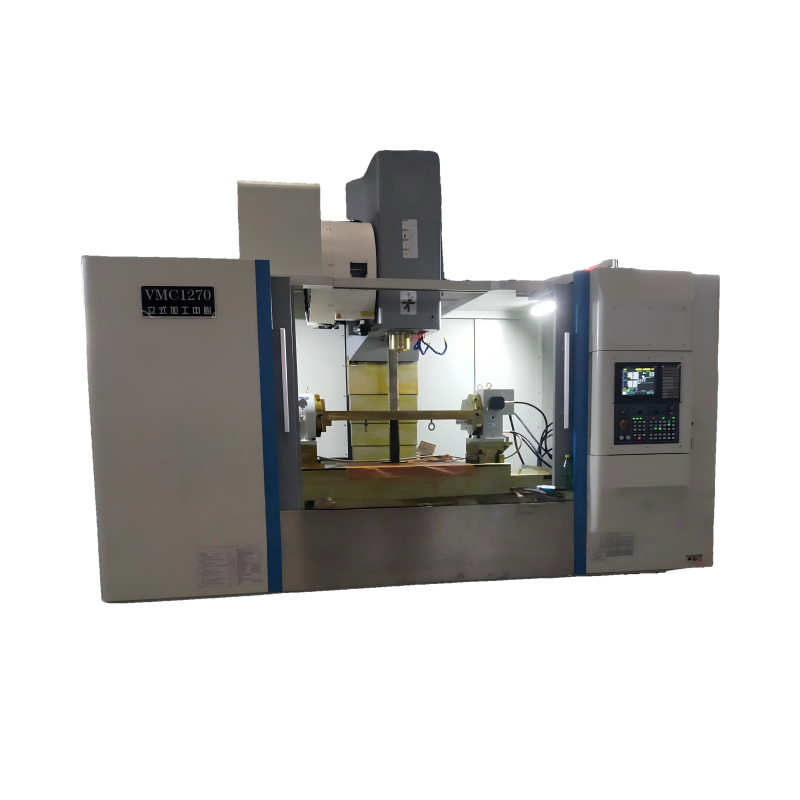
In the realm of aerospace manufacturing, precision and reliability are paramount. The use of CNC Vertical Machining Center (VMC) has become increasingly prevalent due to their ability to deliver high-precision components with consistent quality. This report explores the critical role of CNC VMCs in the production of aerospace components, highlighting key benefits and applications.
One of the primary advantages of using a CNC Vertical Machining Center in aerospace component production is the enhanced precision and accuracy it offers. Aerospace parts often require extremely tight tolerances, and even the slightest deviation can lead to catastrophic failures. CNC VMCs are equipped with advanced control systems that can execute complex machining operations with micron-level accuracy. This level of precision ensures that every component meets the stringent specifications required for safe and reliable operation in the aerospace industry.
Moreover, CNC VMCs utilize multi-axis capabilities, allowing for the machining of intricate geometries that would be difficult or impossible to achieve with conventional machines. This capability is particularly valuable in the aerospace sector, where components such as turbine blades, engine casings, and structural parts must be manufactured to exacting standards. The ability to produce these parts with high precision not only enhances the performance of the final product but also reduces the risk of failure during operation.
Another significant benefit of CNC VMCs in aerospace component production is their ability to increase productivity and efficiency. These machines are designed to operate at high speeds and with minimal downtime, which is crucial in an industry where time-to-market is a critical factor. The automation features of CNC VMCs allow for continuous operation, reducing the need for manual intervention and minimizing the potential for human error.
Furthermore, CNC VMCs can handle a wide range of materials commonly used in aerospace, including aluminum, titanium, and various composites. The versatility of these machines enables manufacturers to produce a diverse array of components without the need for frequent tool changes or setup adjustments. This flexibility not only saves time but also reduces the overall cost of production. Additionally, the use of advanced software and simulation tools allows for the optimization of machining processes, further enhancing productivity and efficiency.
Consistency and quality control are essential in the aerospace industry, and CNC VMCs play a vital role in ensuring both. These machines are capable of producing large volumes of identical components with consistent quality, which is crucial for maintaining the integrity of the final assembly. The use of automated inspection and measurement systems integrated into CNC VMCs allows for real-time monitoring and adjustment of the machining process, ensuring that each part meets the required specifications.
Additionally, CNC VMCs can be programmed to perform in-process inspections, which helps to identify and correct any deviations before they become significant issues. This proactive approach to quality control not only improves the overall quality of the components but also reduces the likelihood of rework and scrap. The ability to maintain high levels of consistency and quality is particularly important in the aerospace industry, where the safety and reliability of the final product are of utmost importance.
While the initial investment in a CNC Vertical Machining Center may be significant, the long-term cost-effectiveness and sustainability of these machines make them a worthwhile investment for aerospace manufacturers. The increased productivity and efficiency of CNC VMCs result in lower per-unit costs, which can significantly reduce the overall production expenses. Additionally, the ability to minimize waste through precise machining and efficient material utilization contributes to a more sustainable manufacturing process.
Moreover, the use of CNC VMCs can help reduce the environmental impact of aerospace manufacturing. By optimizing the machining process and reducing the amount of material waste, these machines contribute to a more environmentally friendly production environment. The ability to produce high-quality components with minimal waste not only benefits the manufacturer but also aligns with the growing demand for sustainable practices in the aerospace industry.
The role of CNC Vertical Machining Centers in aerospace component production is multifaceted and indispensable. These machines offer enhanced precision and accuracy, increased productivity and efficiency, and robust quality control and consistency. Additionally, their cost-effectiveness and sustainability make them a valuable asset for aerospace manufacturers. As the industry continues to evolve, the importance of CNC VMCs in delivering high-quality, reliable components will only continue to grow.
 26/06/2026
Understanding the Versatility of CNC Vertical Machining CentersThe CNC (Computer Numerical Control) vertical machining center is a fundamental tool in modern manufacturing, known for its precision and versatility. These machines are capable of performing
Read More26/06/2026The advent of CNC Vertical Machining Centers has revolutionized the mold making industry, offering unparalleled precision, efficiency, and versatility. This report delves into the significant impact of CNC vertical machining centers on mold making process
Read More26/06/2026The CNC Vertical Machining Center (VMC) is a cornerstone of modern manufacturing, enabling precise and efficient production across a wide range of industries. As the demand for high-precision components continues to grow, selecting the right VMC becomes i
Read More25/06/2026In today’s rapidly evolving manufacturing landscape, the integration of advanced technologies has become a cornerstone for enhancing productivity and maintaining a competitive edge. One such technology that stands out is the CNC (Computer Numerical Contro
Read More25/06/2026Understanding the Importance of Regular Maintenance for CNC Vertical Machining CentersThe CNC Vertical Machining Center is a critical piece of equipment in many manufacturing and engineering environments. These machines are designed to perform complex and
Read More25/06/2026Introduction to CNC Vertical Machining CentersThe evolution of manufacturing technology has seen the rise of CNC (Computer Numerical Control) vertical machining centers as a pivotal tool in modern metalworking. These machines, characterized by their abili
Read More25/06/2026In the world of manufacturing, efficiency and precision are paramount. The advent of Computer Numerical Control (CNC) technology has revolutionized how parts and components are machined, offering unparalleled accuracy and repeatability. Among the various
Read More24/06/2026In the rapidly evolving landscape of modern manufacturing, CNC (Computer Numerical Control) Vertical Machining Centers have emerged as a cornerstone technology, offering unparalleled precision, efficiency, and versatility. These machines play a crucial ro
Read More24/06/2026The advent of CNC (Computer Numerical Control) technology has revolutionized the manufacturing industry, particularly in sectors such as aerospace, where precision and efficiency are paramount. Among the various types of CNC machines, the CNC Vertical Mac
Read More24/06/2026A CNC Vertical Machining Center (CNC VMC) is a critical piece of equipment in modern manufacturing, designed to perform a wide range of machining operations with high precision and efficiency. Selecting the right CNC VMC for your specific needs can be a d
Read More24/06/2026The evolution of manufacturing technologies has significantly impacted the way products are designed, produced, and delivered. Among these advancements, the CNC Vertical Machining Center stands out as a pivotal tool in modern machining processes. This rep
Read More23/06/2026The CNC Vertical Machining Center is a cornerstone in the world of precision engineering, offering unparalleled accuracy and efficiency. This comprehensive guide aims to provide an in-depth understanding of CNC vertical machining centers, their applicatio
Read More23/06/2026Introduction to CNC Vertical Machining Centers in Automotive Parts Production The automotive industry is one of the most technologically advanced and competitive sectors globally, constantly pushing the boundaries of innovation. A key enabler in this rele
Read More23/06/2026In the realm of precision engineering, the advent of CNC (Computer Numerical Control) technology has revolutionized manufacturing processes, allowing for unprecedented levels of accuracy, efficiency, and flexibility. Among the various types of CNC machine
Read More23/06/2026In the rapidly evolving landscape of modern manufacturing, CNC (Computer Numerical Control) vertical machining centers have become an indispensable tool for achieving precision, efficiency, and flexibility. These advanced machines are at the forefront of
Read MoreOur professional sales team is always ready to assist you.