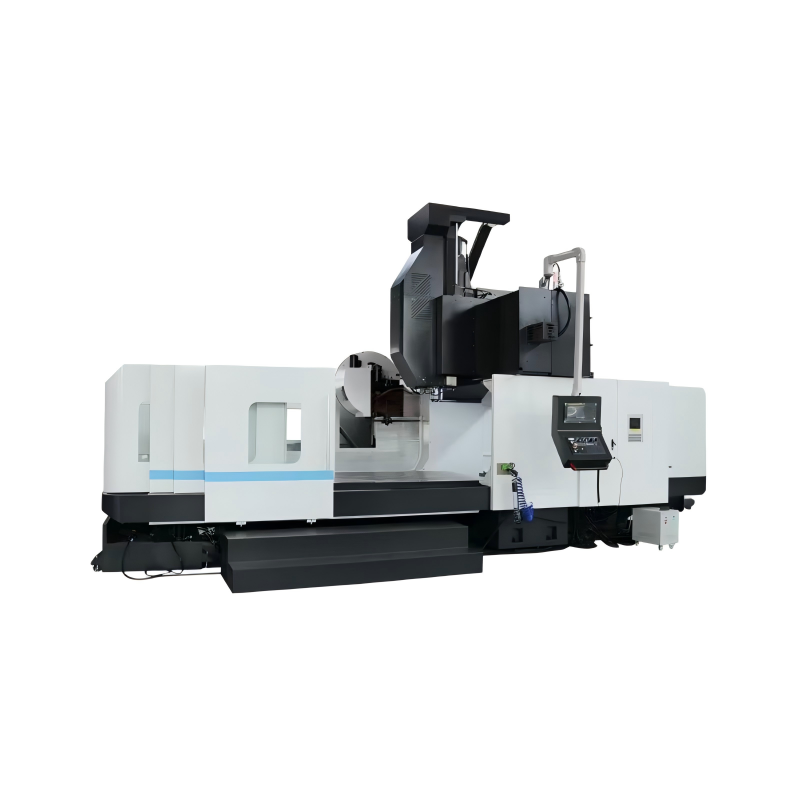
This technical report provides a detailed guide on operating a Turning Hard Rail CNC Lathe, covering essential aspects from basic machine setup to advanced programming techniques. It is designed for both beginners and experienced operators looking to enhance their skills in the field of precision machining. The document explores key areas such as safety protocols, initial setup, tool selection, workpiece preparation, and effective use of G-codes and M-codes. Additionally, it delves into troubleshooting common issues and maintaining the machine for optimal performance over time. This comprehensive resource aims to equip readers with the knowledge needed to operate a Turning Hard Rail CNC Lathe efficiently and safely.
Safety is paramount when operating any type of machinery, including a Turning Hard Rail CNC Lathe. Before starting the machine, it is crucial to familiarize oneself with all safety guidelines provided by the manufacturer. These include wearing appropriate personal protective equipment (PPE), such as safety glasses and gloves, and ensuring that loose clothing or jewelry does not pose a risk of entanglement. Furthermore, understanding emergency stop procedures and knowing how to respond in case of an accident can significantly reduce the likelihood of injury.
A thorough understanding of the various components that make up a Turning Hard Rail CNC Lathe is fundamental to its proper operation. Key parts to be aware of include the spindle, chuck, tool turret, and control panel. Knowing the function of each component and how they interact with one another will help in setting up jobs correctly and troubleshooting potential problems. For instance, recognizing the importance of the spindle's rotational speed in determining surface finish quality or the role played by the tool turret in changing cutting tools automatically during the machining process.
Proper calibration and alignment are critical steps in preparing your Turning Hard Rail CNC Lathe for use. Misalignment can lead to inaccuracies in the final product, which may result in wasted materials and increased production costs. To ensure accurate results, start by leveling the machine using shims if necessary. Next, check the squareness of the bed and ways, adjusting them until they meet the manufacturer's specifications. Regularly scheduled maintenance checks should also include verifying the accuracy of the machine's scales and sensors, as these elements play a vital role in achieving precise movements.
Modern Turning Hard Rail CNC Lathes come equipped with sophisticated control systems capable of executing complex operations based on user-defined programs. Familiarity with the specific programming language used by your machine, typically G-code or M-code, is essential for creating efficient and error-free routines. Begin by learning basic commands related to motion, such as linear and circular interpolation, followed by more advanced features like canned cycles and subroutines. Utilizing simulation software before running actual cuts can save time and resources by allowing you to test and refine your program without risking damage to the machine or workpiece.
The selection of appropriate cutting tools greatly influences the outcome of a machining job. Factors to consider when choosing tools include material compatibility, required cutting forces, and desired surface finish. High-speed steel (HSS) and carbide-tipped inserts are popular choices for general-purpose applications, while specialized coatings, such as titanium nitride (TiN) or aluminum oxide (Al2O3), offer enhanced wear resistance and thermal stability under demanding conditions. Always inspect tools for signs of wear or damage before installation, replacing them as needed to maintain consistent performance.
Effective preparation of the workpiece is just as important as selecting the right tools. Ensuring that the part is securely clamped in the chuck or held by other means, such as a collet, prevents movement during the cutting process, thereby improving accuracy and reducing the risk of accidents. Additionally, taking the time to clean and deburr raw materials removes any contaminants that could affect tool life or compromise the integrity of the finished product. In some cases, pre-machining operations, like facing or turning down oversized stock, might be required to achieve the desired dimensions and tolerances.
Adopting lean manufacturing principles can significantly improve the efficiency of your Turning Hard Rail CNC Lathe operations. One key aspect of this approach involves minimizing waste, whether it be through reducing setup times, optimizing tool paths, or streamlining material handling processes. Employing standardized work instructions and visual management tools, such as kanban boards, helps keep track of inventory levels and ensures that necessary supplies are always available. Moreover, involving employees in continuous improvement initiatives fosters a culture of innovation and accountability, leading to better overall performance.
To fully leverage the capabilities of a Turning Hard Rail CNC Lathe, exploring its advanced features and accessories can provide substantial benefits. Live tooling, for example, enables secondary operations, such as drilling or milling, to be performed within the same setup, eliminating the need for additional machines and reducing cycle times. Similarly, incorporating automatic tool changers (ATCs) allows for rapid switching between different cutting tools, further enhancing productivity. Other useful options include coolant delivery systems, chip conveyors, and touch probes, all of which contribute to smoother, more reliable machining processes.
Regular maintenance is essential for keeping a Turning Hard Rail CNC Lathe in top working condition. Adhering to a preventive maintenance schedule, which includes tasks such as lubricating moving parts, cleaning filters, and checking for wear on critical components, can prevent unexpected breakdowns and extend the lifespan of the machine. Additionally, keeping detailed records of all maintenance activities facilitates tracking and planning future servicing needs. Training staff on proper care and handling practices also plays a significant role in preserving the machine's functionality over time.
Despite careful operation and diligent maintenance, occasional issues may arise during the use of a Turning Hard Rail CNC Lathe. Some common problems include excessive vibration, poor surface finish, and inconsistent dimensional accuracy. Vibration can often be attributed to imbalanced loads or worn bearings; addressing these root causes usually resolves the issue. Poor surface finish might indicate improper feed rates or dull cutting tools, so adjusting parameters accordingly or replacing tools should help. Inconsistencies in part dimensions could point towards misaligned axes or faulty encoders, necessitating recalibration or repair. By promptly identifying and addressing these challenges, operators can minimize downtime and maintain high-quality output.
This content provides a comprehensive overview of operating a Turning Hard Rail CNC Lathe, covering safety, setup, tool and workpiece preparation, production optimization, and maintenance. Each section is designed to give readers practical insights and actionable tips to enhance their machining skills. 10/06/2026
In today's competitive manufacturing landscape, maximizing the efficiency and output of a Turning Hard Rail CNC Lathe is crucial for businesses aiming to stay ahead. This technical report delves into the strategies and best practices that can significantl
Read More10/06/2026Introduction to Turning Hard Rail CNC Lathes The turning hard rail CNC lathe is a specialized machine tool designed for high-precision machining of cylindrical and conical surfaces. These machines are equipped with robust, rigid rails that provide the nec
Read More08/06/2026In the ever-evolving world of manufacturing, the turning hard rail CNC lathe stands out as a pivotal technology that continues to shape the future of machining. This report delves into the latest innovations in this field, highlighting how advancements ar
Read More08/06/2026Understanding the Basics of Turning Hard Rail CNC Lathes The journey from novice to expert in mastering the turning hard rail CNC lathe begins with a solid understanding of its fundamental principles. A CNC (Computer Numerical Control) lathe is an automat
Read More08/06/2026When it comes to precision machining, a Turning Hard Rail CNC Lathe is an indispensable tool. This machine is designed for high-precision and high-efficiency turning operations, making it a preferred choice in many manufacturing settings. However, the per
Read More07/06/2026Turning hard rail CNC lathe machining represents a significant advancement in the field of precision engineering, offering unparalleled accuracy and efficiency. This report delves into advanced techniques that enhance the capabilities of turning hard rail
Read More07/06/2026Understanding the Importance of Regular Maintenance for Your Turning Hard Rail CNC Lathe Maintaining a turning hard rail CNC lathe is crucial for ensuring its longevity and optimal performance. Regular maintenance not only extends the machine's lifespan b
Read More07/06/2026In the realm of modern manufacturing, the integration of advanced technologies has significantly transformed traditional processes. One such innovation is the turning hard rail CNC lathe, a tool that exemplifies precision and versatility. This article del
Read More07/06/2026The maintenance of a Turning Hard Rail CNC Lathe is crucial for ensuring its longevity and maintaining high levels of precision and efficiency. Proper care not only extends the life of the machine but also reduces downtime, which can be costly in terms of
Read More06/06/2026The turning hard rail CNC lathe is a highly specialized piece of machinery that combines the precision and flexibility of computer numerical control (CNC) with the robustness of a hard rail system. This article delves into the mechanics behind such a lath
Read More06/06/2026With the advancement of manufacturing technology, the Turning Hard Rail CNC Lathe has become an indispensable tool for many industries. Its ability to produce high-precision parts efficiently makes it a preferred choice for manufacturers aiming to enhance
Read More06/06/2026In the realm of precision engineering, the Turning Hard Rail CNC Lathe stands out as a pivotal tool for achieving high-accuracy machining. This report delves into the capabilities and applications of this advanced machinery, exploring its role in modern m
Read More06/06/2026In the realm of precision machining, the Turning Hard Rail CNC Lathe stands out as a critical tool for producing high-accuracy components. This machine's ability to handle tough materials and maintain consistent performance makes it an indispensable asset
Read More05/06/2026The advent of the Turning Hard Rail CNC Lathe has revolutionized precision machining across various industries. This guide aims to provide a comprehensive understanding of operating such machinery, ensuring operators can achieve optimal performance and ma
Read More05/06/2026Turning Hard Rail CNC Lathe machines are essential in the modern manufacturing industry, offering unparalleled precision and efficiency. This report aims to explore how users can maximize the performance of their Turning Hard Rail CNC Lathes, focusing on
Read More05/06/2026In the realm of precision machining, the Turning Hard Rail CNC Lathe stands out as a versatile and robust solution for a wide range of applications. This technical report delves into the advantages and practical uses of this advanced machine tool, highlig
Read More05/06/2026Introduction to Turning Hard Rail CNC Lathes The turning hard rail CNC lathe represents a significant advancement in the field of precision machining. This type of machine is designed with a robust, rigid structure that enhances its ability to handle high
Read More04/06/2026In the realm of precision machining, the Turning Hard Rail CNC Lathe stands out as a remarkable tool, capable of producing intricate and accurate parts with unparalleled efficiency. This article delves into the intricacies of using a Turning Hard Rail CNC
Read More04/06/2026Introduction to Turning Hard Rail CNC LatheThe turning hard rail CNC lathe represents a significant advancement in the field of precision machining, offering unparalleled accuracy and efficiency. This type of lathe is designed with a robust, stable struct
Read More04/06/2026In the realm of modern machining, the Turning Hard Rail CNC Lathe has emerged as a transformative technology, offering unparalleled precision, efficiency, and versatility. This technical report delves into the capabilities and potential applications of th
Read More04/06/2026In the realm of precision machining, CNC lathes play a pivotal role in producing high-quality components. The performance and accuracy of these machines are significantly influenced by their design and construction. One critical aspect that enhances the p
Read More03/06/2026In the rapidly evolving landscape of manufacturing, the turning hard rail CNC lathe stands out as a pinnacle of precision and efficiency. This article delves into the advanced features that make modern turning hard rail CNC lathes indispensable in today's
Read More02/06/2026In the realm of precision machining, the Turning Hard Rail CNC Lathe stands out as a critical tool for achieving high accuracy and efficiency. This article delves into the techniques and best practices that can be employed to maximize the potential of a T
Read MoreOur professional sales team is always ready to assist you.