Introduction to Turning Hard Rail CNC Lathes
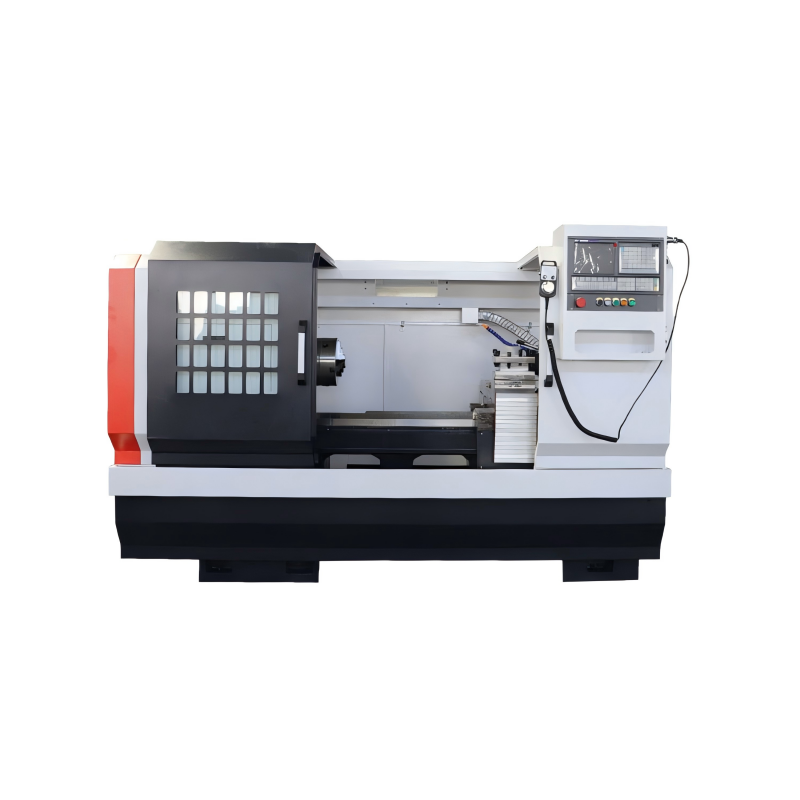
The turning hard rail CNC Lathe is a specialized machine tool designed for high-precision machining of cylindrical and conical surfaces. These machines are equipped with robust, rigid rails that provide the necessary support and stability during operation, ensuring accurate and repeatable results. The control system of a Turning Hard Rail CNC Lathe plays a crucial role in its performance, enabling operators to program and execute complex machining tasks with ease. This article delves into the intricacies of the control systems of a turning hard rail CNC lathe, exploring their components, functions, and the benefits they offer.
Understanding the Control System Architecture
The control system of a turning hard rail CNC lathe is typically composed of several key components, including the controller, input/output (I/O) devices, servo drives, and feedback sensors. The controller, often a microprocessor-based unit, serves as the brain of the system, processing commands from the operator or an external computer and coordinating the actions of the other components. Input devices, such as keyboards and touchscreens, allow operators to enter commands and parameters, while output devices, like displays and status indicators, provide real-time information about the machine's status and performance.
Servo drives, which convert the controller's digital signals into mechanical motion, play a vital role in the precise movement of the lathe's axes. Feedback sensors, such as encoders and resolvers, continuously monitor the position and velocity of these axes, sending data back to the controller for adjustments. This closed-loop control ensures that the machine operates within specified tolerances, even under varying loads and conditions.
Programming and Operation of the Control System
Programming a turning hard rail CNC lathe involves creating a sequence of instructions, known as G-code, that defines the desired tool paths and operations. Modern CNC lathes come with user-friendly software interfaces that simplify the programming process, allowing operators to generate G-code through graphical tools and wizards. Additionally, many systems support advanced features like automatic tool change, adaptive cutting, and in-process inspection, further enhancing productivity and flexibility.
During operation, the control system continuously monitors the machining process, making real-time adjustments to maintain accuracy and efficiency. Features such as spindle speed control, feed rate adjustment, and tool wear compensation ensure that the lathe can handle a wide range of materials and applications. The ability to store and recall programs also allows for quick setup and changeover between different jobs, reducing downtime and increasing overall throughput.
Advantages of Advanced Control Systems in Turning Hard Rail CNC Lathes
Advanced control systems in turning hard rail CNC lathes offer numerous advantages over traditional manual and semi-automated machines. One of the primary benefits is improved precision and repeatability. The closed-loop feedback system, combined with high-resolution encoders and servos, enables the machine to achieve micron-level accuracy, even for complex and intricate parts. This level of precision is essential in industries such as aerospace, automotive, and medical, where tight tolerances and high-quality finishes are critical.
Another significant advantage is enhanced productivity. With the ability to run unattended for long periods, turning hard rail CNC lathes can operate 24/7, maximizing machine utilization and reducing labor costs. Automated features like bar feeding, part ejection, and integrated quality control systems further streamline the production process, minimizing cycle times and improving overall efficiency. Additionally, the use of advanced control algorithms and predictive maintenance technologies helps to reduce downtime and extend the lifespan of the machine, leading to lower total cost of ownership.
Integration and Networking Capabilities
Modern turning hard rail CNC lathes are designed to integrate seamlessly with other manufacturing systems and networks, enabling them to be part of a larger, more efficient production environment. Many control systems support industry-standard communication protocols, such as Ethernet, Profibus, and Modbus, allowing for easy connectivity with other machines, robots, and automated material handling systems. This integration facilitates the implementation of Industry 4.0 concepts, such as smart factories and the Internet of Things (IoT), where data is collected, analyzed, and used to optimize the entire production process.
Networking capabilities also enable remote monitoring and diagnostics, allowing technicians and engineers to access the machine's status and performance data from anywhere in the world. This feature is particularly useful for troubleshooting and maintenance, as it allows issues to be identified and resolved quickly, reducing downtime and improving overall reliability. Furthermore, the ability to collect and analyze large amounts of data provides valuable insights into machine performance, helping manufacturers to make informed decisions and drive continuous improvement.
Conclusion
The control system of a turning hard rail CNC lathe is a sophisticated and integral component that significantly impacts the machine's performance, precision, and productivity. By understanding the architecture, programming, and operational aspects of these control systems, manufacturers can leverage their full potential to achieve higher levels of accuracy, efficiency, and integration. As technology continues to advance, the future of turning hard rail CNC lathes looks promising, with ongoing developments in control systems, automation, and networking capabilities set to further enhance their capabilities and applications.

 10/06/2026



