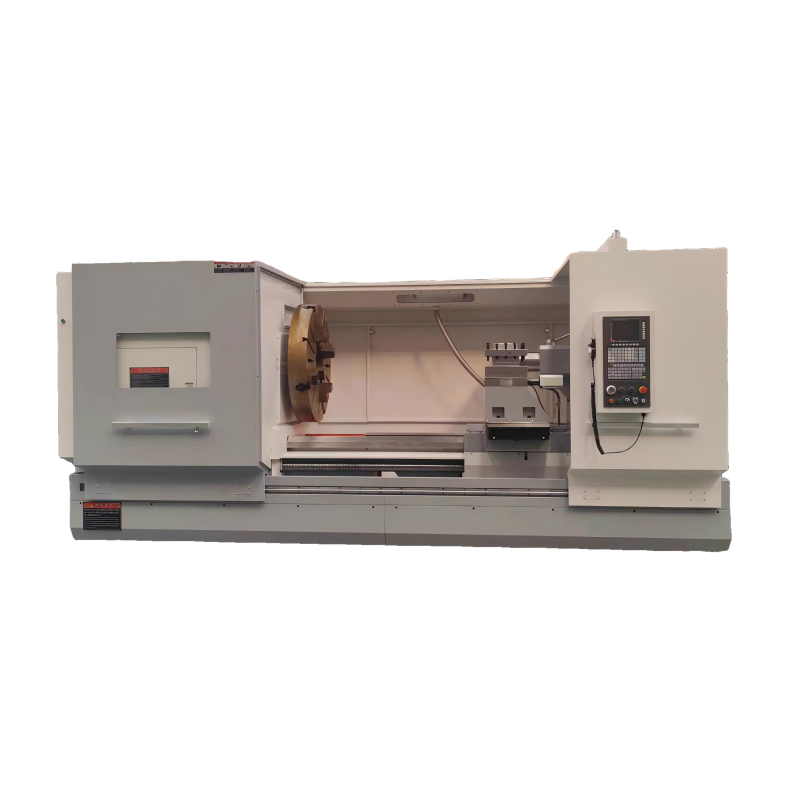
The journey from novice to expert in mastering the turning hard rail CNC Lathe begins with a solid understanding of its fundamental principles. A CNC (Computer Numerical Control) lathe is an automated machine tool that uses computer programming inputs to control the movement and operation of the lathe, allowing for precise and repeatable machining processes. The term "hard rail" refers to the type of guideway used in these machines, which provides greater rigidity and stability compared to softer alternatives like linear guides. This characteristic makes the Turning Hard Rail CNC Lathe particularly suitable for heavy-duty operations where precision and durability are paramount.
To effectively operate such a machine, it's essential to familiarize oneself with the basic components: the spindle, chuck, tailstock, and tool turret, as well as the control panel through which operators input commands. Learning about the different types of cutting tools, materials, and their applications also forms a crucial part of this initial phase. By grasping these fundamentals, one lays the groundwork for more advanced skills and techniques.
Once the basics are understood, the next step towards becoming proficient involves delving into programming and actual operation of the turning hard rail CNC lathe. Programming can be done using G-code, a language specifically designed for CNC machines, or through more user-friendly software interfaces provided by manufacturers. It’s important to note that while pre-written programs can simplify tasks, developing custom programs allows for greater flexibility and optimization of the machining process.
Practical experience is indispensable at this stage. Hands-on training on setting up workpieces, selecting appropriate tools, and executing various machining operations under supervision helps consolidate theoretical knowledge. Moreover, troubleshooting common issues related to setup, calibration, and maintenance further enhances one's competence. Engaging in projects that require multiple steps and complex geometries not only improves technical skills but also fosters problem-solving abilities, key attributes for any skilled machinist.
Proper maintenance and effective troubleshooting are critical aspects of operating a turning hard rail CNC lathe efficiently over the long term. Regular maintenance schedules, including lubrication, cleaning, and inspection of parts, help prevent unexpected breakdowns and extend the lifespan of the equipment. Understanding the signs of wear and tear, knowing when and how to replace worn-out components, and being able to perform minor repairs without external assistance are all valuable skills.
Troubleshooting, on the other hand, requires a deep understanding of both the mechanical and electronic systems within the lathe. Issues could range from simple malfunctions like incorrect tool settings to more complex problems involving motor failures or controller errors. Developing a systematic approach to diagnosing and resolving these issues, often through the use of diagnostic software or manuals, is vital. Additionally, staying updated with the latest advancements in CNC technology and participating in continuous learning opportunities, such as workshops or online courses, ensures that one remains at the forefront of the field.
As proficiency grows, exploring advanced techniques and specialized applications becomes the natural progression in mastering the turning hard rail CNC lathe. Advanced techniques may include high-speed machining, multi-axis operations, and the use of sophisticated CAM (Computer-Aided Manufacturing) software to generate complex toolpaths. These methods enable the production of intricate parts with tight tolerances, opening up new possibilities in industries such as aerospace, automotive, and medical devices.
Specialized applications, meanwhile, might involve working with exotic materials like titanium or composites, each presenting unique challenges and requiring specific considerations regarding tool selection, cutting parameters, and cooling strategies. Mastery of these areas not only broadens one's skill set but also positions them as highly sought-after experts capable of tackling diverse and demanding projects. Collaboration with engineers and designers during the development phase of products can further refine these skills, ensuring that the final output meets all specifications and quality standards.
The path from novice to expert in mastering the turning hard rail CNC lathe is a dynamic and ongoing process. As technology evolves, so too must the skills and knowledge of those who operate these machines. Embracing a mindset of continuous improvement, actively seeking out new information, and adapting to changes in the industry are key to maintaining relevance and excellence in this field. Whether through formal education, self-study, or practical experience, the journey of mastering the turning hard rail CNC lathe is one filled with opportunities for growth and achievement.
 10/06/2026
In today's competitive manufacturing landscape, maximizing the efficiency and output of a Turning Hard Rail CNC Lathe is crucial for businesses aiming to stay ahead. This technical report delves into the strategies and best practices that can significantl
Read More10/06/2026Introduction to Turning Hard Rail CNC Lathes The turning hard rail CNC lathe is a specialized machine tool designed for high-precision machining of cylindrical and conical surfaces. These machines are equipped with robust, rigid rails that provide the nec
Read More08/06/2026In the ever-evolving world of manufacturing, the turning hard rail CNC lathe stands out as a pivotal technology that continues to shape the future of machining. This report delves into the latest innovations in this field, highlighting how advancements ar
Read More08/06/2026This technical report provides a detailed guide on operating a Turning Hard Rail CNC Lathe, covering essential aspects from basic machine setup to advanced programming techniques. It is designed for both beginners and experienced operators looking to enha
Read More08/06/2026When it comes to precision machining, a Turning Hard Rail CNC Lathe is an indispensable tool. This machine is designed for high-precision and high-efficiency turning operations, making it a preferred choice in many manufacturing settings. However, the per
Read More07/06/2026Turning hard rail CNC lathe machining represents a significant advancement in the field of precision engineering, offering unparalleled accuracy and efficiency. This report delves into advanced techniques that enhance the capabilities of turning hard rail
Read More07/06/2026Understanding the Importance of Regular Maintenance for Your Turning Hard Rail CNC Lathe Maintaining a turning hard rail CNC lathe is crucial for ensuring its longevity and optimal performance. Regular maintenance not only extends the machine's lifespan b
Read More07/06/2026In the realm of modern manufacturing, the integration of advanced technologies has significantly transformed traditional processes. One such innovation is the turning hard rail CNC lathe, a tool that exemplifies precision and versatility. This article del
Read More07/06/2026The maintenance of a Turning Hard Rail CNC Lathe is crucial for ensuring its longevity and maintaining high levels of precision and efficiency. Proper care not only extends the life of the machine but also reduces downtime, which can be costly in terms of
Read More06/06/2026The turning hard rail CNC lathe is a highly specialized piece of machinery that combines the precision and flexibility of computer numerical control (CNC) with the robustness of a hard rail system. This article delves into the mechanics behind such a lath
Read More06/06/2026With the advancement of manufacturing technology, the Turning Hard Rail CNC Lathe has become an indispensable tool for many industries. Its ability to produce high-precision parts efficiently makes it a preferred choice for manufacturers aiming to enhance
Read More06/06/2026In the realm of precision engineering, the Turning Hard Rail CNC Lathe stands out as a pivotal tool for achieving high-accuracy machining. This report delves into the capabilities and applications of this advanced machinery, exploring its role in modern m
Read More06/06/2026In the realm of precision machining, the Turning Hard Rail CNC Lathe stands out as a critical tool for producing high-accuracy components. This machine's ability to handle tough materials and maintain consistent performance makes it an indispensable asset
Read More05/06/2026The advent of the Turning Hard Rail CNC Lathe has revolutionized precision machining across various industries. This guide aims to provide a comprehensive understanding of operating such machinery, ensuring operators can achieve optimal performance and ma
Read More05/06/2026Turning Hard Rail CNC Lathe machines are essential in the modern manufacturing industry, offering unparalleled precision and efficiency. This report aims to explore how users can maximize the performance of their Turning Hard Rail CNC Lathes, focusing on
Read More05/06/2026In the realm of precision machining, the Turning Hard Rail CNC Lathe stands out as a versatile and robust solution for a wide range of applications. This technical report delves into the advantages and practical uses of this advanced machine tool, highlig
Read More05/06/2026Introduction to Turning Hard Rail CNC Lathes The turning hard rail CNC lathe represents a significant advancement in the field of precision machining. This type of machine is designed with a robust, rigid structure that enhances its ability to handle high
Read More04/06/2026In the realm of precision machining, the Turning Hard Rail CNC Lathe stands out as a remarkable tool, capable of producing intricate and accurate parts with unparalleled efficiency. This article delves into the intricacies of using a Turning Hard Rail CNC
Read More04/06/2026Introduction to Turning Hard Rail CNC LatheThe turning hard rail CNC lathe represents a significant advancement in the field of precision machining, offering unparalleled accuracy and efficiency. This type of lathe is designed with a robust, stable struct
Read More04/06/2026In the realm of modern machining, the Turning Hard Rail CNC Lathe has emerged as a transformative technology, offering unparalleled precision, efficiency, and versatility. This technical report delves into the capabilities and potential applications of th
Read More04/06/2026In the realm of precision machining, CNC lathes play a pivotal role in producing high-quality components. The performance and accuracy of these machines are significantly influenced by their design and construction. One critical aspect that enhances the p
Read More03/06/2026In the rapidly evolving landscape of manufacturing, the turning hard rail CNC lathe stands out as a pinnacle of precision and efficiency. This article delves into the advanced features that make modern turning hard rail CNC lathes indispensable in today's
Read More02/06/2026In the realm of precision machining, the Turning Hard Rail CNC Lathe stands out as a critical tool for achieving high accuracy and efficiency. This article delves into the techniques and best practices that can be employed to maximize the potential of a T
Read MoreOur professional sales team is always ready to assist you.