In the realm of precision engineering, deep hole machining for long shafts using CNC lathes presents a unique set of challenges. This process is critical in industries ranging from aerospace to energy, where components must meet stringent performance and durability standards. Addressing these challenges effectively can significantly enhance productivity and quality, ensuring that manufactured parts are both accurate and reliable.
The primary challenge in deep hole machining lies in maintaining consistent accuracy over extended lengths. As the depth of the bore increases, so does the likelihood of errors such as deflection, vibration, and thermal expansion. These factors can lead to inaccuracies in the final product, which may compromise its functionality. Additionally, the removal of chips and coolant delivery become more complex as the hole gets deeper, further complicating the machining process. Effective solutions to these problems require a combination of advanced tooling, optimized cutting parameters, and robust machine design.
One key to successful deep hole machining is the selection and design of appropriate tools. Specialized drills, such as gun drills and BTA (Boring Trepanning Association) drills, are commonly used due to their ability to maintain straightness and accuracy over long distances. Gun drills, for example, have a single flute and an internal channel for coolant and chip evacuation, which helps to reduce friction and heat. BTA drills, on the other hand, use external channels for coolant and chip removal, making them suitable for larger diameter holes. The choice between these tools depends on the specific requirements of the job, including the material being machined, the desired surface finish, and the length of the hole.
Moreover, the geometry of the cutting edge plays a crucial role in determining the efficiency of the machining process. Sharp, well-designed cutting edges can minimize wear and tear, leading to longer tool life and better surface finishes. Advanced coatings, such as TiAlN (Titanium Aluminum Nitride), can also be applied to the cutting tools to improve their hardness and resistance to wear, thereby enhancing their performance in demanding applications.
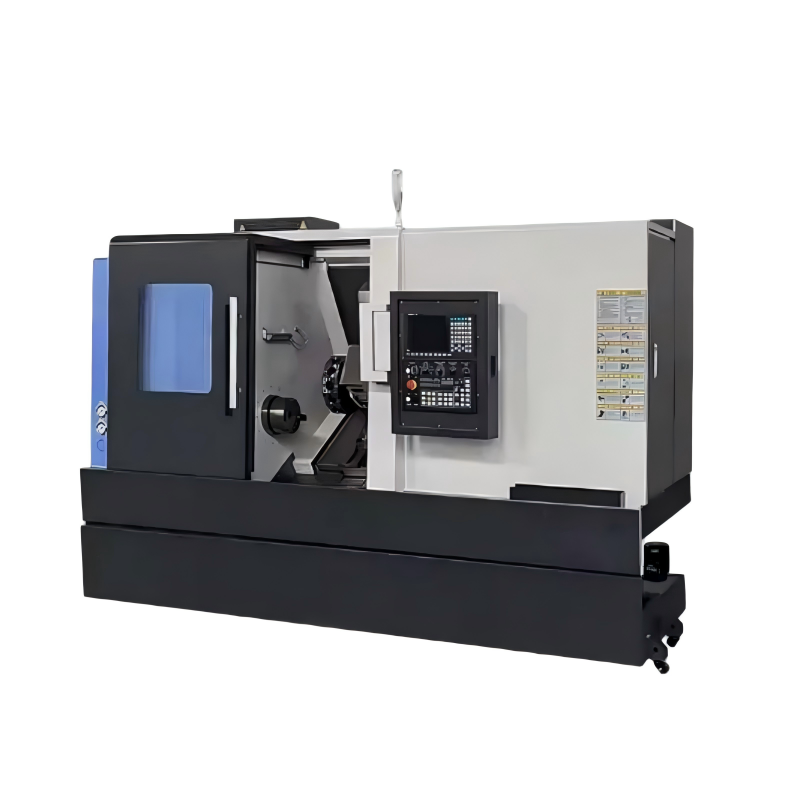
CNC Lathes equipped with advanced control systems and monitoring technologies are essential for achieving high-precision deep hole machining. Modern CNC controls allow for precise control over the cutting parameters, such as feed rate, spindle speed, and coolant flow. These parameters can be adjusted in real-time based on feedback from sensors, ensuring that the machining process remains within the desired tolerances. For instance, adaptive control systems can automatically adjust the feed rate to compensate for variations in the material or tool condition, thus maintaining consistent performance.
Additionally, integrated monitoring systems can provide valuable data on the machining process, enabling operators to detect and address issues before they escalate. Real-time monitoring of parameters such as temperature, vibration, and tool wear can help prevent catastrophic failures and ensure that the machining process remains stable. By leveraging these advanced technologies, manufacturers can achieve higher levels of accuracy and reliability in deep hole machining for long shafts.
Effective management of coolant and chips is another critical aspect of deep hole machining. In deep holes, the evacuation of chips and the delivery of coolant become increasingly challenging. Poor chip evacuation can lead to chip packing, which can cause tool breakage and poor surface finish. Similarly, inadequate coolant flow can result in excessive heat buildup, leading to thermal deformation and reduced tool life.
To address these issues, specialized coolant systems, such as high-pressure through-spindle coolant (HPC), are often employed. HPC systems deliver coolant directly to the cutting zone at high pressures, ensuring that the cutting area is continuously cooled and lubricated. This not only helps to dissipate heat but also aids in the efficient removal of chips. Furthermore, the use of chip-breaking geometries on the cutting tools can help to produce smaller, more manageable chips, which are easier to evacuate.
Regular maintenance and inspection of the coolant system are also important to ensure that it operates at peak efficiency. This includes checking for clogs, leaks, and proper filtration. By maintaining a clean and effective coolant system, manufacturers can significantly improve the overall performance and longevity of their deep hole machining operations.
Deep hole machining for long shafts using CNC lathes is a complex and demanding process, but with the right strategies and technologies, it can be managed effectively. By understanding the specific challenges, optimizing tool design, implementing advanced CNC controls and monitoring systems, and ensuring proper coolant and chip management, manufacturers can achieve high-precision and reliable results. These approaches not only enhance the quality of the finished products but also increase productivity and reduce costs, making them essential for success in today’s competitive manufacturing landscape.
 19/06/2026
Deep hole machining on CNC lathes is a specialized process that requires precise control and advanced tooling. This technique is particularly useful for manufacturing long shafts, which are essential components in various industries, including automotive,
Read More18/06/2026China, being a major player in the global manufacturing industry, has seen its lathe producers rise to prominence over recent decades. The country's top lathe manufacturers are known for their high-quality products and innovative solutions, particularly i
Read More18/06/2026In the realm of modern manufacturing, the integration of advanced technologies has revolutionized the way we produce components and parts. Among these innovations, the deep hole machining CNC lathe for long shafts stands out as a pivotal tool, offering un
Read More18/06/2026In the realm of precision manufacturing, investing in advanced machinery is crucial for maintaining a competitive edge. This report explores the benefits of acquiring a double pallet heavy horizontal machining center (HMC) and how it complements deep hole
Read More18/06/2026Choosing the right turning hard rail CNC lathe for deep hole machining, especially when dealing with long shafts, is a critical decision that can significantly impact production efficiency and part quality. This guide aims to provide an in-depth analysis
Read More18/06/2026In the realm of modern manufacturing, precision and efficiency are paramount. This is especially true in the production of long shafts, a component that is critical across various industries, from automotive to aerospace. The evolution of deep hole machin
Read More18/06/2026In the realm of manufacturing, the precision and efficiency with which long shafts are machined play a crucial role in the overall productivity and quality of the final product. This report explores how advanced machining technologies, such as deep hole m
Read More18/06/2026Deep hole machining is a critical process in the manufacturing of long shafts, where precision and efficiency are paramount. With the advent of advanced CNC (Computer Numerical Control) technology, the capabilities of deep hole machining have been signifi
Read More18/06/2026Deep hole machining is a critical process in the manufacturing of long shafts, where precision and efficiency are paramount. As technology advances, CNC (Computer Numerical Control) lathes have become increasingly sophisticated, offering advanced features
Read More17/06/2026Understanding the Importance of Precision in Long Shaft MachiningIn the manufacturing industry, precision is not just a preference but a necessity. When it comes to long shaft machining, this principle becomes even more critical. The use of deep hole mach
Read More17/06/2026In the realm of precision engineering, the fabrication of long shafts is a critical process that demands high accuracy and reliability. This technical report delves into the importance of deep hole machining accuracy when using CNC lathes for long shafts,
Read More16/06/2026In the realm of precision engineering, the production of long shafts with deep holes is a critical process that demands high accuracy and efficiency. The use of Deep hole machining CNC lathe for long shafts has become an indispensable tool in this field,
Read More16/06/2026In the realm of precision engineering, the ability to efficiently and accurately machine deep holes in long shafts is a critical skill. This process, often carried out using Deep hole machining CNC lathe for long shafts, presents unique challenges that re
Read More15/06/2026In the realm of precision engineering, advancements in CNC (Computer Numerical Control) lathe technologies have significantly transformed the manufacturing landscape, particularly when it comes to the production of long shafts. This report delves into the
Read More15/06/2026Introduction to Deep Hole Machining for Long Shafts Deep hole machining is a critical process in the manufacturing of precision long shafts, especially those used in industries such as aerospace, automotive, and energy. This technique involves drilling ho
Read MoreOur professional sales team is always ready to assist you.