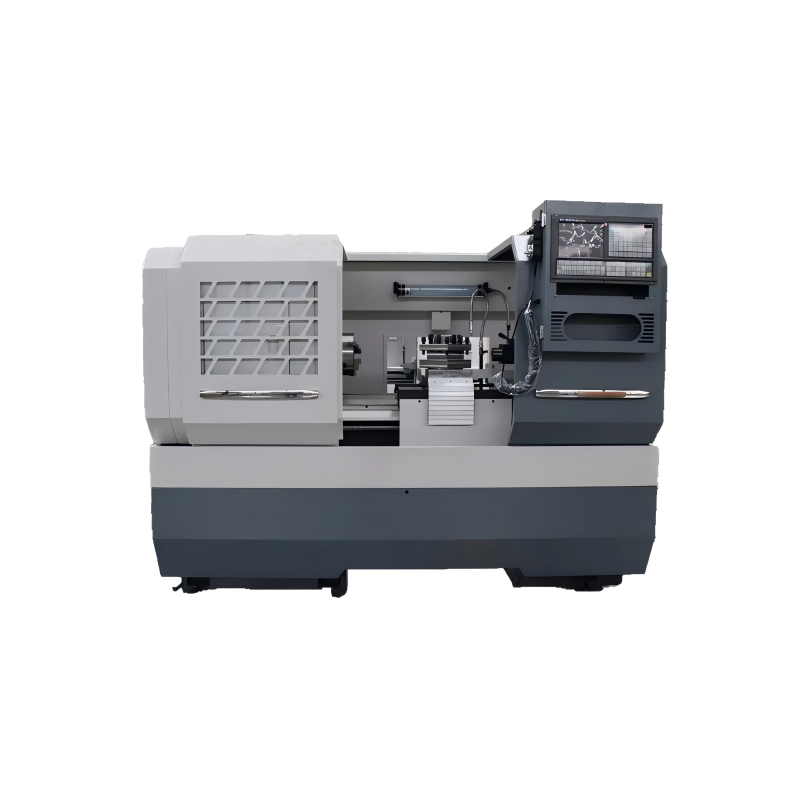
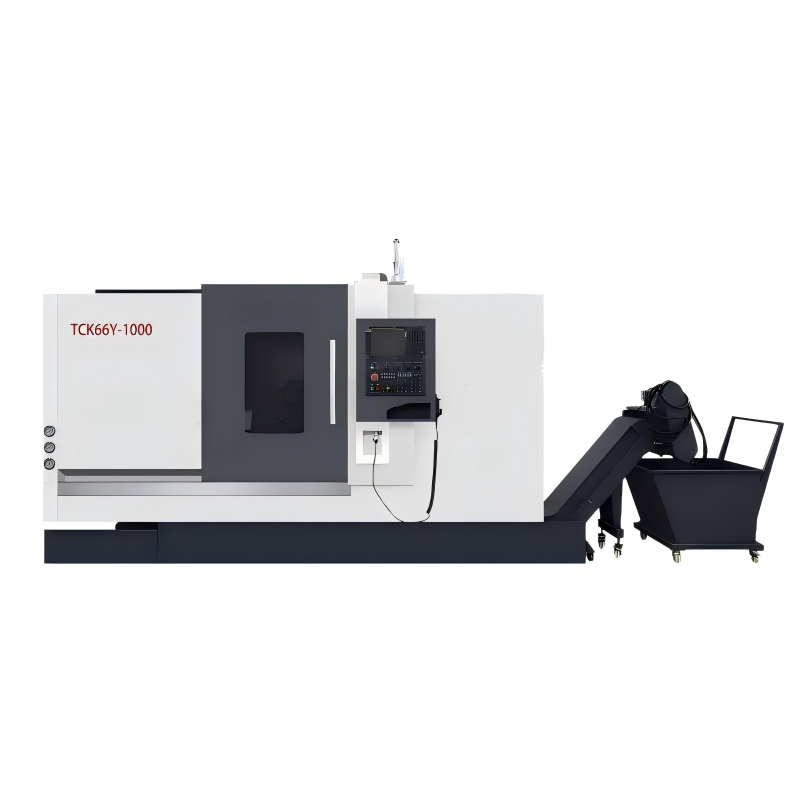
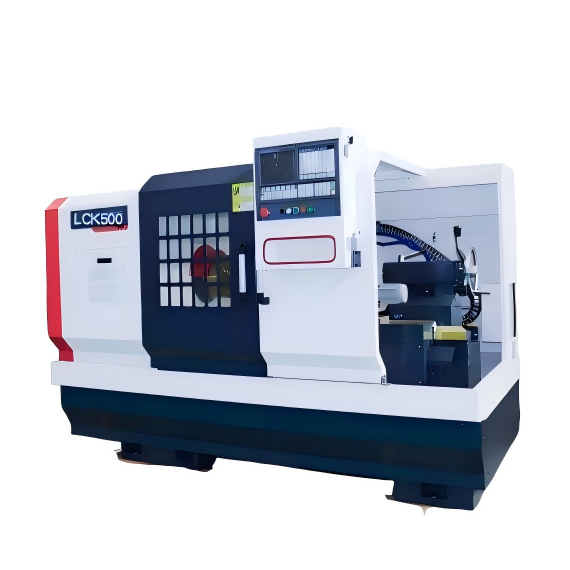
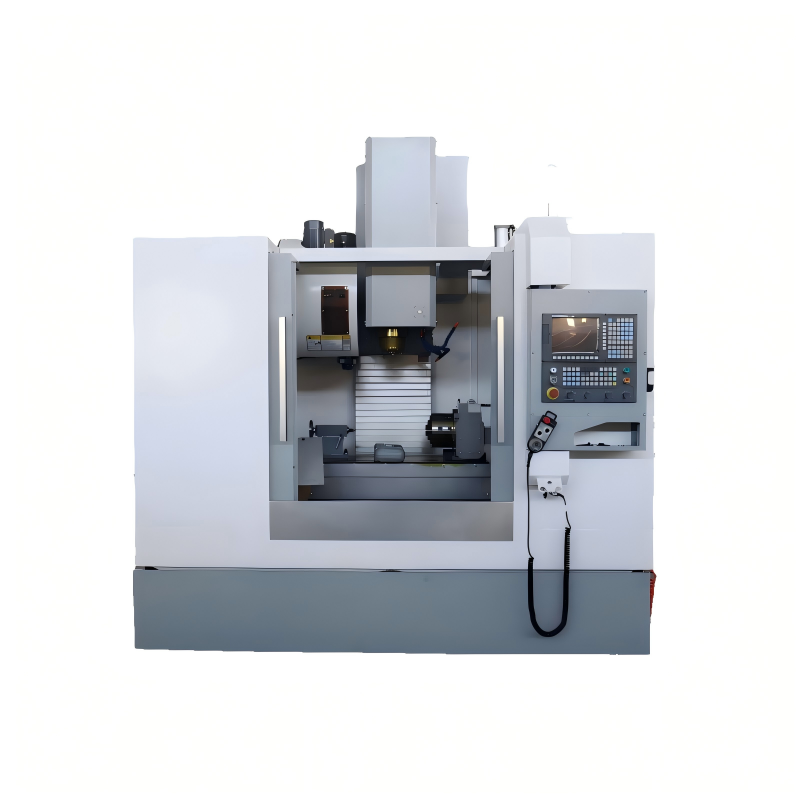
Choosing the right turning hard rail CNC lathe for deep hole machining, especially when dealing with long shafts, is a critical decision that can significantly impact production efficiency and part quality. This guide aims to provide an in-depth analysis of the factors to consider, ensuring you make an informed choice that meets your specific manufacturing needs.
The foundation of any high-precision CNC Lathe is its rail system. Hard rails, made from materials like cast iron or steel, are known for their durability and stability. For deep hole machining, particularly on long shafts, the rigidity and accuracy provided by hard rails are essential. These rails minimize vibrations and ensure consistent cutting performance, which is crucial for maintaining tight tolerances over extended periods.
When evaluating different models, it's important to consider the rail's construction, including its thickness, material, and how it is integrated into the machine's frame. A robust rail system will not only enhance the machine's longevity but also improve the overall precision of your operations.
Deep hole machining CNC lathes are designed to handle the unique challenges associated with long shafts. Some key features to look for include:
These features collectively contribute to the machine's ability to produce high-quality, precise parts, even in challenging deep hole machining scenarios.
In today's manufacturing environment, automation and integration capabilities are becoming increasingly important. A CNC lathe that can be easily integrated into a larger production line or that supports automated processes can significantly enhance productivity and reduce labor costs.
Consider the following aspects when evaluating a CNC lathe for automation:
By choosing a CNC lathe with strong automation and integration capabilities, you can future-proof your investment and stay competitive in a rapidly evolving industry.
While the initial purchase price is a significant factor, it's equally important to consider the total cost of ownership (TCO) over the machine's lifespan. This includes maintenance, energy consumption, and the cost of consumables like tooling and coolant.
Some key cost considerations include:
By carefully evaluating these cost factors, you can make a more informed decision that balances upfront costs with long-term operational efficiency.
Selecting the right Turning Hard Rail CNC Lathe for deep hole machining, especially for long shafts, requires a thorough understanding of the machine's capabilities and how they align with your specific manufacturing needs. By focusing on the importance of hard rail design, key features for deep hole machining, automation and integration capabilities, and cost considerations, you can make a well-informed decision that will enhance your production efficiency and part quality.
Remember, the right CNC lathe is an investment in the future of your business, and taking the time to evaluate all the relevant factors will pay off in the long run.
 19/06/2026
Deep hole machining on CNC lathes is a specialized process that requires precise control and advanced tooling. This technique is particularly useful for manufacturing long shafts, which are essential components in various industries, including automotive,
Read More19/06/2026In the realm of precision engineering, deep hole machining for long shafts using CNC lathes presents a unique set of challenges. This process is critical in industries ranging from aerospace to energy, where components must meet stringent performance and
Read More18/06/2026China, being a major player in the global manufacturing industry, has seen its lathe producers rise to prominence over recent decades. The country's top lathe manufacturers are known for their high-quality products and innovative solutions, particularly i
Read More18/06/2026In the realm of modern manufacturing, the integration of advanced technologies has revolutionized the way we produce components and parts. Among these innovations, the deep hole machining CNC lathe for long shafts stands out as a pivotal tool, offering un
Read More18/06/2026In the realm of precision manufacturing, investing in advanced machinery is crucial for maintaining a competitive edge. This report explores the benefits of acquiring a double pallet heavy horizontal machining center (HMC) and how it complements deep hole
Read More18/06/2026In the realm of modern manufacturing, precision and efficiency are paramount. This is especially true in the production of long shafts, a component that is critical across various industries, from automotive to aerospace. The evolution of deep hole machin
Read More18/06/2026In the realm of manufacturing, the precision and efficiency with which long shafts are machined play a crucial role in the overall productivity and quality of the final product. This report explores how advanced machining technologies, such as deep hole m
Read More18/06/2026Deep hole machining is a critical process in the manufacturing of long shafts, where precision and efficiency are paramount. With the advent of advanced CNC (Computer Numerical Control) technology, the capabilities of deep hole machining have been signifi
Read More18/06/2026Deep hole machining is a critical process in the manufacturing of long shafts, where precision and efficiency are paramount. As technology advances, CNC (Computer Numerical Control) lathes have become increasingly sophisticated, offering advanced features
Read More17/06/2026Understanding the Importance of Precision in Long Shaft MachiningIn the manufacturing industry, precision is not just a preference but a necessity. When it comes to long shaft machining, this principle becomes even more critical. The use of deep hole mach
Read More17/06/2026In the realm of precision engineering, the fabrication of long shafts is a critical process that demands high accuracy and reliability. This technical report delves into the importance of deep hole machining accuracy when using CNC lathes for long shafts,
Read More16/06/2026In the realm of precision engineering, the production of long shafts with deep holes is a critical process that demands high accuracy and efficiency. The use of Deep hole machining CNC lathe for long shafts has become an indispensable tool in this field,
Read More16/06/2026In the realm of precision engineering, the ability to efficiently and accurately machine deep holes in long shafts is a critical skill. This process, often carried out using Deep hole machining CNC lathe for long shafts, presents unique challenges that re
Read More15/06/2026In the realm of precision engineering, advancements in CNC (Computer Numerical Control) lathe technologies have significantly transformed the manufacturing landscape, particularly when it comes to the production of long shafts. This report delves into the
Read More15/06/2026Introduction to Deep Hole Machining for Long Shafts Deep hole machining is a critical process in the manufacturing of precision long shafts, especially those used in industries such as aerospace, automotive, and energy. This technique involves drilling ho
Read MoreOur professional sales team is always ready to assist you.