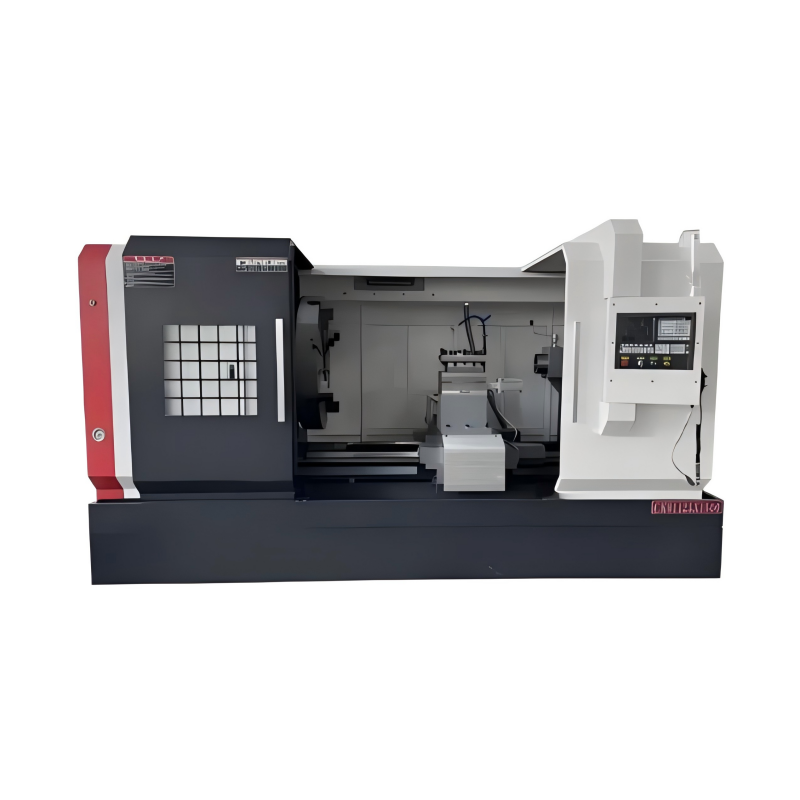
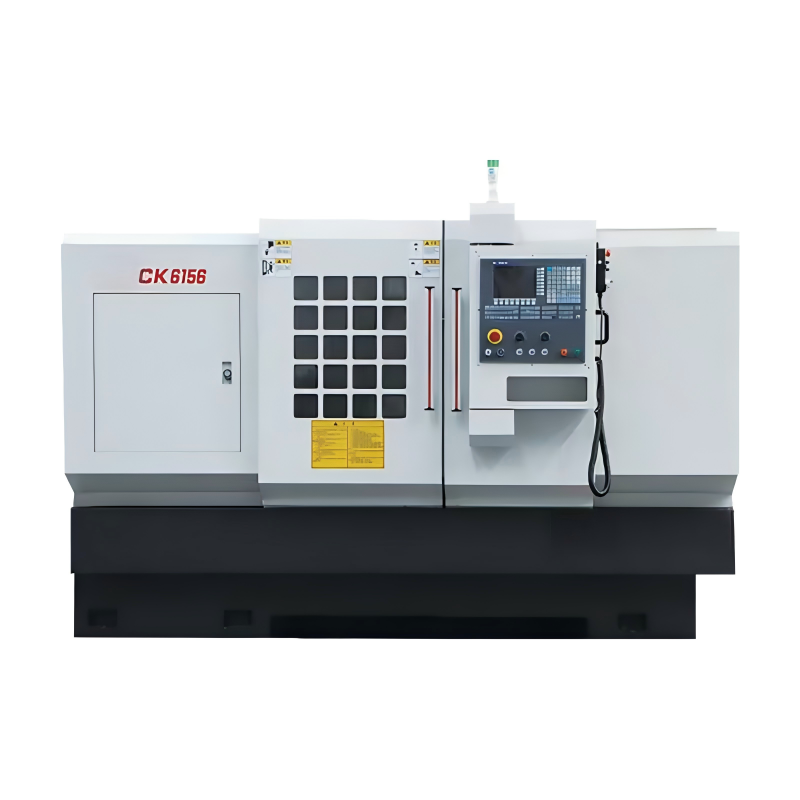
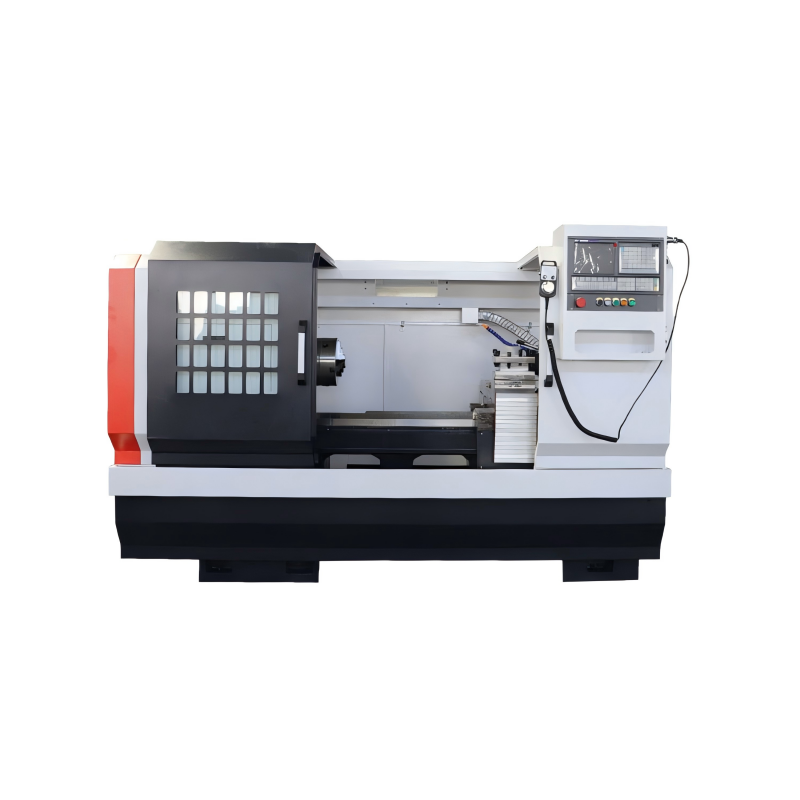
The rapid advancement in manufacturing technologies, particularly within the realm of CNC (Computer Numerical Control) machining, has significantly transformed how complex parts are produced. This report delves into the sophisticated features of multi-axis CNC workcells, with a particular focus on fully automatic horizontal CNC Lathes from China, which have become pivotal for enhancing production efficiency and part accuracy.
In today's competitive manufacturing landscape, precision is not just a preference but a necessity. Multi-axis CNC workcells offer unparalleled accuracy by enabling simultaneous control over multiple axes, allowing for intricate geometries to be machined with minimal setup times. For instance, a Fully automatic horizontal CNC lathe from China can perform turning, milling, drilling, and even grinding operations in a single setup, reducing the need for manual intervention and repositioning of the workpiece. This capability ensures that all critical dimensions are achieved with tight tolerances, thereby improving overall product quality.
The integration of advanced software solutions further enhances the precision of these machines. High-resolution feedback systems, coupled with intelligent algorithms, allow for real-time adjustments during the machining process, ensuring consistent results across batches. Additionally, the use of high-quality tooling and robust machine construction contributes to long-term stability and repeatability, making multi-axis CNC workcells ideal for producing complex parts with exacting specifications.
One of the key advantages of using multi-axis CNC workcells, such as the fully automatic Horizontal CNC Lathe from China, is the significant boost in productivity they provide. These machines are designed to minimize downtime and maximize throughput, thanks to their ability to perform multiple operations in a single setup. This eliminates the need for frequent workpiece handling and reduces the likelihood of human error, leading to faster cycle times and higher output.
Moreover, the automation capabilities of these workcells enable continuous operation, even in unattended mode. Features like automatic tool changers, pallet changers, and robotic loading and unloading systems ensure that the machine can run 24/7, maximizing its utilization. The integration of Industry 4.0 technologies, such as predictive maintenance and remote monitoring, further enhances operational efficiency by minimizing unplanned downtime and optimizing maintenance schedules.
Another factor contributing to increased productivity is the flexibility of multi-axis CNC workcells. These machines can be easily reprogrammed to handle different part geometries and materials, making them highly versatile. This adaptability is especially valuable in industries where product designs frequently change or where there is a need to produce small batch sizes with varying requirements.
While the initial investment in a multi-axis CNC workcell, such as a fully automatic horizontal CNC lathe from China, may seem substantial, the long-term cost savings and return on investment (ROI) make it a worthwhile consideration. The reduced labor costs, lower scrap rates, and increased throughput contribute to a more efficient and profitable manufacturing process.
Firstly, the reduction in labor costs is significant. With automated processes, the need for skilled operators is minimized, and the remaining workforce can be redeployed to more value-added tasks. This not only lowers operational expenses but also addresses the challenge of finding and retaining skilled labor in a competitive job market.
Secondly, the precision and consistency of multi-axis CNC workcells lead to lower scrap rates. By achieving tighter tolerances and reducing the risk of human error, manufacturers can expect fewer defective parts, which translates into substantial material and time savings. Additionally, the ability to perform multiple operations in a single setup reduces the number of setups required, further lowering the risk of errors and rework.
Finally, the increased throughput and flexibility of these machines allow for faster production cycles and the ability to take on more diverse and complex projects. This can open up new business opportunities and help manufacturers stay competitive in a rapidly evolving market. The combination of these factors—reduced labor costs, lower scrap rates, and increased productivity—contributes to a strong ROI, making multi-axis CNC workcells a strategic investment for modern manufacturing facilities.
Multi-axis CNC workcells, including the fully automatic horizontal CNC lathe from China, are at the forefront of integrating with advanced manufacturing technologies. This integration not only enhances the capabilities of the machines but also supports the broader goals of smart manufacturing and Industry 4.0. One of the key areas of integration is with simulation and modeling software, which allows for virtual prototyping and testing before actual production begins. This helps in identifying potential issues early in the design phase, reducing the risk of costly errors and delays.
Additionally, the use of data analytics and machine learning algorithms enables predictive maintenance, where the system can forecast when maintenance is needed based on real-time data. This proactive approach minimizes unplanned downtime and extends the lifespan of the machine. Furthermore, the integration of IoT (Internet of Things) sensors and devices allows for real-time monitoring of machine performance, enabling operators to make informed decisions and optimize production processes.
Collaborative robotics (cobots) are another area of integration that is gaining traction. Cobots can work alongside human operators to perform tasks that require both precision and dexterity, such as loading and unloading workpieces, performing inspections, and conducting quality checks. This collaborative approach not only improves safety but also enhances the overall efficiency of the manufacturing process.
In conclusion, the integration of multi-axis CNC workcells with advanced manufacturing technologies is a critical step towards achieving smarter, more efficient, and more flexible manufacturing operations. As these technologies continue to evolve, the capabilities of multi-axis CNC workcells will only become more robust, driving further innovation and competitiveness in the industry.
The advanced features of multi-axis CNC workcells, exemplified by the fully automatic horizontal CNC lathe from China, are revolutionizing the manufacturing of complex parts. These machines offer enhanced precision, increased productivity, and cost-effectiveness, making them an essential tool for modern manufacturing. The integration with advanced manufacturing technologies further amplifies their capabilities, paving the way for a more efficient and innovative future in the industry. As the demand for high-precision and complex parts continues to grow, multi-axis CNC workcells will remain at the forefront of manufacturing excellence.
 29/06/2026
In the realm of modern manufacturing, efficiency and precision are paramount. The advent of advanced machinery such as the fully automatic horizontal CNC lathe from China has significantly transformed how industries approach production. This report delves
Read More29/06/2026The evolution of machining technologies has been a testament to human ingenuity, with each generation of machines pushing the boundaries of precision, efficiency, and automation. Among these advancements, Fully automatic horizontal CNC lathe China stands
Read More29/06/2026China, as one of the world's largest manufacturing hubs, has been at the forefront of adopting advanced technologies to enhance its industrial capabilities. Among these, fully automatic horizontal CNC lathes have played a pivotal role in shaping the count
Read More29/06/2026In the realm of advanced manufacturing, the integration of fully automatic horizontal CNC lathes and 4-axis heavy horizontal machining centers has revolutionized the way complex parts are produced. This report delves into the capabilities, applications, a
Read More26/06/2026In the realm of modern manufacturing, the integration of advanced machinery has become a cornerstone for enhancing efficiency and precision. Among these, the fully automatic horizontal CNC lathe China stands out as an innovative solution that is reshaping
Read More26/06/2026In the realm of modern manufacturing, precision and efficiency are paramount. One of the key tools that have revolutionized the industry is the fully automatic horizontal CNC lathe. This article delves into how a reliable fully automatic horizontal CNC la
Read More26/06/2026A fully automatic horizontal CNC lathe from China is a highly efficient and versatile machine used in various manufacturing industries. Its ability to perform complex machining tasks with high precision makes it an indispensable tool for many workshops. H
Read More25/06/2026In the realm of manufacturing, precision and efficiency are paramount. The emergence of fully automatic horizontal CNC lathes from China has significantly transformed the industry, offering unparalleled capabilities and cost-effectiveness. This report del
Read More25/06/2026The manufacturing industry is witnessing a rapid transformation, driven by advancements in technology. One such area that has seen significant development is the production of fully automatic horizontal CNC lathes. These machines are essential for achievi
Read More25/06/2026In the rapidly evolving landscape of manufacturing, technological advancements have played a pivotal role in enhancing productivity, precision, and efficiency. One such innovation that has significantly impacted the industry is the fully automatic horizon
Read More24/06/2026In today’s competitive manufacturing landscape, the adoption of advanced machinery is crucial for businesses aiming to stay ahead. One such piece of equipment that has gained significant traction is the fully automatic horizontal CNC lathe. This technolog
Read More24/06/2026In the realm of modern manufacturing, the evolution of machining technologies has been nothing short of revolutionary. Among these advancements, the fully automatic horizontal CNC lathe stands out as a pivotal innovation, especially when it comes from Chi
Read More24/06/2026The Advantages of Automation in Modern MachiningAs the manufacturing industry continues to evolve, the adoption of advanced technologies becomes increasingly important. One such technology is the fully automatic horizontal CNC lathe, which offers numerous
Read More23/06/2026The manufacturing industry is continually evolving, with advancements in technology playing a crucial role in enhancing production efficiency. One such advancement is the fully automatic horizontal CNC lathe from China, which has revolutionized the way pr
Read More23/06/2026In the realm of modern manufacturing, the Fully automatic horizontal CNC lathe China has emerged as a critical tool for achieving high precision and efficiency. This guide aims to provide a comprehensive overview of operating such machinery, focusing on k
Read More23/06/2026The evolution of manufacturing technology has seen significant advancements over the years, with fully automatic horizontal CNC lathes playing a crucial role in precision engineering. These machines, particularly those produced in China, have become indis
Read More22/06/2026In the realm of precision machining, the fully automatic horizontal CNC lathe from China stands out as a beacon of technological advancement. This article delves into the intricacies and advantages of the high precision flat bed CNC lathe, highlighting it
Read More22/06/2026The advancement in manufacturing technology has brought about significant improvements in the efficiency and precision of production processes. Among these advancements, the fully automatic horizontal CNC lathe from China stands out as a transformative so
Read More22/06/2026Understanding the Basics of Fully Automatic Horizontal CNC LathesIn today's rapidly evolving manufacturing landscape, choosing the right machinery is crucial for maintaining a competitive edge. One such essential tool is the fully automatic horizontal CNC
Read More22/06/2026With the rapid development of manufacturing technology, the demand for precision and efficiency in machining processes has increased significantly. One of the key machines that have emerged to meet this demand is the fully automatic horizontal CNC lathe.
Read More22/06/2026In the realm of modern manufacturing, the adoption of advanced technologies plays a crucial role in enhancing productivity, precision, and overall efficiency. One such technology that has gained significant traction is the fully automatic horizontal CNC l
Read More16/06/2026As the demand for precision machining continues to grow, manufacturers are increasingly looking towards solutions that can fit into compact spaces without compromising on performance. One such solution is the fully automatic horizontal CNC lathe, which ha
Read MoreOur professional sales team is always ready to assist you.