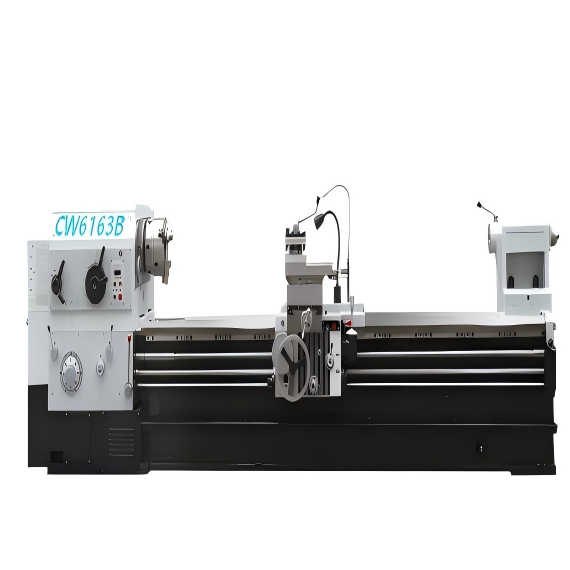
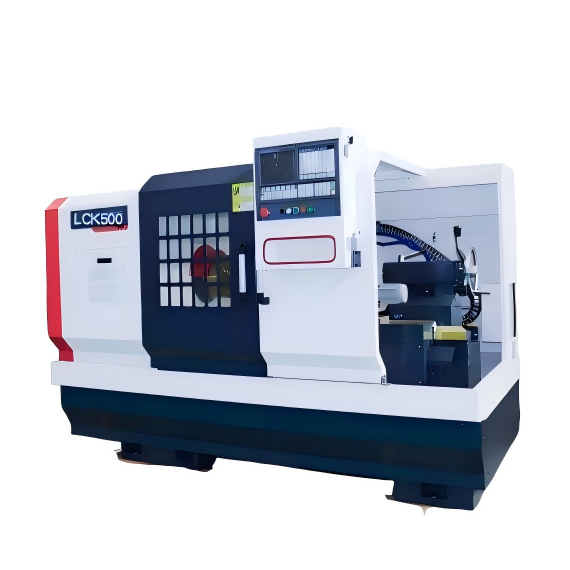
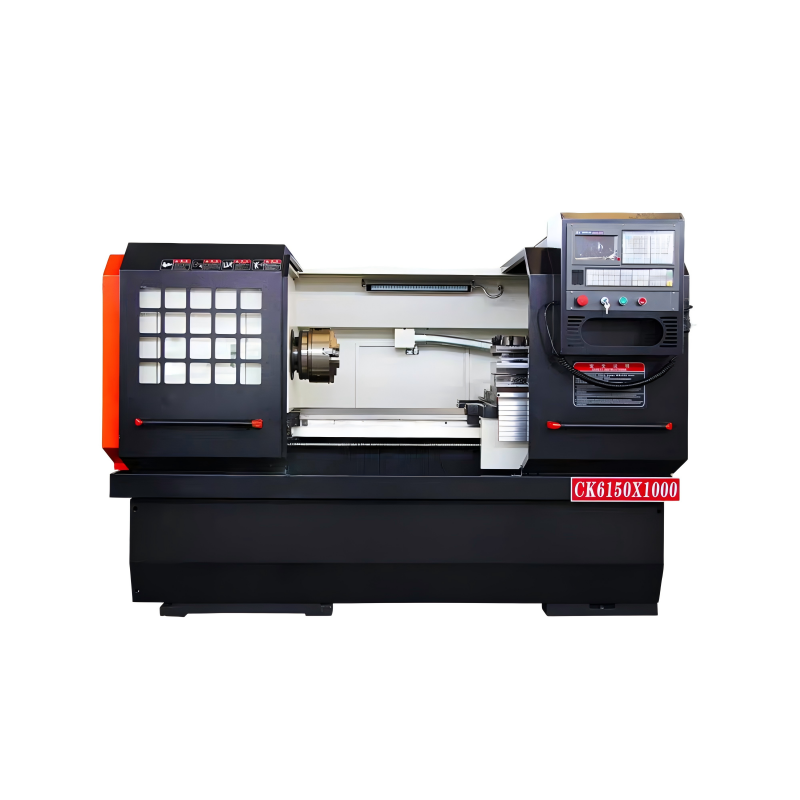
The machining of long shafts is a critical process in many industries, from automotive to aerospace. Achieving high precision and quality on conventional lathes for long shafts requires a deep understanding of the techniques and principles involved. This report delves into the key aspects of using Conventional lathe for long shaft machining, providing insights and best practices for achieving optimal results.
Machining long shafts on a conventional lathe presents unique challenges that must be addressed to ensure precision and quality. The primary issues include deflection, vibration, and thermal expansion, which can significantly affect the final product's accuracy. Deflection occurs due to the weight and length of the shaft, causing it to bend slightly, especially when subjected to cutting forces. Vibration, another common problem, can result from unbalanced tooling or workpiece, leading to surface finish imperfections and dimensional inaccuracies. Additionally, thermal expansion, caused by the heat generated during the cutting process, can lead to dimensional changes in the workpiece, affecting the overall precision of the machined part.
Proper setup and workholding are crucial for successful long shaft machining on a conventional lathe. The first step is to ensure that the lathe is properly aligned and calibrated. Any misalignment can exacerbate deflection and vibration issues. Using a live center at both ends of the lathe helps to support the shaft and reduce deflection. For very long shafts, additional support in the form of steady rests can be employed to provide intermediate support and minimize deflection. It is also essential to use high-quality tooling and ensure that the tools are properly balanced and securely mounted to reduce vibration. Additionally, maintaining consistent and appropriate cutting parameters, such as feed rate and depth of cut, can help to minimize thermal expansion and ensure a smooth, accurate finish.
Employing advanced cutting strategies can significantly enhance the precision and quality of long shaft machining on a conventional lathe. One effective approach is to use a combination of roughing and finishing passes. During the roughing pass, the goal is to remove the majority of the material quickly, while the finishing pass focuses on achieving the desired surface finish and dimensional accuracy. Utilizing a higher spindle speed and a lower feed rate during the finishing pass can help to achieve a smoother surface finish. Another strategy is to employ climb milling, where the cutter rotates in the same direction as the workpiece, reducing the risk of chatter and improving surface finish. Additionally, using coolant effectively can help to control the temperature of the workpiece and tool, reducing thermal expansion and extending tool life. Proper coolant application, such as through-the-spindle delivery, ensures that the cutting zone remains cool, minimizing thermal effects and improving overall machining performance.
Ensuring the quality of machined long shafts is critical, and this involves implementing robust quality control and inspection methods. Regular in-process inspections can help to identify and address any issues early in the machining process. Key inspection points include checking for dimensional accuracy, surface finish, and concentricity. Using precision measuring tools, such as micrometers and dial indicators, can provide accurate measurements. Additionally, non-contact measurement techniques, such as laser scanning, can be used to inspect the entire length of the shaft, ensuring uniformity and consistency. Post-machining, it is important to perform a final inspection to verify that all specifications have been met. This may involve using coordinate measuring machines (CMMs) to check for complex geometries and tolerances. By integrating these quality control and inspection methods, manufacturers can ensure that the machined long shafts meet the required standards and specifications.
Successfully machining long shafts on a conventional lathe requires a comprehensive understanding of the challenges and the implementation of effective techniques. By addressing issues such as deflection, vibration, and thermal expansion, and by optimizing setup, workholding, and cutting strategies, manufacturers can achieve high precision and quality. Additionally, rigorous quality control and inspection methods are essential to ensure that the final product meets the required standards. With the right approach and attention to detail, conventional lathes can be used to produce high-precision long shafts that meet the demands of various industries.
 23/06/2026
When it comes to machining long shafts, a conventional lathe for long shaft offers a reliable and versatile solution. However, working with such components presents unique challenges that require advanced setups and techniques to ensure precision, efficie
Read More23/06/2026Choosing the right conventional lathe for long shaft production is a critical decision that can significantly impact the quality, efficiency, and cost-effectiveness of your manufacturing process. This technical report aims to guide you through the essenti
Read More23/06/2026In the realm of machining, working with long shafts on a conventional lathe presents unique challenges that require careful planning and execution. This report aims to provide practical advice for maximizing efficiency when using a conventional lathe on l
Read More23/06/2026IntroductionThe conventional lathe, a fundamental machine tool in the manufacturing industry, has been a cornerstone of precision machining for centuries. Its versatility and reliability have made it an indispensable asset, especially when it comes to the
Read More23/06/2026Understanding the Basics of Conventional Lathe for Long Shaft Machining In the realm of precision engineering, conventional lathes play a crucial role in manufacturing long shafts. A conventional lathe for long shaft is designed to handle workpieces that
Read More17/06/2026Introduction to the CW61 Series Universal Turning Lathe The CW61 series universal turning lathe is a versatile and reliable machine that has been widely used in various industries for its ability to handle a wide range of machining tasks. This article aim
Read More15/06/2026The application of conventional lathes for long shafts in engineering projects is a well-established practice, offering numerous advantages that make it an indispensable tool in the manufacturing industry. This report aims to provide a comprehensive under
Read More15/06/2026The CW61 series universal turning lathe, designed with precision and versatility in mind, has become an indispensable tool in modern workshops, particularly for the machining of long shafts. This technical report explores how the CW61 series not only meet
Read MoreOur professional sales team is always ready to assist you.