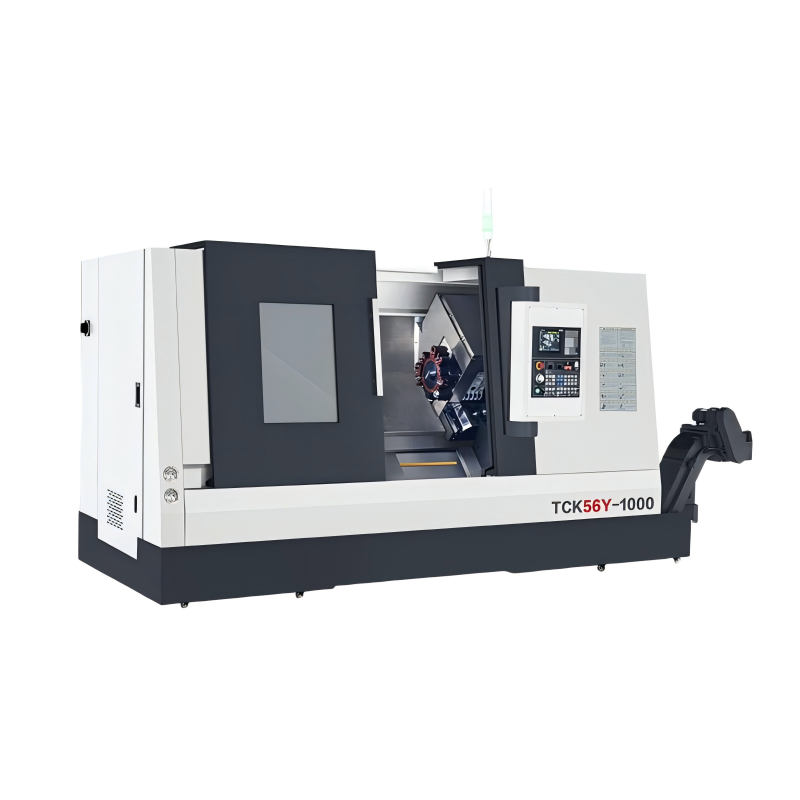
A CNC Lathe with live tooling is not just another piece of equipment in a modern machine shop; it represents a significant leap forward in machining technology, offering unparalleled flexibility and efficiency. This type of lathe combines the traditional capabilities of turning with milling, drilling, and other operations, all within a single setup. The integration of live tooling, which allows tools to rotate independently while the workpiece remains stationary or rotates at a different speed, opens up new possibilities for complex part manufacturing. By understanding these capabilities, manufacturers can unlock the full potential of their machinery, leading to more efficient production processes and higher quality products.
To fully leverage the advantages offered by a CNC Lathe with live tooling, optimizing setup times becomes crucial. One effective way to achieve this is by implementing smart workholding solutions. These include quick-change chucks, zero-point clamping systems, and modular fixturing. Such solutions allow for rapid changeovers between jobs, minimizing downtime and increasing overall productivity. Additionally, employing advanced CAD/CAM software that supports virtual simulation of setups can help in identifying potential issues before they occur on the shop floor, further streamlining the process. By focusing on reducing setup times, shops can significantly enhance their competitiveness, especially in high-mix, low-volume production environments where flexibility and speed are key.
Efficient programming is at the heart of optimizing machining processes on a CNC lathe with live tooling. Advanced CAM software plays a pivotal role here, enabling programmers to create sophisticated toolpaths that take full advantage of the machine's multi-axis capabilities. Utilizing high-speed machining (HSM) strategies, such as trochoidal milling and adaptive clearing, can drastically reduce cycle times while maintaining or even improving surface finish quality. Moreover, incorporating toolpath optimization features, like corner rounding and lead-in/lead-out paths, helps in extending tool life and achieving consistent results. It's also important to regularly update post-processors to ensure compatibility with the latest machine controls and to fine-tune parameters for optimal performance. Through these techniques, manufacturers can maximize the output from their CNC lathes, thereby enhancing profitability and customer satisfaction.
Maintaining high standards of quality and consistency is essential for any manufacturing operation, and a CNC lathe with live tooling provides several avenues to achieve this. Implementing in-process measurement and probing systems can enable real-time monitoring of part dimensions during machining, allowing for immediate adjustments if deviations from specifications are detected. Furthermore, utilizing automated tool setting and broken tool detection functionalities ensures that tools are always in optimal condition, reducing the likelihood of producing defective parts. Regular maintenance and calibration of the machine, along with adhering to best practices for coolant management and chip evacuation, contribute to a stable and reliable machining environment. By prioritizing these aspects, businesses can deliver consistently high-quality products, fostering trust and loyalty among their customers.
As the landscape of manufacturing continues to evolve, staying ahead of emerging trends is vital for long-term success. For those operating a CNC lathe with live tooling, embracing Industry 4.0 technologies such as IoT (Internet of Things), AI (Artificial Intelligence), and data analytics presents an opportunity to gain a competitive edge. Integrating sensors into machines to collect data on performance, wear, and environmental conditions enables predictive maintenance, reducing unplanned downtimes. Leveraging AI for predictive modeling and optimization can further refine machining processes, leading to cost savings and improved efficiency. Additionally, adopting cloud-based platforms for collaboration and remote monitoring facilitates seamless communication across teams and locations, enhancing operational agility. By proactively adapting to these advancements, manufacturers can position themselves as leaders in their field, ready to meet the challenges and opportunities of tomorrow.
 30/06/2026
In the realm of modern manufacturing, precision and efficiency are key. CNC lathes with live tooling have emerged as a revolutionary technology, offering unparalleled capabilities for producing complex parts in a single setup. This report delves into adva
Read More30/06/2026In the ever-evolving landscape of manufacturing, the integration of live tooling into CNC lathes has emerged as a pivotal advancement. This technology not only streamlines production processes but also significantly enhances the capabilities of modern mac
Read More30/06/2026In the ever-evolving landscape of manufacturing, the integration of advanced technologies has become a cornerstone for enhancing productivity and precision. One such technological advancement that stands out is the CNC Lathe with live tooling. This articl
Read More30/06/2026Introduction to CNC Lathe with Live ToolingThe introduction of CNC Lathe with live tooling has revolutionized the manufacturing industry by significantly improving both precision and efficiency. This advanced technology integrates milling, drilling, and t
Read More30/06/2026In the world of precision machining, the integration of live tooling into CNC lathes has become a pivotal development, enhancing not only the efficiency but also the versatility of these machines. This technical report explores how the incorporation of li
Read More30/06/2026The advent of advanced manufacturing technologies has revolutionized the way products are made, with CNC (Computer Numerical Control) lathes being at the forefront of this transformation. Among these, the CNC Lathe with live tooling stands out as a versat
Read More30/06/2026In the realm of precision machining, the integration of advanced technologies plays a crucial role in enhancing productivity and quality. One such technology that has revolutionized the manufacturing industry is the CNC Lathe with live tooling. This artic
Read MoreOur professional sales team is always ready to assist you.