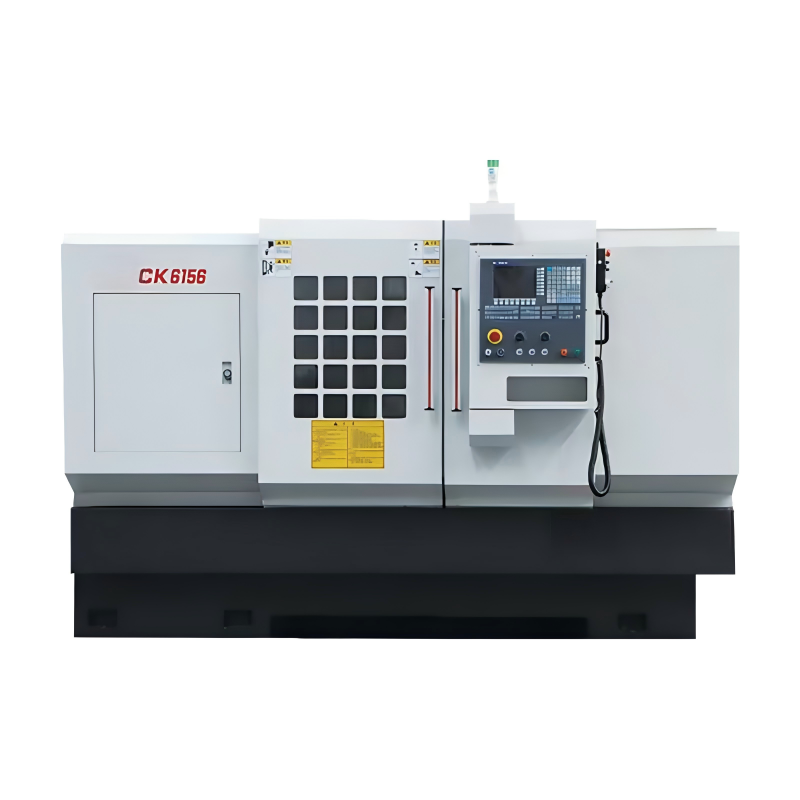
In the world of precision machining, the integration of live tooling into CNC lathes has become a pivotal development, enhancing not only the efficiency but also the versatility of these machines. This technical report explores how the incorporation of live tooling contributes to improving the overall performance and productivity of CNC laths, focusing on key aspects such as reduced cycle times, enhanced machining capabilities, and improved part quality.
The primary advantage of incorporating live tooling into a CNC Lathe with live tooling is the significant reduction in cycle times. Traditional CNC lathes are limited to performing turning operations, which often require additional setups for milling, drilling, or other secondary processes. Live tooling allows for simultaneous operations, where both turning and milling can be performed in a single setup. This capability means that parts requiring multiple types of machining can be completed without the need to move them between different machines, thereby drastically reducing the total production time.
Moreover, the ability to perform these operations concurrently leads to a more streamlined workflow. The machine can switch seamlessly between turning and milling, allowing for continuous operation and minimizing idle time. This not only speeds up the production process but also optimizes the use of the machine, leading to higher throughput and lower costs per part.
Live tooling significantly enhances the machining capabilities of a CNC lathe, making it a more versatile and flexible tool. With live tooling, the machine can handle a broader range of operations, including milling, drilling, tapping, and even some grinding tasks. This expanded functionality means that a single CNC Lathe with live tooling can replace several dedicated machines, simplifying the manufacturing process and reducing the need for additional equipment and floor space.
Additionally, live tooling enables the creation of complex geometries and features that would otherwise be difficult or impossible to achieve with a standard CNC lathe. For example, intricate profiles, undercuts, and cross-drilled holes can be machined with high precision and accuracy. This capability is particularly valuable in industries such as aerospace, automotive, and medical, where parts often have complex and precise requirements.
One of the most significant benefits of using live tooling in a CNC lathe is the improvement in part quality and consistency. By eliminating the need to transfer parts between different machines, the risk of misalignment, positioning errors, and other handling-related issues is greatly reduced. This results in more accurate and consistent parts, which is critical for maintaining high standards of quality and meeting tight tolerances.
Furthermore, live tooling allows for better control over the machining process. The integrated nature of the system means that all operations are performed within a single, controlled environment, where variables such as tool wear, cutting conditions, and part alignment can be closely monitored and adjusted. This level of control ensures that each part is machined to the same high standard, leading to increased reliability and fewer defects.
Investing in a CNC lathe with live tooling can be highly cost-effective, offering a strong return on investment (ROI) over time. The initial cost of a CNC lathe with live tooling may be higher than that of a standard CNC lathe, but the long-term savings in terms of reduced cycle times, increased productivity, and improved part quality make it a worthwhile investment.
By consolidating multiple operations into a single machine, manufacturers can reduce labor costs, minimize material handling, and decrease the number of setups required. This consolidation also leads to a more efficient use of resources, as fewer machines are needed to complete the same amount of work. Additionally, the reduction in scrap and rework due to improved part quality further contributes to cost savings.
The integration of live tooling into CNC lathes represents a significant advancement in the field of precision machining. By enabling simultaneous operations, enhancing machining capabilities, and improving part quality, live tooling offers numerous benefits that contribute to increased efficiency and productivity. As manufacturing continues to evolve, the role of live tooling in CNC lathes will likely become even more crucial, driving innovation and competitiveness in the industry.
 30/06/2026
In the realm of modern manufacturing, precision and efficiency are key. CNC lathes with live tooling have emerged as a revolutionary technology, offering unparalleled capabilities for producing complex parts in a single setup. This report delves into adva
Read More30/06/2026In the ever-evolving landscape of manufacturing, the integration of live tooling into CNC lathes has emerged as a pivotal advancement. This technology not only streamlines production processes but also significantly enhances the capabilities of modern mac
Read More30/06/2026Understanding the Capabilities of a CNC Lathe with Live ToolingA CNC lathe with live tooling is not just another piece of equipment in a modern machine shop; it represents a significant leap forward in machining technology, offering unparalleled flexibili
Read More30/06/2026In the ever-evolving landscape of manufacturing, the integration of advanced technologies has become a cornerstone for enhancing productivity and precision. One such technological advancement that stands out is the CNC Lathe with live tooling. This articl
Read More30/06/2026Introduction to CNC Lathe with Live ToolingThe introduction of CNC Lathe with live tooling has revolutionized the manufacturing industry by significantly improving both precision and efficiency. This advanced technology integrates milling, drilling, and t
Read More30/06/2026The advent of advanced manufacturing technologies has revolutionized the way products are made, with CNC (Computer Numerical Control) lathes being at the forefront of this transformation. Among these, the CNC Lathe with live tooling stands out as a versat
Read More30/06/2026In the realm of precision machining, the integration of advanced technologies plays a crucial role in enhancing productivity and quality. One such technology that has revolutionized the manufacturing industry is the CNC Lathe with live tooling. This artic
Read MoreOur professional sales team is always ready to assist you.