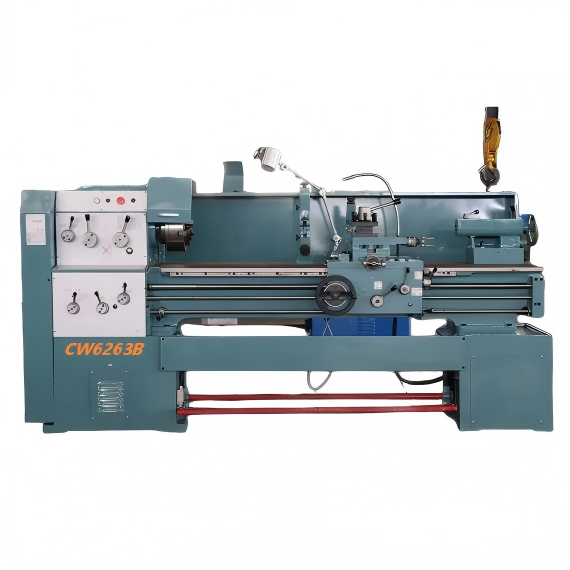
Horizontal 2-Axis CNC Lathes are a vital component in modern manufacturing, offering precision and efficiency that can significantly enhance productivity. This report explores the various ways in which a Horizontal 2-Axis CNC Lathe can be utilized to maximize productivity, from its operational capabilities to maintenance best practices.
A Horizontal 2-Axis CNC Lathe is designed for high-precision machining tasks, particularly those involving cylindrical parts. The two axes, X (cross slide) and Z (spindle), allow for complex operations such as turning, facing, threading, and drilling. By automating these processes, manufacturers can achieve consistent quality and faster production times compared to manual lathes. The ability to program the lathe with specific instructions through computer-aided design (CAD) and computer-aided manufacturing (CAM) software further enhances its versatility and accuracy. This level of automation not only reduces human error but also allows for continuous operation, thereby increasing overall throughput.
One of the key factors in maximizing productivity with a Horizontal 2-Axis CNC Lathe is minimizing setup and changeover times. Efficient setup procedures can significantly reduce downtime between jobs, allowing the machine to remain productive for longer periods. To optimize setup, it is essential to have a well-organized tooling system where tools are easily accessible and correctly labeled. Additionally, using quick-change tool holders and modular fixturing can further streamline the process. Pre-programming multiple jobs and storing them in the lathe’s control system can also save time, as operators can quickly switch between programs without the need for extensive reprogramming. Regular training for machine operators on best practices for setup and changeover can also contribute to improved efficiency.
Material handling is another critical aspect of maximizing productivity with a Horizontal 2-Axis CNC Lathe. Automated material handling systems, such as bar feeders and part catchers, can significantly reduce the need for manual intervention, thereby increasing the machine’s uptime. Bar feeders, for example, can automatically load raw material into the lathe, allowing for continuous operation without the need for an operator to manually load each piece. Similarly, part catchers can collect finished parts, reducing the risk of damage and ensuring that the workflow remains uninterrupted. Integrating these systems with the lathe’s control system can further enhance their effectiveness, as they can be programmed to work in sync with the machining process. For instance, the bar feeder can be set to automatically stop feeding when the lathe reaches a certain point in the program, preventing overloading and ensuring smooth operation.
To maintain high precision and quality, regular maintenance of the Horizontal 2-Axis CNC Lathe is crucial. This includes routine checks and servicing to ensure that all components are functioning correctly. Key areas to focus on include the spindle, which should be checked for runout and wear, and the guideways, which must be kept clean and lubricated to prevent excessive friction. Additionally, the tooling should be regularly inspected and replaced as needed to avoid any degradation in cutting performance. Implementing a preventive maintenance schedule can help identify and address potential issues before they become major problems, thereby minimizing downtime and maintaining the lathe’s optimal performance. Training operators on proper maintenance procedures and providing them with the necessary tools and resources can also contribute to the longevity and reliability of the machine.
Advanced toolpath strategies can further enhance the productivity of a Horizontal 2-Axis CNC Lathe. By optimizing the toolpaths, manufacturers can reduce machining time, improve surface finish, and extend tool life. One effective strategy is to use high-speed machining techniques, which involve taking lighter cuts at higher speeds. This approach can reduce the cutting forces and heat generated during the process, leading to better surface finishes and longer tool life. Another strategy is to employ adaptive toolpaths, which dynamically adjust the cutting parameters based on the material being machined. This can help maintain a consistent chip load and reduce the likelihood of tool breakage. Additionally, using multi-threading and multi-pass operations can further optimize the machining process, allowing for more efficient material removal and reduced cycle times. CAM software can be used to simulate and test these advanced toolpath strategies, ensuring that they are optimized for the specific job and material requirements.
In conclusion, a Horizontal 2-Axis CNC Lathe offers numerous opportunities for maximizing productivity in manufacturing. By understanding its capabilities, optimizing setup and changeover times, enhancing material handling and automation, maintaining high precision and quality, and implementing advanced toolpath strategies, manufacturers can achieve significant improvements in efficiency and output. These strategies, when combined with regular maintenance and operator training, can help ensure that the lathe operates at its full potential, delivering consistent and high-quality results.
 24/06/2026
In the rapidly evolving landscape of manufacturing, the integration of advanced technologies is reshaping traditional processes. One such technology that stands out in the context of Industry 4.0 is the Horizontal 2-Axis CNC Lathe. This report delves into
Read More24/06/2026When it comes to precision machining, the Horizontal 2-Axis CNC Lathe stands out as a critical tool for manufacturers across various industries. This type of lathe is designed to provide high accuracy and efficiency, making it an essential piece of equipm
Read More23/06/2026Understanding the Basics of a Horizontal 2-Axis CNC LatheA Horizontal 2-Axis CNC Lathe is a sophisticated piece of machinery used in manufacturing for performing complex and precise machining operations. This type of lathe operates along two primary axes,
Read More23/06/2026Introduction to Horizontal 2-Axis CNC Lathe The advent of computer numerical control (CNC) technology has transformed the manufacturing industry, enabling precision and efficiency in the production process. Among the various types of CNC machines, the hor
Read More23/06/2026In the realm of advanced manufacturing, the Floor Type Horizontal Machining Center and the Horizontal 2-Axis CNC Lathe stand out as pivotal pieces of equipment. Both are essential in the production of high-precision components, but they serve different pu
Read More23/06/2026In recent years, the global manufacturing landscape has witnessed a significant shift towards adopting advanced machining solutions. Among these, the Horizontal 2-Axis CNC Lathe has emerged as a critical tool for precision engineering. This technical repo
Read More23/06/2026Understanding the Basics of a Horizontal 2-Axis CNC LatheA Horizontal 2-Axis CNC Lathe is an advanced machine tool that plays a crucial role in modern manufacturing. It operates on two axes, the X-axis (horizontal) and Z-axis (vertical), allowing for prec
Read More23/06/2026Horizontal 2-Axis CNC Lathes have been a cornerstone of precision manufacturing for decades, but recent advancements in technology are transforming their capabilities and applications. This report delves into the latest innovations that are redefining the
Read More23/06/2026A Horizontal 2-Axis CNC Lathe is a versatile machine tool, widely used in manufacturing for its precision and efficiency. This guide aims to provide a comprehensive overview of the maintenance procedures necessary to ensure optimal performance and longevi
Read More22/06/2026In the metalworking industry, the quest for efficiency and precision is a never-ending pursuit. Among the various innovations that have emerged to meet this demand, the Horizontal 2-Axis CNC Lathe, particularly in its slant bed configuration, stands out a
Read More22/06/2026In the realm of precision machining, the Horizontal 2-Axis CNC Lathe stands as a cornerstone for manufacturers seeking to produce high-quality parts with efficiency. This machine's versatility and capability in turning operations make it an essential tool
Read More22/06/2026The development of modern manufacturing has been significantly influenced by advancements in machine tools, with Horizontal 2-Axis CNC Lathes playing a pivotal role. These machines have revolutionized the way parts are machined, offering unparalleled prec
Read More22/06/2026The advent of computer numerical control (CNC) technology has revolutionized the manufacturing industry, enabling precise and efficient production processes. Among the various types of CNC machines, the Horizontal 2-Axis CNC Lathe stands out for its versa
Read MoreOur professional sales team is always ready to assist you.