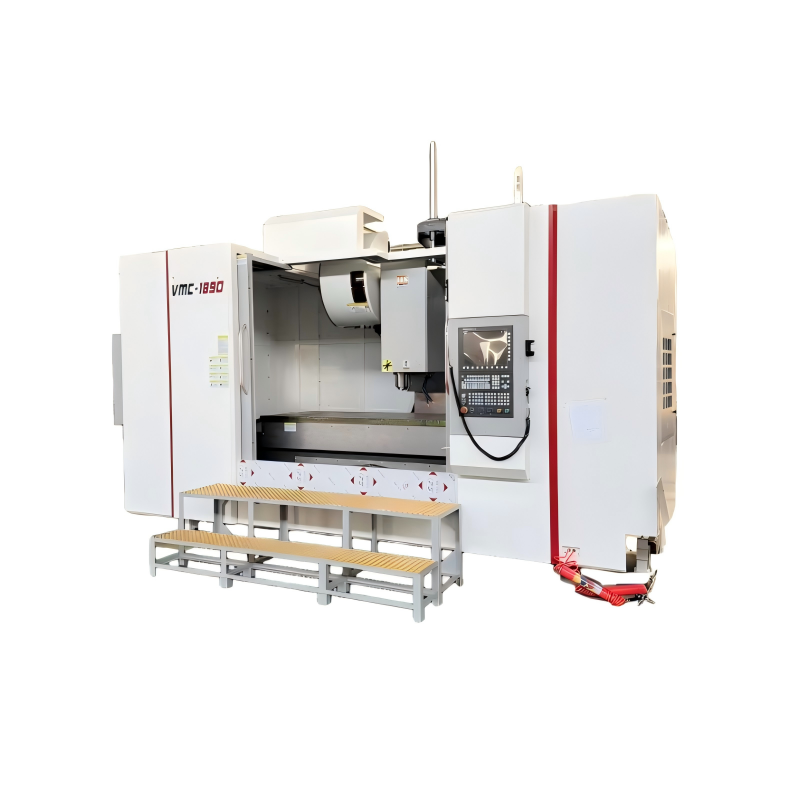
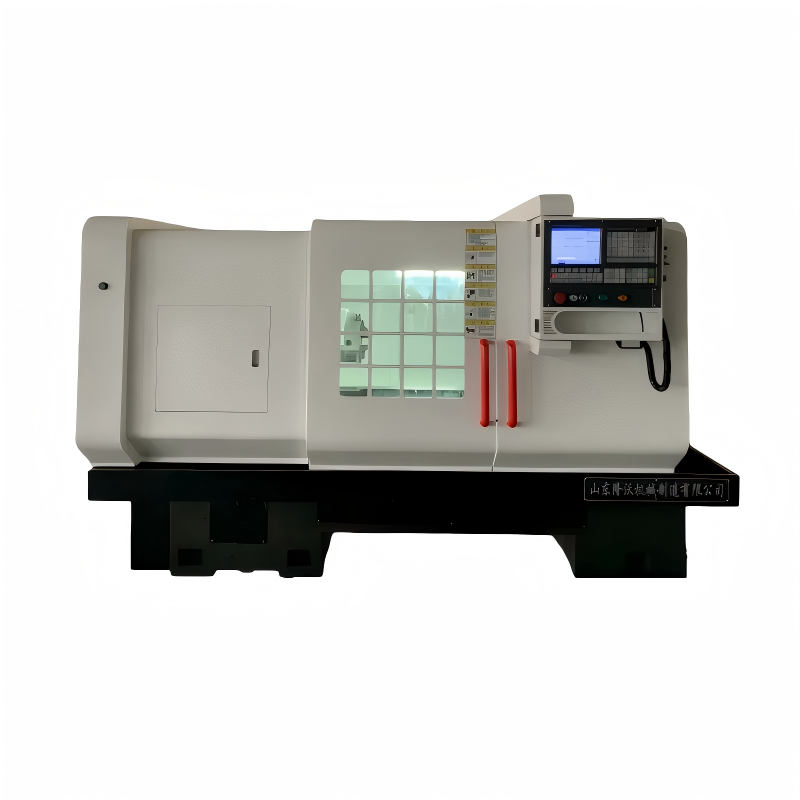
In the world of manufacturing, precision and efficiency are paramount. As technology advances, so do the tools that manufacturers rely on to produce high-quality components. One such tool that stands out for its versatility and accuracy is the Economic 2-Axis CNC Lathe with a flat bed. This type of lathe has become increasingly popular for handling complex projects, offering several advantages over traditional lathes. In this technical report, we will explore the key benefits of using an Economic 2-Axis CNC Lathe with a flat bed for complex manufacturing tasks.
The primary advantage of an Economic 2-Axis CNC Lathe with a flat bed is its ability to deliver enhanced precision and accuracy. Unlike manual lathes, which depend heavily on the skill and experience of the operator, CNC lathes use computer-aided design (CAD) and computer-aided manufacturing (CAM) software to control the cutting process. This digital control allows for extremely precise movements, ensuring that parts are manufactured to exact specifications. The flat bed design further enhances stability, reducing vibrations and maintaining consistent alignment throughout the machining process. This level of precision is particularly crucial in industries such as aerospace, automotive, and medical, where even the slightest deviation can lead to significant consequences.
Moreover, the use of advanced sensors and feedback systems in modern CNC lathes enables real-time monitoring and adjustment of the cutting parameters. This ensures that any deviations from the programmed path are immediately corrected, resulting in highly accurate and repeatable parts. For complex projects that require intricate details and tight tolerances, the Economic 2-Axis CNC Lathe with a flat bed is an indispensable tool.
Another significant benefit of using an Economic 2-Axis CNC Lathe with a flat bed is the substantial increase in productivity and efficiency. Traditional lathes often require frequent setup changes and manual adjustments, which can be time-consuming and labor-intensive. In contrast, CNC lathes can be programmed to perform multiple operations in a single setup, reducing the need for manual intervention and minimizing downtime. The flat bed design also allows for easier loading and unloading of workpieces, further streamlining the production process.
Additionally, the ability to automate the machining process through the use of pre-programmed instructions means that the machine can operate continuously, even outside of regular working hours. This 24/7 operation capability significantly boosts overall production capacity and reduces lead times. For manufacturers dealing with high-volume orders or tight deadlines, the increased productivity and efficiency of an Economic 2-Axis CNC Lathe with a flat bed can be a game-changer.
While the initial investment in an Economic 2-Axis CNC Lathe with a flat bed may be higher than that of a traditional lathe, the long-term cost savings make it a cost-effective solution for many manufacturers. The reduced need for skilled labor, combined with the increased efficiency and productivity, leads to lower operational costs. Additionally, the precision and consistency of CNC lathes result in fewer errors and less material waste, further contributing to cost savings.
Furthermore, the flexibility of CNC lathes allows for quick and easy reprogramming, enabling manufacturers to adapt to changing project requirements without incurring significant additional costs. This adaptability is particularly valuable in industries where product designs frequently evolve or where there is a need for rapid prototyping. By investing in an Economic 2-Axis CNC Lathe with a flat bed, manufacturers can achieve a more cost-effective and flexible manufacturing process.
Quality control is a critical aspect of any manufacturing process, and the Economic 2-Axis CNC Lathe with a flat bed offers several features that enhance quality control. The digital control system ensures that each part is machined to the exact specifications, reducing the likelihood of defects and inconsistencies. The flat bed design also contributes to better surface finish and dimensional accuracy, as it provides a stable platform for the workpiece during the machining process.
Moreover, the integration of quality inspection tools, such as coordinate measuring machines (CMMs) and in-process gauging, allows for real-time monitoring and verification of part dimensions. This immediate feedback loop enables operators to detect and correct any issues before they escalate, ensuring that only high-quality parts are produced. For complex projects that require stringent quality standards, the improved quality control provided by an Economic 2-Axis CNC Lathe with a flat bed is invaluable.
One of the most significant advantages of using an Economic 2-Axis CNC Lathe with a flat bed is its scalability and flexibility. The ability to program and reprogram the machine quickly and easily means that it can handle a wide range of projects, from simple to highly complex. This flexibility is particularly beneficial for manufacturers who need to produce a variety of parts or who frequently switch between different projects.
Additionally, the modular design of many CNC lathes allows for the addition of various accessories and tools, such as live tooling, sub-spindles, and bar feeders. These add-ons can expand the capabilities of the machine, enabling it to perform more complex operations and handle larger workpieces. For manufacturers looking to grow their operations or diversify their product lines, the scalability and flexibility of an Economic 2-Axis CNC Lathe with a flat bed provide a solid foundation for future expansion.
In conclusion, the Economic 2-Axis CNC Lathe with a flat bed offers numerous benefits for manufacturers, especially when it comes to handling complex projects. Its enhanced precision and accuracy, increased productivity and efficiency, cost-effectiveness, improved quality control, and scalability and flexibility make it an essential tool in modern manufacturing. By leveraging the capabilities of this advanced machinery, manufacturers can stay competitive, meet high-quality standards, and efficiently manage their production processes.
 24/06/2026
In the ever-evolving landscape of manufacturing, the quest for higher profit margins is a constant. One effective way to achieve this is through the adoption of advanced yet cost-effective machinery, such as the Economic 2-Axis CNC Lathe. This report will
Read More24/06/2026Investing in an Economic 2-Axis CNC Lathe is a significant step towards enhancing the efficiency and precision of your manufacturing processes. However, to ensure that your investment continues to deliver optimal performance over time, regular maintenance
Read More24/06/2026The landscape of manufacturing has been continuously evolving, driven by advancements in technology and the ever-growing demand for efficiency. One such area that has seen significant progress is the field of 2-Axis CNC (Computer Numerical Control) Lathes
Read More23/06/2026In the rapidly evolving landscape of modern manufacturing, the role of advanced machinery cannot be overstated. Among these, the Economic 2-Axis CNC Lathe stands out as a versatile and efficient solution for various machining needs. This report delves int
Read More23/06/2026The Economic 2-Axis CNC Lathe represents a significant advancement in the field of manufacturing, offering an affordable yet efficient solution for many machining needs. This type of lathe is particularly popular among small to medium-sized enterprises du
Read More23/06/2026Introduction to 2-Axis CNC Lathes in Modern ManufacturingIn the rapidly evolving landscape of precision engineering, the Economic 2-Axis CNC Lathe has emerged as a pivotal tool. These machines are designed to offer high-precision machining capabilities wh
Read More23/06/2026The economic 2-axis CNC lathe is an essential tool for many manufacturing processes, offering precision, efficiency, and cost-effectiveness. This guide aims to provide a comprehensive overview of the key factors to consider when selecting the right econom
Read More22/06/2026In the realm of precision manufacturing, the economic 2-axis CNC lathe stands out as a cost-effective solution for many small to medium-sized enterprises. This report aims to explore how businesses can maximize productivity with an economic 2-axis CNC lat
Read More22/06/2026In today’s competitive manufacturing landscape, small businesses often face the challenge of balancing productivity with cost. One solution that has gained significant traction is the Economic 2-Axis CNC Lathe. This machine offers a blend of efficiency an
Read More22/06/2026Introduction to the Economic 2-Axis CNC Lathe The economic 2-axis CNC lathe has become a cornerstone in modern manufacturing, offering a blend of precision and cost-effectiveness that makes it an attractive option for many industries. This type of lathe i
Read MoreOur professional sales team is always ready to assist you.