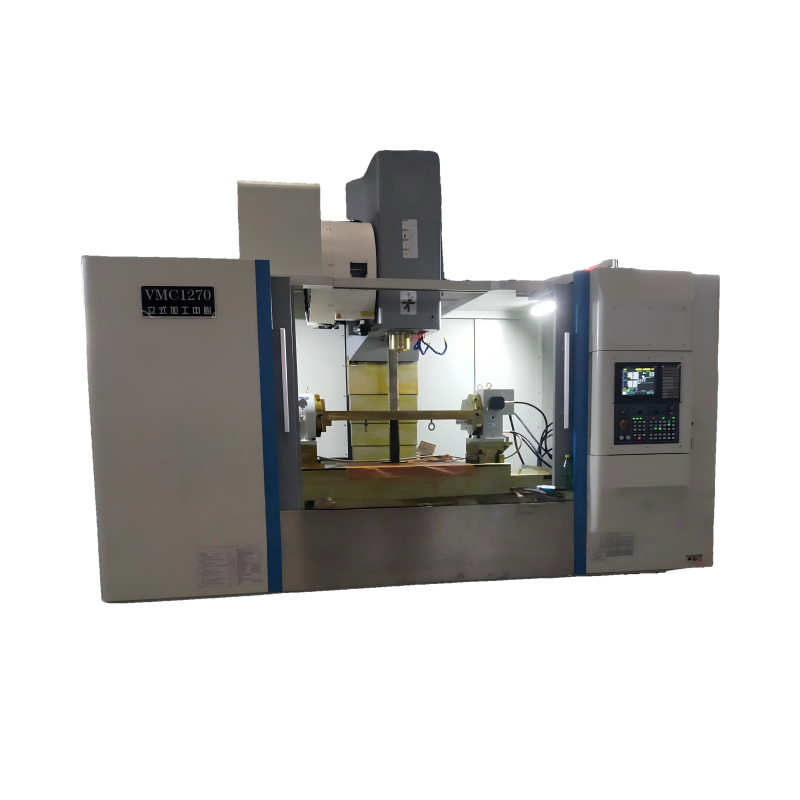
Vertical Machining Centers (VMCs) have become indispensable tools in the manufacturing industry, particularly for the production of complex components. The ability to perform precise and intricate operations on a wide range of materials has made VMCs a preferred choice for many manufacturers. Recent innovations in VMC technology, especially in the X-axis and Z-axis Movement, have further enhanced their capabilities, enabling more efficient and accurate production processes.
Enhanced Precision through Improved X-axis and Z-axis Movement
The X-axis and Z-axis movement in Vertical Machining Centers play a critical role in determining the precision and accuracy of the final product. In traditional VMCs, the X-axis typically controls the horizontal movement of the worktable, while the Z-axis is responsible for the vertical movement of the spindle. However, recent advancements have introduced new mechanisms and technologies that significantly improve the performance of these axes.
One such innovation is the use of linear motors for the X-axis and Z-axis. Linear motors offer several advantages over conventional ball screws, including higher acceleration and deceleration rates, reduced wear and tear, and improved positioning accuracy. This results in faster and more precise movements, which are essential for producing complex components with tight tolerances.
Another significant improvement is the integration of advanced feedback systems, such as laser interferometers and encoders, which provide real-time data on the position and speed of the axes. These systems enable the VMC to make instantaneous adjustments, ensuring that the tool path remains within the specified tolerances. This level of precision is particularly important in industries such as aerospace and medical devices, where even the slightest deviation can lead to catastrophic failures.
Increased Flexibility and Versatility in Complex Component Production
The flexibility and versatility of vertical machining centers have been greatly enhanced by the improvements in X-axis and Z-axis movement. Modern VMCs are now capable of performing a wide range of operations, from simple milling and drilling to more complex tasks such as contouring, pocketing, and engraving. This increased versatility allows manufacturers to produce a variety of components using a single machine, reducing the need for multiple setups and improving overall efficiency.
One of the key features that contribute to this flexibility is the ability to perform simultaneous multi-axis operations. For example, a VMC with a rotating table or a tilting head can combine X-axis and Z-axis movements with rotational movements, allowing for the machining of complex geometries in a single setup. This not only reduces the production time but also improves the quality of the finished product by minimizing the potential for errors that can occur during multiple setups.
Additionally, the integration of advanced software and control systems has further enhanced the flexibility of VMCs. Computer-aided design (CAD) and computer-aided manufacturing (CAM) software allow for the creation of highly detailed and precise tool paths, which can be easily programmed into the VMC. This enables manufacturers to quickly adapt to changes in design and production requirements, making the VMC a highly versatile tool for complex component production.
Improved Efficiency and Productivity through Advanced Automation
Advancements in X-axis and Z-axis movement have also led to significant improvements in the efficiency and productivity of vertical machining centers. Automation plays a crucial role in achieving these gains, as it allows for continuous operation with minimal human intervention. Automated features such as tool changers, pallet changers, and robotic loading and unloading systems have become standard in modern VMCs, enabling them to operate 24/7 with high reliability and consistency.
Tool changers, for instance, allow for the rapid and automatic replacement of cutting tools, reducing the downtime between operations and increasing the overall throughput. Pallet changers, on the other hand, enable the VMC to switch between different workpieces without interrupting the machining process, further enhancing productivity. Robotic loading and unloading systems can handle the transfer of workpieces in and out of the VMC, eliminating the need for manual intervention and reducing the risk of operator error.
Furthermore, the integration of advanced monitoring and diagnostic systems has enabled VMCs to operate more efficiently and with greater uptime. These systems can detect and diagnose issues such as tool wear, mechanical failures, and deviations in the machining process, allowing for proactive maintenance and minimizing unplanned downtime. By continuously monitoring the performance of the X-axis and Z-axis, these systems ensure that the VMC operates at optimal levels, maximizing productivity and reducing operational costs.
Conclusion
In conclusion, the innovations in X-axis and Z-axis movement have significantly enhanced the capabilities of vertical machining centers, making them more precise, flexible, and efficient. These advancements have not only improved the quality of the final products but also increased the productivity and versatility of the manufacturing process. As the demand for complex and high-precision components continues to grow, the ongoing development of VMC technology will play a crucial role in meeting these challenges and driving the future of manufacturing.
 30/06/2026



