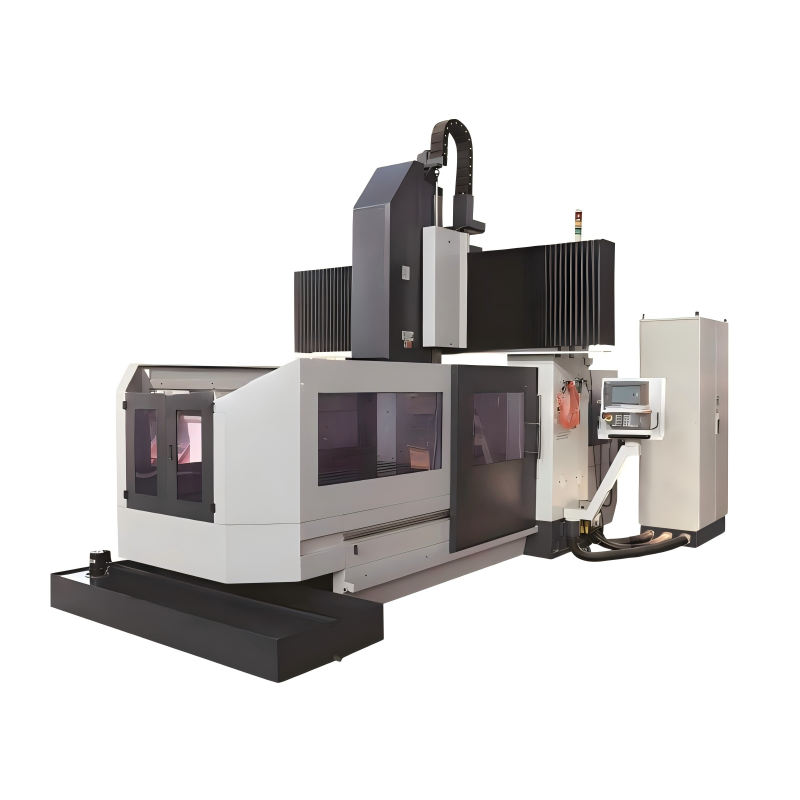
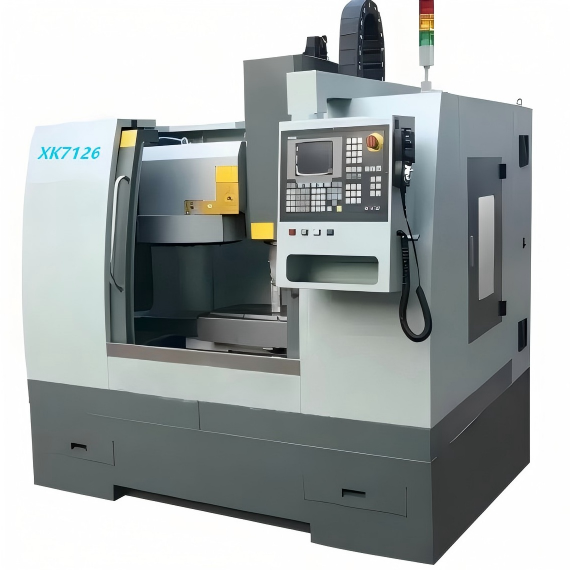
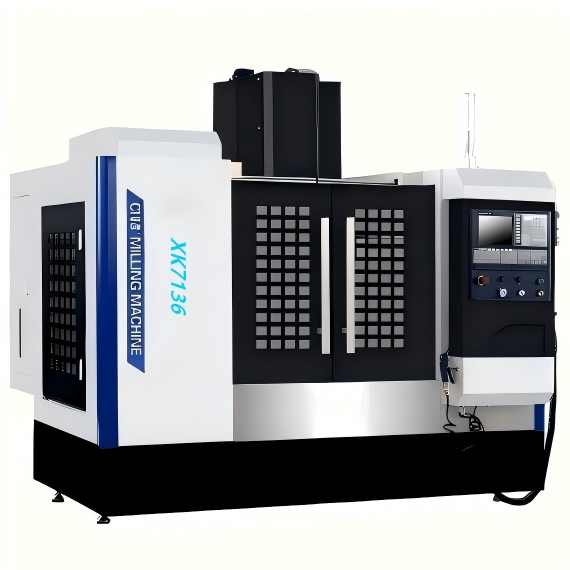
In today’s highly competitive manufacturing industry, precision is not just a desirable trait but a necessity. The ability to produce components with high accuracy and repeatability can significantly impact the quality, efficiency, and cost-effectiveness of a business. This principle applies across various sectors, from automotive to aerospace, where even the slightest deviation can lead to catastrophic failures. When investing in a Box Way VMC (Vertical Machining Center) machine, it's crucial to prioritize precision capabilities. A China precision lathe, for instance, exemplifies the level of accuracy that modern manufacturing demands, offering tight tolerances and superior surface finishes.
One of the key considerations when selecting a Box Way VMC machine is its stability and rigidity. These attributes are essential for maintaining the precision and accuracy of the machining process. Box way designs, as opposed to linear ways, offer enhanced stiffness and damping characteristics, which are critical for heavy-duty cutting operations. The rigid structure of a box way VMC ensures that the machine can handle high loads without deflection, leading to consistent and reliable performance. For businesses looking to invest in such machinery, it is important to evaluate the construction materials, design, and overall build quality to ensure long-term durability and reliability.
Modern Box Way VMC machines are equipped with advanced control systems that play a pivotal role in enhancing their performance. These control systems, often featuring CNC (Computer Numerical Control) technology, provide precise and automated control over the machining process. The integration of CNC allows for the execution of complex and intricate machining tasks with high accuracy and speed. Additionally, these systems offer real-time monitoring and feedback, enabling operators to make adjustments on the fly and optimize the machining parameters. When considering a Box Way VMC, it is essential to assess the capabilities and user-friendliness of the control system, as it directly impacts the machine's overall efficiency and productivity.
Versatility and adaptability are critical factors when investing in a Box Way VMC machine. The ability to handle a wide range of materials, from metals to composites, and to perform various machining operations, such as milling, drilling, and tapping, can significantly enhance the machine's value. A versatile VMC can help businesses reduce the need for multiple specialized machines, thereby saving on costs and floor space. Moreover, the adaptability of the machine to different workpiece sizes and configurations is equally important. Features such as automatic tool changers, multi-axis capabilities, and modular fixtures can greatly enhance the machine's flexibility, making it a valuable asset for any manufacturing operation.
Investing in a Box Way VMC machine is a significant commitment, and ensuring its long-term reliability is paramount. Regular maintenance and timely support are crucial for keeping the machine in optimal condition and minimizing downtime. When evaluating different VMC options, it is essential to consider the availability of spare parts, the ease of maintenance, and the responsiveness of the manufacturer's support services. A well-maintained machine not only extends its lifespan but also ensures consistent performance and productivity. Additionally, training programs and technical documentation provided by the manufacturer can empower operators to effectively manage and troubleshoot the machine, further enhancing its operational efficiency.
 26/06/2026
Understanding the Advantages of Slant Bed Lathes in Precision MachiningIn the world of precision machining, where accuracy and repeatability are paramount, the choice of machine tool can significantly impact both the quality of the final product and the e
Read More19/06/2026In the realm of advanced manufacturing, precision and speed are not just desirable; they are essential. The integration of high-speed linear motion control systems into China precision lathe operations has opened up new possibilities for achieving superio
Read More18/06/2026With the rapid advancement in manufacturing technology, precision lathes have become an indispensable tool for many workshops. The CK6136, a China precision lathe, stands out as a versatile and efficient machine that can significantly enhance the producti
Read More17/06/2026China precision lathe has become an indispensable tool in the automotive parts production industry, offering numerous advantages that contribute to enhanced efficiency, cost-effectiveness, and product quality. This report delves into the specific benefits
Read More15/06/2026In the realm of modern manufacturing, precision engineering plays a pivotal role in ensuring that products meet the highest standards of quality and performance. One tool that stands out in this context is the China precision lathe. This article delves in
Read More14/06/2026Understanding the Core Capabilities of China Precision LatheThe China precision lathe has become a cornerstone in modern manufacturing, especially for operations that require high-precision machining. This section will delve into what makes these lathes s
Read More10/06/2026China precision lathes are essential tools in the manufacturing industry, providing high-precision machining capabilities. To ensure optimal performance and longevity, it is crucial to follow expert tips for maintaining and operating these machines. This
Read More08/06/2026IntroductionIn today's rapidly evolving manufacturing landscape, the demand for high-precision machining solutions has never been greater. Among the various tools and technologies available, the China precision lathe stands out as a versatile and reliable
Read More07/06/2026China precision lathes have become increasingly popular in the global manufacturing industry due to their high accuracy, reliability, and cost-effectiveness. This technical report aims to provide an in-depth understanding of the key features that make Chi
Read More06/06/2026In the realm of manufacturing, precision lathes have long been a cornerstone for producing high-accuracy components. The evolution of China precision lathe technology has not only kept pace with global advancements but, in many cases, has led the way. Thi
Read More05/06/2026China, a leading global manufacturer of industrial machinery, has significantly contributed to the advancement of precision engineering through its high-quality China precision lathe products. These lathes are not only cost-effective but also highly relia
Read More05/06/2026China precision lathe technology, particularly in the realm of Computer Numerical Control (CNC) lathes, has been rapidly advancing and transforming the global manufacturing landscape. This technical report delves into how CNC lathe machines from China are
Read More05/06/2026As the global manufacturing landscape continues to evolve, China has emerged as a key player in the precision machining industry, with its CNC lathe machines gaining recognition for their advanced features and competitive pricing. This report explores the
Read More05/06/2026With the rapid advancement of manufacturing technology, vertical machine centers have become indispensable in transforming industrial production. This report delves into how these machines, along with precision tools like China precision lathe, are revolu
Read More05/06/2026Understanding the Importance of Precision in MachiningIn the world of manufacturing, precision is not just a preference but a necessity. China precision lathe machines have become increasingly popular due to their ability to produce parts with high accura
Read More04/06/2026The Evolution of China Precision Lathe in the Global MarketOver the past few decades, China precision lathe has emerged as a formidable force in the global machining industry. This transformation is not just a story of rapid industrialization but also one
Read More03/06/2026In the realm of modern manufacturing, precision is not just a preference but an absolute necessity. The advent and evolution of China precision lathe technologies have significantly contributed to this quest for perfection, enhancing industrial efficiency
Read More02/06/2026In the realm of modern manufacturing, precision is not just a desirable trait but an absolute necessity. This has led to the rise in popularity and demand for high-quality machinery such as the China precision lathe. These machines are known for their abi
Read More02/06/2026In the realm of modern manufacturing, the role of CNC lathe machine China has become increasingly significant. This article delves into the advantages that these machines bring to the table, highlighting their impact on productivity, precision, and overal
Read MoreOur professional sales team is always ready to assist you.