In the realm of high-precision engineering, the role of a 2-axis Slant Bed CNC lathe is pivotal. This machinery, designed to facilitate precise X-axis and Z-axis Movement, offers unparalleled accuracy and efficiency in manufacturing processes. The following sections will delve into the specifics of how this technology contributes to the field, focusing on its operational principles, advantages over traditional methods, and the impact it has on modern industrial applications.
Understanding the Mechanics Behind 2-Axis Slant Bed CNC Lathes
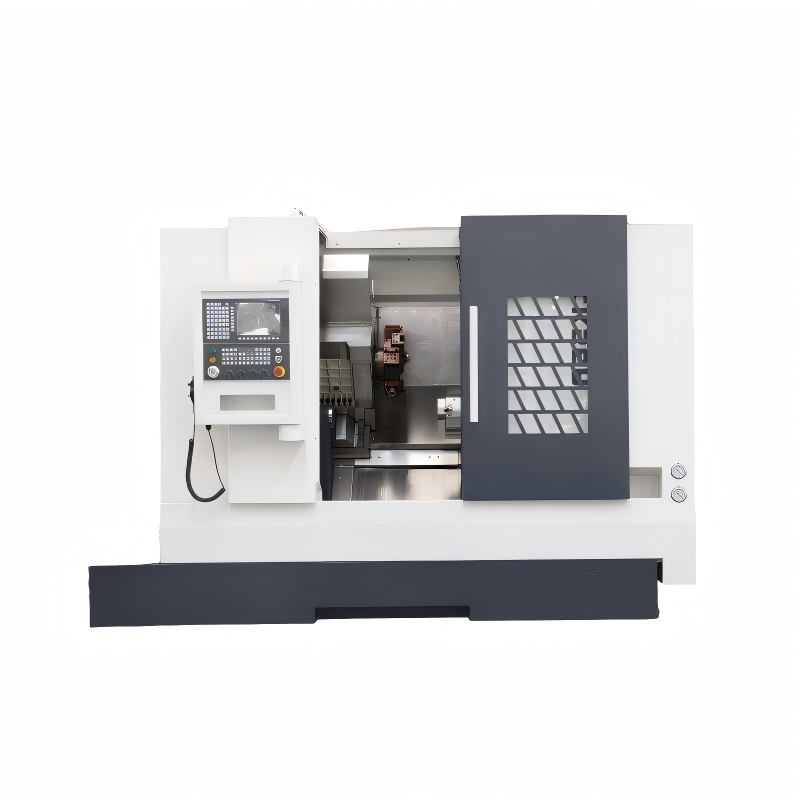
The fundamental principle behind the operation of a 2-axis slant bed CNC (Computer Numerical Control) lathe lies in its ability to move along two primary axes: the X-axis, which controls the cross-slide motion, and the Z-axis, responsible for the longitudinal travel. This dual-axis capability allows for intricate shaping and turning operations with high precision. Unlike conventional lathes, where manual adjustments are often required, a CNC system automates these movements through pre-programmed instructions, ensuring consistency and reducing human error. The slanted bed design further enhances stability and chip disposal, making it an ideal choice for high-accuracy work.
Advantages Over Traditional Lathes in High-Precision Engineering
One of the most significant benefits of using a 2-axis slant bed CNC Lathe in high-precision engineering is its enhanced level of accuracy. By eliminating the need for manual intervention, the CNC system can achieve tolerances that would be nearly impossible to replicate consistently by hand. Additionally, the integration of advanced software enables complex geometries to be machined with ease, expanding the range of possible designs. Another advantage is the increased productivity; once programmed, a CNC lathe can operate continuously without breaks, significantly speeding up production times while maintaining quality standards. Furthermore, the adaptability of CNC systems means they can be quickly reprogrammed to handle different parts or modifications, offering flexibility in manufacturing environments.
Impact on Modern Industrial Applications
The adoption of 2-axis Slant Bed CNC Lathes has had a profound effect on various industries, from aerospace to medical device manufacturing. In aerospace, for instance, components must meet stringent safety and performance criteria. A CNC lathe's ability to produce parts with tight tolerances ensures that these requirements are met, contributing to safer and more reliable aircraft. Similarly, in the medical sector, where precision is crucial for the functionality of devices like surgical instruments, the use of CNC lathes guarantees that each piece meets exact specifications, enhancing patient outcomes. Beyond these sectors, any industry requiring high-precision machining stands to benefit from the capabilities of 2-Axis Slant Bed CNC Lathes, as they enable the creation of complex, high-quality products at scale.
To conclude, the 2-axis slant bed CNC lathe represents a significant advancement in the field of high-precision engineering. Its capacity for accurate X-axis and Z-axis movement, combined with the automation and flexibility provided by CNC technology, makes it an indispensable tool for modern manufacturers. As industries continue to demand higher levels of precision and efficiency, the importance of such machines will only grow, driving innovation and excellence across the board.

 29/06/2026



