The turning hard rail CNC lathe is a highly specialized piece of machinery that combines the precision and flexibility of computer numerical control (CNC) with the robustness of a hard rail system. This article delves into the mechanics behind such a lathe, exploring its components, operational principles, and the advantages it offers over traditional lathes.
Understanding the Components of a Turning Hard Rail CNC Lathe
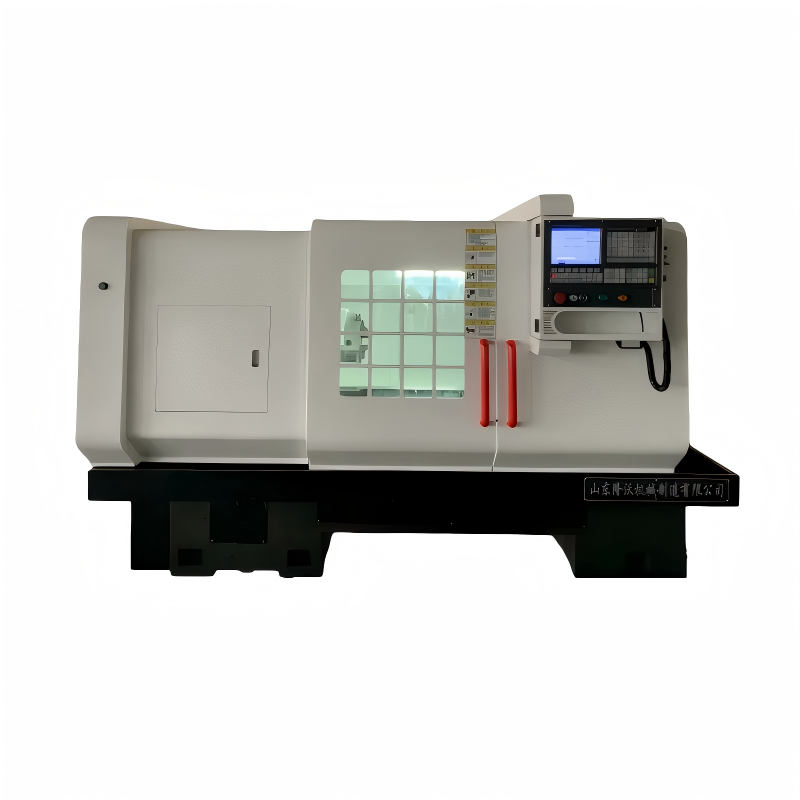
A Turning Hard Rail CNC Lathe is composed of several key parts, each playing a crucial role in its functionality. The bed, which forms the foundation, is typically made from high-quality cast iron or steel, providing stability and reducing vibrations during operation. The hard rails, mounted on the bed, are designed to support the carriage and ensure smooth, accurate movement. These rails are often made from hardened and ground steel, offering excellent wear resistance and longevity. The spindle, responsible for rotating the workpiece, is powered by an electric motor and can achieve high speeds while maintaining precision. Additionally, the tool turret, which holds various cutting tools, can be programmed to change tools automatically, enhancing the lathe's versatility and efficiency. The control system, at the heart of the CNC lathe, uses software to translate digital designs into precise movements, ensuring that the final product meets the specified dimensions and tolerances.
Operational Principles and Precision Control
The operational principles of a turning hard rail CNC lathe are based on the integration of mechanical and electronic systems. The process begins with the creation of a digital design, which is then loaded into the CNC controller. The controller interprets this design and sends signals to the servo motors, which drive the linear and rotational movements of the lathe. The hard rails play a critical role in this process, as they provide a stable and rigid platform for the carriage, minimizing deflection and ensuring that the cutting tool follows the intended path with high accuracy. The use of ball screws and linear guides further enhances the precision of the lathe, allowing for fine adjustments and consistent performance. Feedback systems, such as encoders, continuously monitor the position and speed of the moving parts, making real-time corrections to maintain the desired level of precision. This combination of advanced mechanical components and sophisticated control systems results in a machine capable of producing complex and highly accurate parts with minimal human intervention.
Advantages of Using a Turning Hard Rail CNC Lathe
One of the primary advantages of a turning hard rail CNC lathe is its ability to produce parts with exceptional accuracy and repeatability. The hard rail system provides a stable and rigid platform, which minimizes vibrations and deflections, leading to more precise cuts. This is particularly beneficial in industries where tight tolerances and high-quality finishes are essential, such as aerospace, automotive, and medical device manufacturing. Another advantage is the increased productivity and efficiency. The CNC system allows for the automation of the machining process, reducing the need for manual intervention and enabling the production of large quantities of parts with consistent quality. The ability to program the lathe to perform multiple operations in a single setup also saves time and reduces the risk of errors. Additionally, the turning hard rail CNC lathe is highly versatile, capable of handling a wide range of materials and part geometries. This makes it a valuable asset in any manufacturing environment, as it can adapt to changing production requirements and support the development of new products. Finally, the use of advanced software and control systems in these lathes enables the optimization of machining parameters, leading to improved tool life, reduced material waste, and lower operating costs. Overall, the turning hard rail CNC lathe represents a significant advancement in machining technology, offering a combination of precision, efficiency, and versatility that is unmatched by traditional lathes.
In conclusion, the turning hard rail CNC lathe is a powerful and versatile machine that leverages the strengths of both CNC technology and a robust hard rail system. By understanding its components, operational principles, and the advantages it offers, manufacturers can make informed decisions about integrating this technology into their production processes. The turning hard rail CNC lathe not only enhances the precision and quality of the parts produced but also improves overall productivity and efficiency, making it an indispensable tool in modern manufacturing.
 10/06/2026



