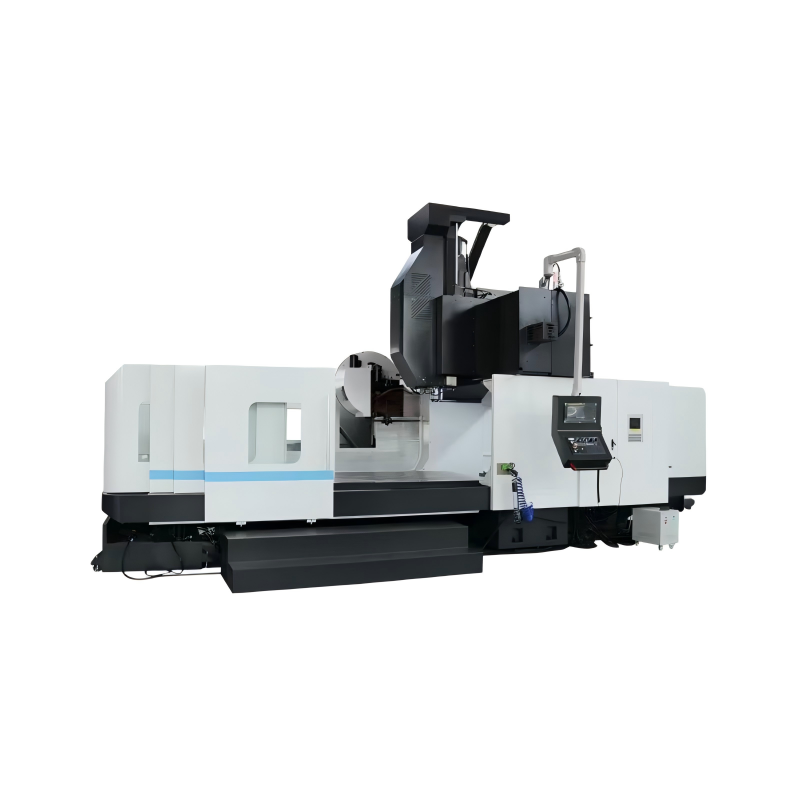
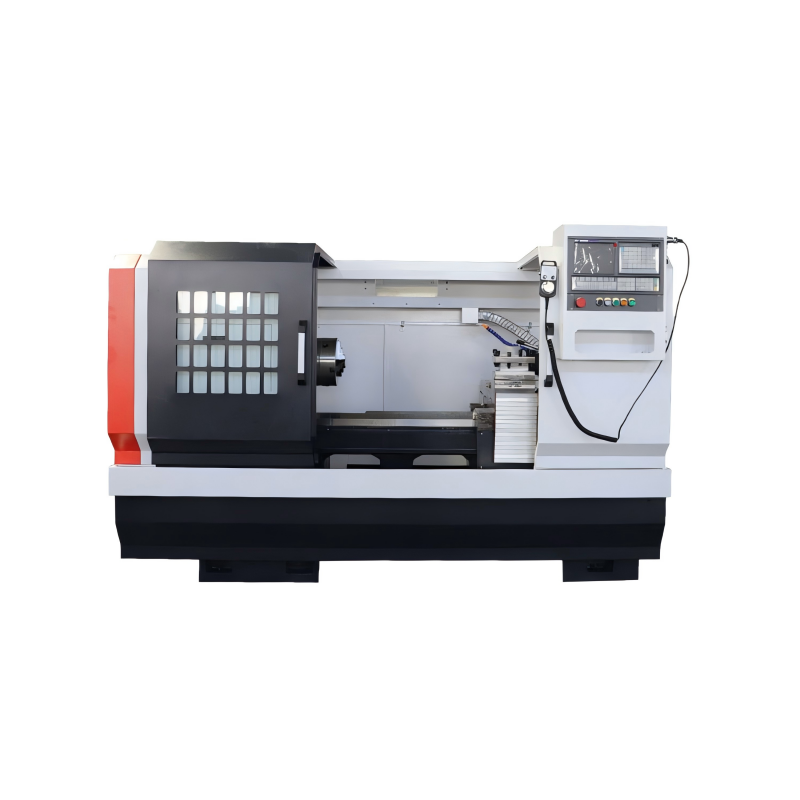
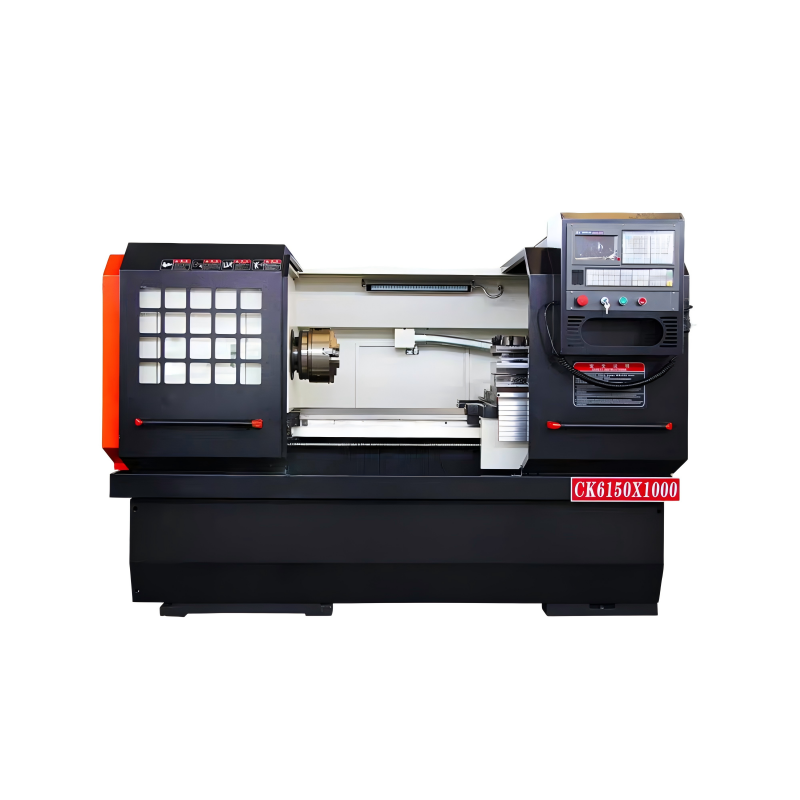
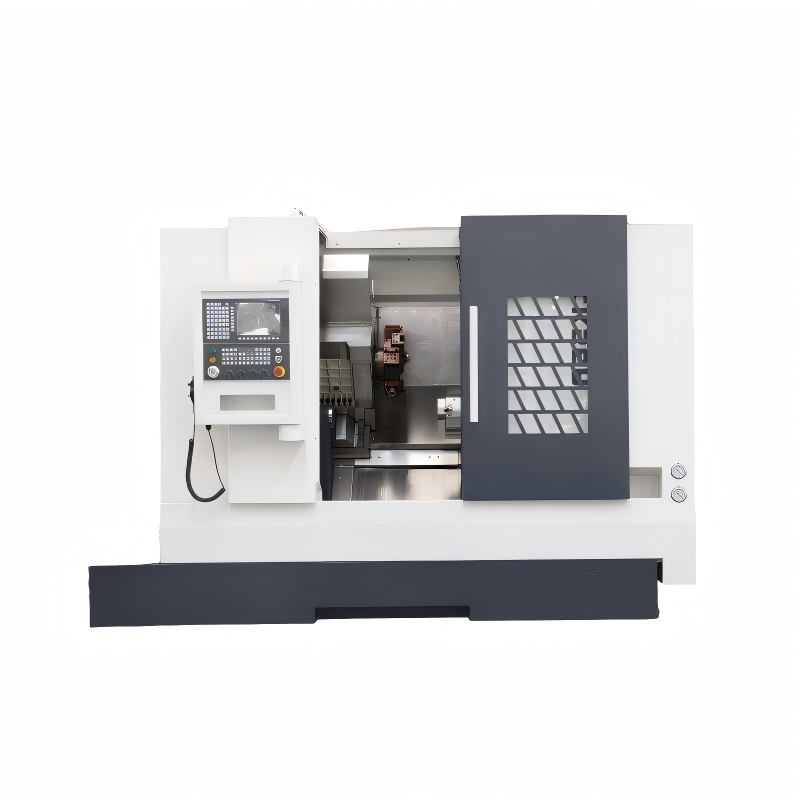
In the ever-evolving landscape of manufacturing, the integration of advanced CNC (Computer Numerical Control) technology has opened up a new world of possibilities for workshops and small-scale operations. One of the key players in this transformation is the Small VMC (Vertical Machining Center), which has become an indispensable tool for precision machining. This report will explore how these compact yet powerful machines are revolutionizing the workshop environment, enhancing productivity, and enabling more complex and precise manufacturing processes.
The adoption of a Small VMC for Workshop applications is primarily driven by the need for higher precision and accuracy. These machines are equipped with advanced CNC controls that allow for micron-level tolerances, ensuring that parts are machined to exact specifications. The use of high-resolution encoders and servo motors enables smooth and accurate movements, reducing the margin of error significantly. Additionally, the rigid construction of the machine, often featuring a monoblock design, minimizes vibrations and thermal expansion, further enhancing the overall precision of the machining process.
Moreover, modern Small VMCs come with integrated probing systems that can measure and verify part dimensions in real-time. This feature not only ensures consistent quality but also allows for immediate adjustments, reducing the likelihood of rework and scrap. The ability to achieve such high levels of precision is particularly valuable in industries where tight tolerances are critical, such as aerospace, medical devices, and automotive components.
One of the most significant advantages of incorporating a Small VMC into a workshop is the substantial increase in productivity and efficiency. These machines are designed to handle a wide range of materials, from aluminum and steel to more exotic alloys, making them versatile tools for various applications. The high-speed spindles, typically ranging from 10,000 to 20,000 RPM, enable rapid material removal rates, reducing cycle times and increasing throughput.
Furthermore, many Small VMCs are equipped with automatic tool changers (ATCs) and pallet changers, which minimize downtime between operations. The ATC system allows for the quick and seamless exchange of cutting tools, while the pallet changer enables continuous operation by loading and unloading workpieces automatically. This automation not only speeds up the machining process but also reduces the dependency on manual labor, leading to a more efficient and cost-effective workflow.
Additionally, the integration of advanced software, such as CAM (Computer-Aided Manufacturing) and simulation tools, allows for the optimization of tool paths and cutting strategies. This software can predict and mitigate potential issues before they occur, ensuring a smoother and more efficient machining process. The ability to program and simulate operations offline also frees up the machine for actual production, further boosting productivity.
The introduction of a Small VMC for Workshop environments has expanded the capabilities and flexibility of small-scale manufacturing operations. These machines are capable of performing a variety of operations, including milling, drilling, tapping, and even 4th and 5th-axis machining. This versatility allows workshops to take on a broader range of projects and meet the diverse needs of their clients.
For instance, the 4th and 5th-axis capabilities of some Small VMCs enable the machining of complex geometries and multi-sided parts in a single setup. This not only saves time and reduces the risk of errors associated with multiple setups but also opens up new opportunities for creating intricate and highly detailed components. The ability to produce such complex parts in-house can be a significant competitive advantage, allowing workshops to differentiate themselves and attract more specialized and high-value projects.
Moreover, the modular design of many Small VMCs allows for easy customization and upgrades. Workshops can add additional features and accessories, such as coolant systems, chip conveyors, and different types of tooling, to tailor the machine to their specific requirements. This flexibility ensures that the machine remains a valuable asset as the workshop's needs evolve over time.
Safety and ergonomics are crucial considerations in any manufacturing environment, and the Small VMC for Workshop applications excels in both areas. These machines are designed with robust safety features, such as enclosed work areas, interlocked doors, and emergency stop buttons, to protect operators from flying debris and other hazards. The enclosed design also helps to contain noise and dust, creating a more comfortable and safer working environment.
Ergonomically, Small VMCs are designed to be user-friendly and accessible. The control panels are often positioned at a comfortable height and angle, and the machine interfaces are intuitive and easy to navigate. This design consideration reduces operator fatigue and the risk of repetitive strain injuries, contributing to a healthier and more productive workforce.
Additionally, many Small VMCs are equipped with advanced monitoring and diagnostic systems that provide real-time feedback on the machine's performance and condition. This data can be used to identify and address potential issues before they lead to downtime or safety concerns. Regular maintenance and diagnostics also extend the lifespan of the machine, ensuring that it remains a reliable and safe tool for years to come.
The integration of a Small VMC for Workshop applications is a transformative step that unlocks new possibilities in precision machining, productivity, and flexibility. By enhancing precision and accuracy, increasing productivity and efficiency, expanding capabilities and flexibility, and improving safety and ergonomics, these machines are reshaping the way small-scale operations approach manufacturing. As the technology continues to advance, the role of Small VMCs in the workshop will only become more significant, driving innovation and growth in the industry.
 25/06/2026
As the manufacturing industry continues to evolve, the demand for efficient and versatile machining solutions has never been greater. In this context, the integration of large workpiece turning equipment from China, alongside compact yet powerful machines
Read More23/06/2026As the manufacturing sector continues to evolve, the demand for more efficient and versatile machinery has never been higher. One such piece of equipment that stands out in this regard is the Small VMC for Workshop, which, when combined with fully automat
Read More23/06/2026As the landscape of manufacturing and prototyping continues to evolve, the demand for versatile, compact, and efficient machining solutions has grown significantly. One such solution that stands out in this context is the Small VMC (Vertical Machining Cen
Read More23/06/2026In the rapidly evolving world of precision engineering, the introduction of a Small VMC for Workshop has emerged as a transformative solution, offering unparalleled flexibility and efficiency. This report delves into the impact of such machinery on small-
Read More22/06/2026Vertical Machine Centers (VMCs) have emerged as a pivotal tool in the modern manufacturing landscape, particularly for workshops that require high precision and flexibility. This report explores how small VMCs are shaping the future of precision machining
Read More22/06/2026In the realm of precision manufacturing, the integration of advanced machinery such as Small VMC for Workshop and CNC lathes is pivotal. These machines not only enhance productivity but also ensure high-quality output. One of the key factors that contribu
Read More22/06/2026In the evolving landscape of workshop technologies, one innovation stands out for its potential to revolutionize small-scale manufacturing and prototyping: the Small VMC (Vertical Machining Center). This technology is not just a step forward but a leap to
Read More22/06/2026In the modern workshop, efficiency and versatility are key. A small VMC (Vertical Machining Center) can significantly enhance these aspects by providing a compact yet powerful solution for various machining tasks. This report delves into how customizing y
Read More22/06/2026When it comes to equipping a modern workshop with the right tools, one piece of machinery that stands out for its versatility and precision is the Small VMC (Vertical Machining Center). These compact yet powerful machines have become indispensable in vari
Read More21/06/2026In the realm of modern manufacturing, the integration of advanced machinery is key to achieving high-quality output and efficient production processes. One such piece of equipment that has gained significant attention in workshops across various industrie
Read More21/06/2026In the ever-evolving landscape of modern manufacturing, the integration of advanced machinery is crucial for maintaining a competitive edge. One such piece of equipment that has gained significant traction in small to medium-sized workshops is the Small V
Read More21/06/2026When it comes to outfitting a workshop with the right machinery, choosing a Small VMC (Vertical Machining Center) is a critical decision. These machines are not only versatile but also essential for precision work in various industries, from automotive pa
Read More20/06/2026Exploring the Versatility of a Small VMC for Workshop EnvironmentsIn the realm of hobbyist machining, the small VMC (Vertical Machining Center) has emerged as an indispensable tool. This section delves into the versatility offered by such machines, making
Read More20/06/2026In the contemporary landscape of manufacturing and prototyping, workshops are increasingly becoming hubs of innovation and efficiency. A key enabler in this transformation is the introduction of advanced machinery, with the Small VMC (Vertical Machining C
Read More20/06/2026In the world of modern workshops, precision and efficiency are paramount. The integration of advanced machinery has become a critical factor in achieving these goals. One such piece of equipment that stands out for its versatility and capability is the Sm
Read More19/06/2026In the realm of manufacturing and small-scale production, the integration of a Small VMC (Vertical Machining Center) into a workshop can significantly boost productivity. This report delves into the practical aspects and strategic approaches for enhancing
Read More19/06/2026IntroductionThe integration of a Small VMC (Vertical Machining Center) into your personal workshop can significantly elevate the quality and efficiency of your projects. This guide aims to provide an in-depth look at setting up a Small VMC, ensuring it is
Read More19/06/2026In the realm of precision machining, the choice of machinery plays a pivotal role in determining both the quality and efficiency of the final product. A Small VMC for Workshop, or Vertical Machining Center, is an increasingly popular option due to its ver
Read More18/06/2026In today’s fast-paced manufacturing environment, the need for efficient and versatile machinery is more critical than ever. One such piece of equipment that has gained significant popularity among small to medium-sized workshops is the Small VMC (Vertical
Read More18/06/2026In the world of machining, choosing the right small VMC (Vertical Machining Center) for your workshop is a decision that can significantly impact productivity and efficiency. This article will guide you through the key considerations and steps to ensure y
Read More18/06/2026In the realm of home workshops, having the right tools can make all the difference. One such tool that has gained significant attention is the Small VMC (Vertical Machining Center). This article explores the benefits of integrating a Small VMC into your h
Read MoreOur professional sales team is always ready to assist you.