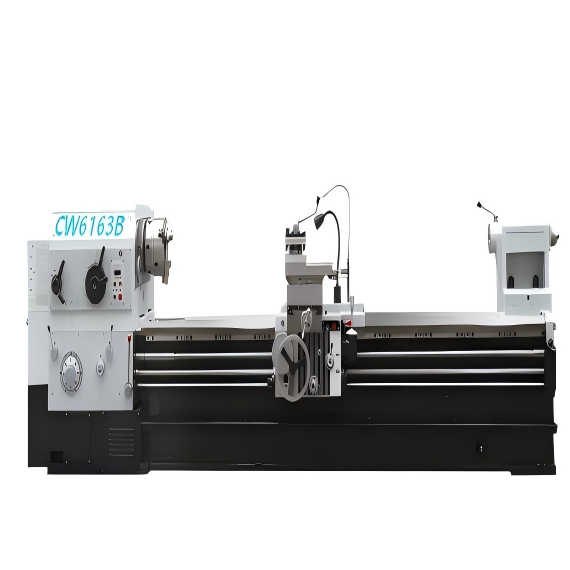
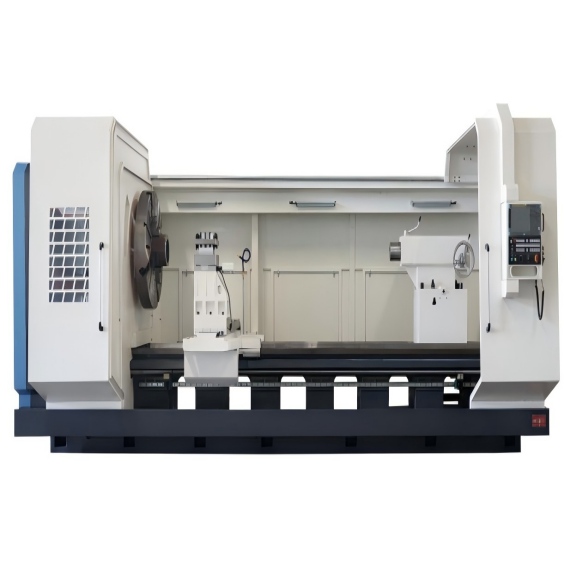
The evolution of manufacturing technologies has led to the development of increasingly sophisticated machinery, with the Horizontal 2-Axis CNC Lathe standing out as a critical tool in modern production. This comprehensive guide aims to provide an in-depth understanding of 2 Axis CNC Lathe technology, exploring its principles, applications, and the benefits it offers over traditional lathes.
Understanding the Basics of 2 Axis CNC Lathes
A 2 Axis CNC Lathe is a machine designed for the precise machining of parts through automated control. The 'CNC' stands for Computer Numerical Control, indicating that the lathe's operations are directed by a computer program. Unlike manual lathes, which require direct human manipulation, CNC lathes follow a pre-programmed set of instructions, ensuring high accuracy and repeatability in every operation. In a Horizontal 2-Axis CNC Lathe, the workpiece rotates around a central axis while the cutting tool moves along two axes: X (horizontal) and Z (vertical). This configuration allows for the creation of complex geometries and shapes, making it ideal for industries requiring high precision, such as automotive, aerospace, and medical device manufacturing.
Key Features and Advantages of 2 Axis CNC Lathes
The adoption of 2 Axis CNC Lathes in industrial settings can be attributed to several key features and advantages they offer. Firstly, these machines significantly enhance productivity due to their ability to operate continuously without the need for frequent operator intervention. Automation reduces the likelihood of human error, leading to higher quality products. Secondly, the precision and consistency achievable with 2 Axis CNC Lathes make them indispensable for tasks requiring tight tolerances. Additionally, these lathes support a wide range of materials, from metals like aluminum and steel to plastics and composites, broadening their application across various sectors. Finally, the integration of advanced software and user-friendly interfaces makes programming and setup relatively straightforward, even for those with limited experience in CNC technology.
Applications Across Industries
The versatility and efficiency of 2 Axis CNC Lathes have made them a preferred choice in multiple industries. In the automotive sector, they are used to manufacture engine components, shafts, and other critical parts that demand high precision and durability. Aerospace manufacturers rely on these lathes for producing turbine blades, landing gear components, and other structural elements, where material strength and dimensional accuracy are paramount. Furthermore, in the medical industry, 2 Axis CNC Lathes play a crucial role in fabricating surgical instruments, implants, and prosthetics, contributing to advancements in patient care and treatment. Their adaptability also extends to the production of custom parts for consumer goods, electronics, and more, highlighting their significance in today's diversified manufacturing landscape.
Challenges and Considerations in Implementing 2 Axis CNC Lathes
While 2 Axis CNC Lathes offer numerous benefits, there are also challenges and considerations that must be addressed during implementation. One major challenge is the initial investment cost, which includes not only the purchase of the machine but also the associated software, training, and maintenance. Businesses must carefully evaluate the return on investment (ROI) and ensure that the increased productivity and quality justify the expenses. Another consideration is the learning curve for operators. Although modern CNC lathes are designed to be user-friendly, mastering the programming and operation still requires time and effort. Companies should invest in comprehensive training programs to fully leverage the capabilities of these machines. Lastly, ongoing maintenance and regular updates to both hardware and software are essential to keep the lathe running smoothly and efficiently, avoiding downtime and potential production delays.
Future Trends and Innovations in 2 Axis CNC Lathe Technology
As technology continues to advance, so too does the functionality and performance of 2 Axis CNC Lathes. Future trends in this field include the integration of artificial intelligence (AI) and machine learning (ML) to optimize machining processes, reduce waste, and improve overall efficiency. These technologies can analyze data in real-time, adjusting parameters to achieve the best possible results. Additionally, the use of additive manufacturing techniques alongside subtractive methods (such as turning) is gaining traction, allowing for the creation of more complex and innovative designs. Sustainability is another area of focus, with manufacturers looking to develop more energy-efficient lathes and reduce the environmental impact of production. As these innovations unfold, 2 Axis CNC Lathes will continue to play a pivotal role in shaping the future of manufacturing, driving progress and innovation across various industries.
In conclusion, the Horizontal 2-Axis CNC Lathe represents a significant advancement in machining technology, offering unparalleled precision, efficiency, and versatility. By understanding its key features, applications, and the challenges involved in its implementation, businesses can harness the full potential of this powerful tool to meet the demands of modern manufacturing. As the industry evolves, staying informed about the latest trends and innovations will be crucial for maintaining a competitive edge and achieving long-term success.
 24/06/2026



