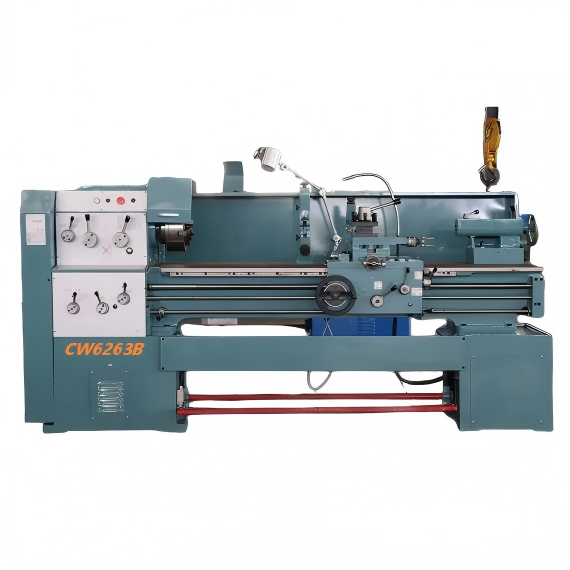
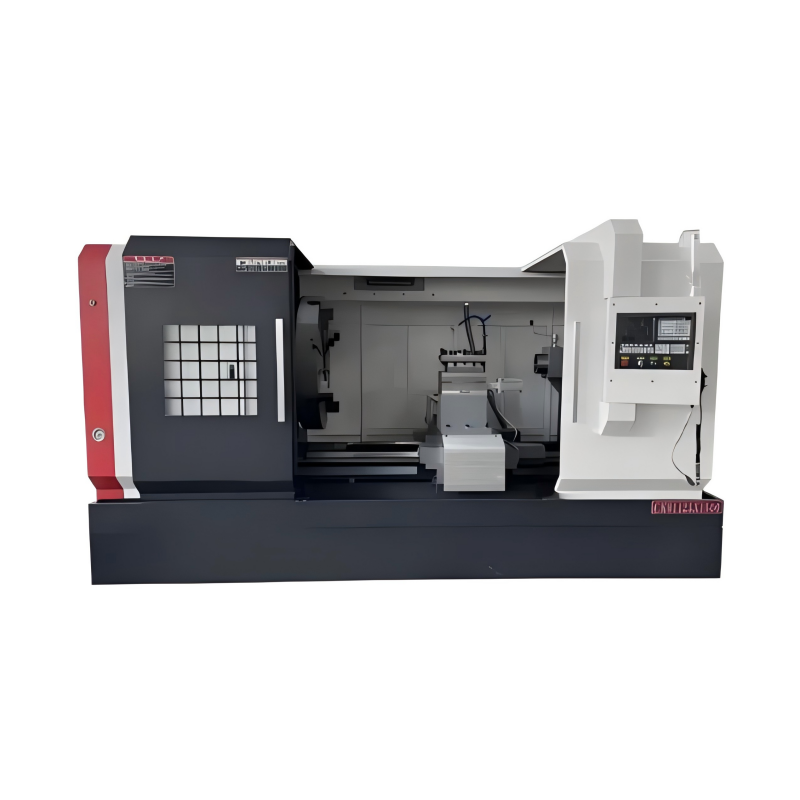
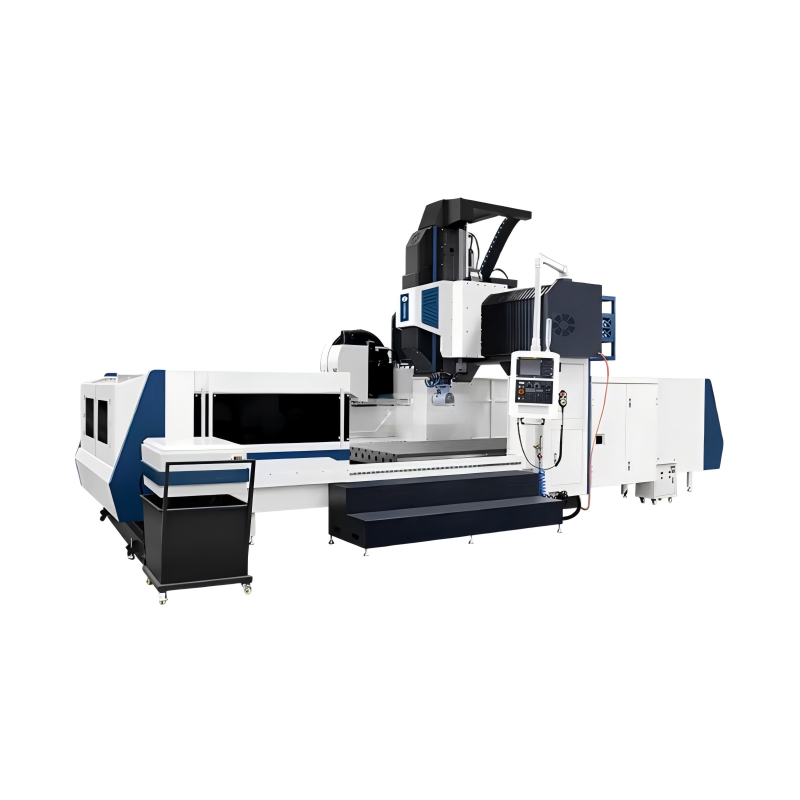
The Horizontal 2-Axis CNC Lathe is a powerful tool in the manufacturing industry, designed for precision and efficiency. This guide aims to provide a thorough understanding of how to operate this machine, from basic principles to advanced techniques, ensuring that operators can maximize its potential while maintaining safety and accuracy. Let's dive into the key aspects of operating a Horizontal 2-Axis CNC Lathe.
A Horizontal 2-Axis CNC Lathe is a type of computer numerical control (CNC) machine that operates on two primary axes: X and Z. The X-axis controls the movement of the tool post, allowing it to move left and right, while the Z-axis controls the movement of the workpiece, enabling it to move forward and backward. Understanding these fundamental components is crucial for effective operation. The spindle, which holds and rotates the workpiece, is another essential part of the lathe. It must be set up correctly to ensure that the workpiece is securely held and accurately positioned. Additionally, the control panel, where the operator inputs the G-code, plays a critical role in the machining process. Familiarity with the control panel and its functions is necessary to execute the desired operations smoothly.
Proper setup is the foundation of successful machining with a Horizontal 2-Axis CNC Lathe. Before starting any operation, it is imperative to check the machine's alignment and calibration. Ensuring that the X and Z axes are properly aligned will prevent inaccuracies and reduce the risk of tool breakage. The workpiece should be securely clamped in the chuck or collet, and the tooling should be correctly installed and adjusted. Regular maintenance, such as cleaning and lubricating the moving parts, is also essential to keep the machine in optimal condition. Additionally, the coolant system should be checked and filled, as proper cooling is vital for extending tool life and achieving better surface finishes. By following these steps, operators can set up the Horizontal 2-Axis CNC Lathe for reliable and efficient performance.
Effective programming is at the heart of CNC machining. The Horizontal 2-Axis CNC Lathe relies on G-code, a programming language that instructs the machine on how to move and perform specific tasks. Operators need to be proficient in writing and interpreting G-code to achieve the desired results. The first step in programming is to create a detailed part drawing or CAD model, which serves as the basis for the G-code. Once the drawing is complete, the G-code can be generated using CAM (Computer-Aided Manufacturing) software. The G-code is then loaded into the machine's control system, and the operator can run a simulation to check for any errors or potential issues. After the simulation, the actual machining process can begin. During the operation, the operator should monitor the machine closely, making adjustments as needed to ensure that the workpiece is machined to the required specifications. By mastering the art of programming and execution, operators can leverage the full capabilities of the Horizontal 2-Axis CNC Lathe.
Safety and quality control are paramount in the operation of a Horizontal 2-Axis CNC Lathe. Operators must adhere to strict safety protocols to prevent accidents and injuries. This includes wearing appropriate personal protective equipment (PPE), such as safety glasses, gloves, and hearing protection. Additionally, the work area should be kept clean and organized to minimize the risk of tripping hazards and other workplace accidents. Regular inspections of the machine and its components, such as the chuck, tooling, and control panel, are also important to identify and address any potential issues before they become serious problems. In terms of quality control, operators should conduct regular checks on the workpiece during the machining process to ensure that it meets the required tolerances and surface finish. Using measuring tools like micrometers and calipers, operators can verify the dimensions and make any necessary adjustments. By prioritizing safety and quality control, operators can produce high-quality parts consistently and safely.
Even with the best practices in place, operators may encounter common issues when working with a Horizontal 2-Axis CNC Lathe. One of the most frequent problems is tool wear, which can lead to poor surface finishes and inaccurate dimensions. To mitigate this, operators should regularly inspect the cutting tools and replace them as needed. Another issue is machine vibration, which can affect the quality of the machined parts. Ensuring that the machine is properly leveled and that the workpiece is securely clamped can help reduce vibration. Additionally, if the machine is not producing the expected results, the G-code may need to be reviewed and corrected. Errors in the G-code can cause the machine to move incorrectly, leading to flawed parts. By being proactive and addressing these common issues, operators can maintain the performance and reliability of the Horizontal 2-Axis CNC Lathe.
In conclusion, mastering the operation of a Horizontal 2-Axis CNC Lathe requires a combination of technical knowledge, practical skills, and attention to detail. By understanding the basics, setting up the machine correctly, programming and executing machining operations, ensuring safety and quality control, and troubleshooting common issues, operators can achieve high levels of precision and efficiency. With the right approach and continuous learning, the Horizontal 2-Axis CNC Lathe can be a valuable asset in any manufacturing environment.
 24/06/2026
The evolution of manufacturing technologies has led to the development of increasingly sophisticated machinery, with the Horizontal 2-Axis CNC Lathe standing out as a critical tool in modern production. This comprehensive guide aims to provide an in-depth
Read More24/06/2026Horizontal 2-Axis CNC Lathes are a vital component in modern manufacturing, offering precision and efficiency that can significantly enhance productivity. This report explores the various ways in which a Horizontal 2-Axis CNC Lathe can be utilized to maxi
Read More24/06/2026In the rapidly evolving landscape of manufacturing, the integration of advanced technologies is reshaping traditional processes. One such technology that stands out in the context of Industry 4.0 is the Horizontal 2-Axis CNC Lathe. This report delves into
Read More24/06/2026When it comes to precision machining, the Horizontal 2-Axis CNC Lathe stands out as a critical tool for manufacturers across various industries. This type of lathe is designed to provide high accuracy and efficiency, making it an essential piece of equipm
Read More23/06/2026Understanding the Basics of a Horizontal 2-Axis CNC LatheA Horizontal 2-Axis CNC Lathe is a sophisticated piece of machinery used in manufacturing for performing complex and precise machining operations. This type of lathe operates along two primary axes,
Read More23/06/2026Introduction to Horizontal 2-Axis CNC Lathe The advent of computer numerical control (CNC) technology has transformed the manufacturing industry, enabling precision and efficiency in the production process. Among the various types of CNC machines, the hor
Read More23/06/2026In the realm of advanced manufacturing, the Floor Type Horizontal Machining Center and the Horizontal 2-Axis CNC Lathe stand out as pivotal pieces of equipment. Both are essential in the production of high-precision components, but they serve different pu
Read More23/06/2026In recent years, the global manufacturing landscape has witnessed a significant shift towards adopting advanced machining solutions. Among these, the Horizontal 2-Axis CNC Lathe has emerged as a critical tool for precision engineering. This technical repo
Read More23/06/2026Understanding the Basics of a Horizontal 2-Axis CNC LatheA Horizontal 2-Axis CNC Lathe is an advanced machine tool that plays a crucial role in modern manufacturing. It operates on two axes, the X-axis (horizontal) and Z-axis (vertical), allowing for prec
Read More23/06/2026Horizontal 2-Axis CNC Lathes have been a cornerstone of precision manufacturing for decades, but recent advancements in technology are transforming their capabilities and applications. This report delves into the latest innovations that are redefining the
Read More23/06/2026A Horizontal 2-Axis CNC Lathe is a versatile machine tool, widely used in manufacturing for its precision and efficiency. This guide aims to provide a comprehensive overview of the maintenance procedures necessary to ensure optimal performance and longevi
Read More22/06/2026In the metalworking industry, the quest for efficiency and precision is a never-ending pursuit. Among the various innovations that have emerged to meet this demand, the Horizontal 2-Axis CNC Lathe, particularly in its slant bed configuration, stands out a
Read More22/06/2026In the realm of precision machining, the Horizontal 2-Axis CNC Lathe stands as a cornerstone for manufacturers seeking to produce high-quality parts with efficiency. This machine's versatility and capability in turning operations make it an essential tool
Read More22/06/2026The development of modern manufacturing has been significantly influenced by advancements in machine tools, with Horizontal 2-Axis CNC Lathes playing a pivotal role. These machines have revolutionized the way parts are machined, offering unparalleled prec
Read More22/06/2026The advent of computer numerical control (CNC) technology has revolutionized the manufacturing industry, enabling precise and efficient production processes. Among the various types of CNC machines, the Horizontal 2-Axis CNC Lathe stands out for its versa
Read MoreOur professional sales team is always ready to assist you.