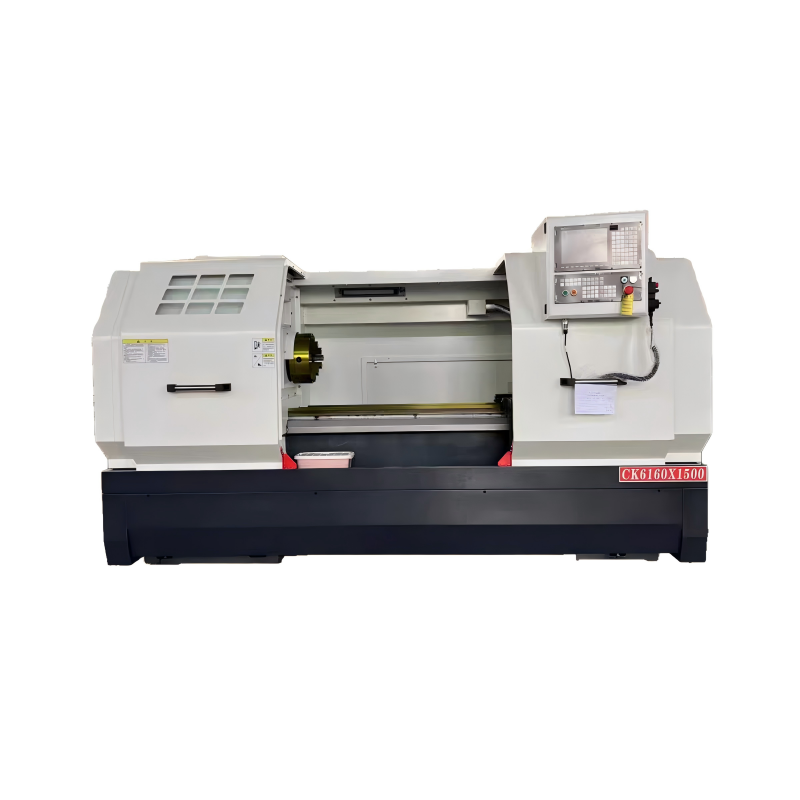
In the realm of modern manufacturing, Two-Axis CNC Lathes stand out as powerful tools for precision machining. These machines are not only capable of producing highly accurate parts but also offer a range of features that make them indispensable in various industries. This report delves into the capabilities of contemporary Two-Axis CNC Lathes, highlighting their versatility, efficiency, and the technological advancements that have made them a cornerstone of modern manufacturing.
One of the most significant advantages of Two-Axis CNC Lathes is their ability to achieve high levels of precision and accuracy. These machines are equipped with advanced control systems that allow for precise movements along both the X-axis (horizontal) and Z-axis (vertical). The use of servo motors and ball screws ensures smooth and controlled motion, resulting in parts that meet stringent tolerances. Additionally, the integration of encoders and feedback systems further enhances the machine's ability to maintain consistent and repeatable results. This level of precision is crucial in industries such as aerospace, automotive, and medical, where even the slightest deviation can lead to catastrophic failures or non-compliance with safety standards.
Modern Two-Axis CNC Lathes are designed to maximize productivity and efficiency. One key feature that contributes to this is the ability to perform multiple operations in a single setup. By utilizing live tooling, these lathes can execute milling, drilling, and other secondary operations without the need to reposition the workpiece. This not only saves time but also reduces the risk of errors associated with manual handling. Furthermore, the use of automated tool changers and part loaders allows for continuous operation, minimizing downtime and increasing overall throughput. Advanced software and programming capabilities enable operators to optimize tool paths and reduce cycle times, making the entire process more efficient and cost-effective.
Another notable capability of Two-Axis CNC Lathes is their ability to handle a wide range of materials. From traditional metals like steel, aluminum, and brass to more exotic materials such as titanium, Inconel, and even some plastics, these machines are versatile enough to accommodate diverse material requirements. The robust construction and high torque output of the spindle ensure that even the toughest materials can be machined with ease. Additionally, the use of coolant and lubrication systems helps to manage heat and friction, prolonging tool life and maintaining surface finish quality. This versatility makes Two-Axis CNC Lathes suitable for a broad spectrum of applications, from prototyping to high-volume production runs.
The advent of Industry 4.0 has brought about significant changes in the way manufacturing processes are managed and optimized. Two-Axis CNC Lathes are no exception, as they can now be seamlessly integrated with various smart technologies. For instance, the implementation of IoT (Internet of Things) sensors allows for real-time monitoring of machine performance, enabling predictive maintenance and reducing unplanned downtime. Data analytics and machine learning algorithms can be used to analyze production data, identify trends, and optimize processes for better efficiency. Moreover, the use of cloud-based software solutions facilitates remote access and collaboration, allowing operators and engineers to monitor and control the machine from anywhere. This integration with Industry 4.0 technologies not only enhances the operational capabilities of the lathes but also positions them as key players in the future of smart manufacturing.
While Two-Axis CNC Lathes are often associated with large-scale industrial applications, they also offer cost-effective solutions for small and medium-sized enterprises (SMEs). The compact design and modular nature of these machines make them suitable for smaller workshops and facilities with limited space. Additionally, the availability of affordable entry-level models and financing options has made it easier for SMEs to invest in this technology. The long-term benefits, such as reduced labor costs, improved quality, and increased production capacity, make it a worthwhile investment. Furthermore, the ability to produce complex parts with high precision and repeatability can give SMEs a competitive edge in the market, enabling them to take on more challenging and profitable projects.
In conclusion, the capabilities of modern Two-Axis CNC Lathes are vast and continue to evolve with technological advancements. Their enhanced precision and accuracy, increased productivity and efficiency, advanced materials compatibility, integration with Industry 4.0 technologies, and cost-effectiveness for SMEs make them an essential tool in the modern manufacturing landscape. As the industry continues to advance, these lathes will play a pivotal role in driving innovation and ensuring the highest standards of quality and performance.
 24/06/2026
Two-Axis CNC Lathes have become an indispensable part of modern machining processes, revolutionizing the way we manufacture parts and components. This report aims to explore the critical role of two-axis CNC lathes in contemporary manufacturing, highlight
Read More24/06/2026A Comprehensive Guide to Maintenance for Two-Axis CNC LathesUnderstanding the Basics of a Two-Axis CNC LatheThe foundation of effective maintenance begins with a thorough understanding of the equipment in question. A two-axis CNC lathe is a precision mach
Read More23/06/2026Understanding the Basics of a Two-Axis CNC LatheIn the realm of modern manufacturing, precision and efficiency are paramount. A Two-Axis CNC Lathe represents a significant advancement in machining technology, enabling manufacturers to achieve higher level
Read More23/06/2026In the realm of precision manufacturing, two-axis CNC lathes play a crucial role in producing high-quality components with tight tolerances. These machines are indispensable for industries ranging from automotive to aerospace, where accuracy and repeatabi
Read More23/06/2026In the rapidly evolving landscape of manufacturing, the adoption of advanced machinery plays a pivotal role in enhancing productivity and efficiency. Among these, the Two-Axis CNC Lathe stands out as a versatile tool that can significantly impact producti
Read More22/06/2026Choosing the right tools for your Two-Axis CNC Lathe is a critical step in ensuring both the efficiency and quality of your machining processes. A well-equipped lathe can significantly enhance productivity, reduce downtime, and produce high-precision part
Read More22/06/2026In the realm of precision machining, Two-Axis CNC Lathes play a pivotal role in transforming raw materials into intricate and accurate components. This report aims to provide an in-depth understanding of the basics of Two-Axis CNC Lathe operations, highli
Read MoreOur professional sales team is always ready to assist you.