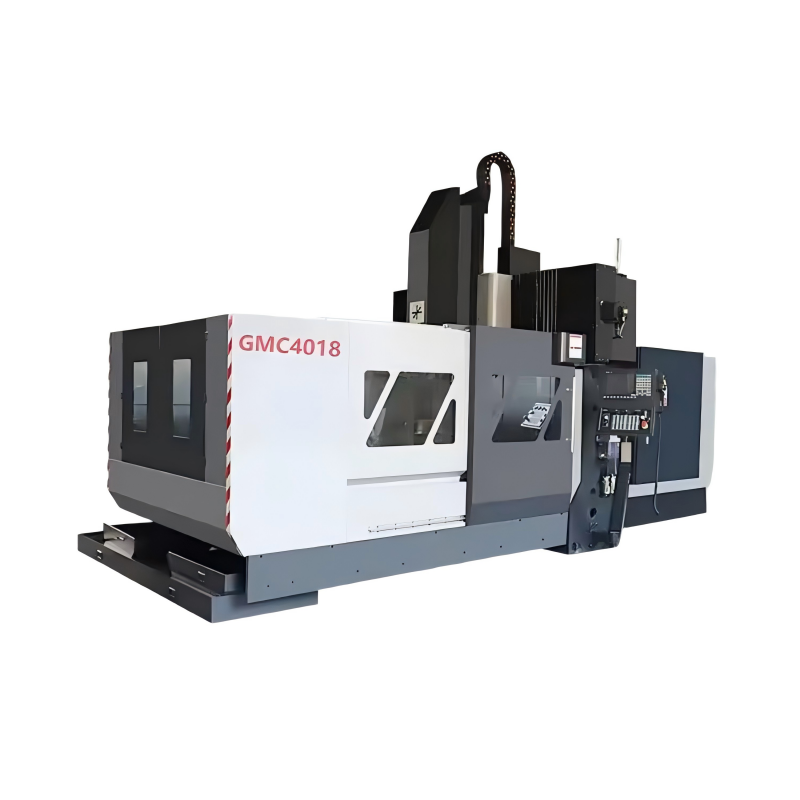
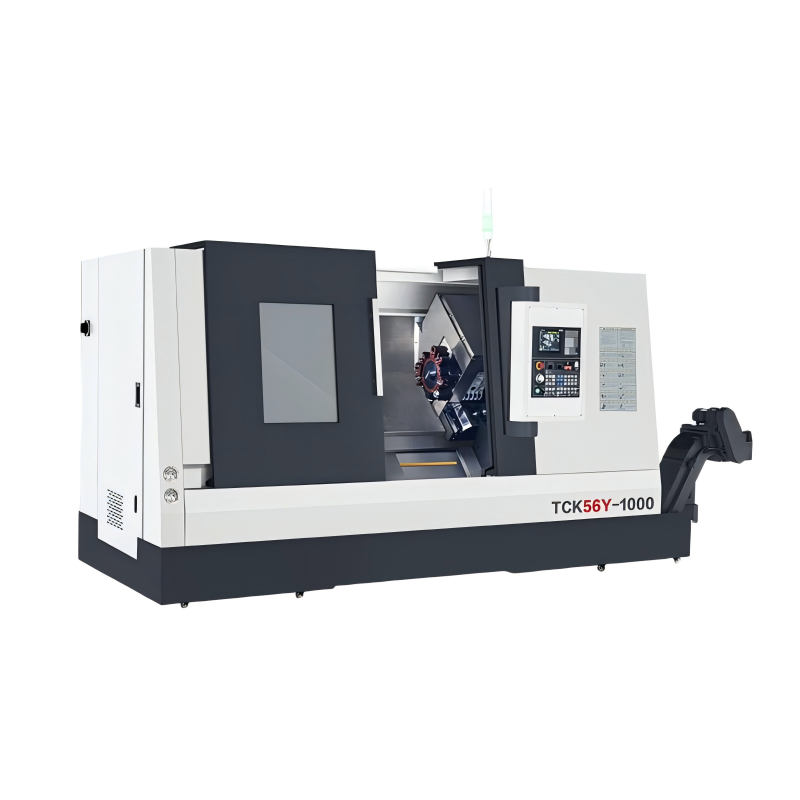
The advancements in CNC Vertical Machining Center technology have revolutionized the manufacturing industry, enabling higher precision, efficiency, and productivity. This report delves into the key innovations that are driving the evolution of CNC Vertical Machining Centers, focusing on their impact on high-efficiency machining.
One of the most significant areas of innovation in CNC Vertical Machining Center technology is the development of advanced control systems. Modern CNC vertical machining centers are equipped with sophisticated control systems that offer superior precision and accuracy. These systems utilize real-time feedback mechanisms, such as encoders and sensors, to monitor and adjust the machine's movements continuously. This ensures that the cutting tool follows the programmed path with minimal deviation, resulting in highly accurate parts.
Moreover, the integration of artificial intelligence (AI) and machine learning (ML) algorithms has further enhanced the capabilities of these control systems. AI-powered algorithms can predict and compensate for potential errors, optimizing the machining process and reducing scrap rates. For example, predictive maintenance features can detect signs of wear and tear on critical components, allowing for timely repairs and minimizing downtime.
Another crucial innovation in CNC Vertical Machining Center technology is the development of high-speed spindles. High-speed spindles enable faster cutting speeds and feed rates, significantly increasing the throughput of the machining process. These spindles are designed to operate at extremely high rotational speeds, often exceeding 30,000 RPM, while maintaining stability and precision.
The use of high-speed spindles not only reduces cycle times but also improves surface finish quality. The higher cutting speeds result in smoother, more consistent cuts, which is particularly beneficial for applications requiring high surface finish standards. Additionally, the increased speed allows for the efficient removal of material, making it possible to achieve complex geometries and intricate designs with ease.
Furthermore, the design of high-speed spindles incorporates advanced cooling systems and lubrication technologies to ensure optimal performance and longevity. These features help dissipate heat generated during high-speed operations, preventing thermal deformation and maintaining the spindle's accuracy over extended periods.
Automation is a key driver of efficiency in modern manufacturing, and CNC Vertical Machining Center technology has embraced this trend with the integration of automated tool changers. Automated tool changers allow for rapid and precise tool changes, eliminating the need for manual intervention and reducing setup times. This feature is particularly valuable in high-mix, low-volume production environments where frequent tool changes are required.
Automated tool changers typically consist of a magazine that stores multiple tools and a robotic arm or carousel system that retrieves and inserts the appropriate tool into the spindle. The entire process is controlled by the CNC system, ensuring that the correct tool is selected and positioned accurately. This not only speeds up the machining process but also minimizes the risk of human error, leading to higher part quality and consistency.
Additionally, some advanced CNC vertical machining centers are equipped with tool management systems that track the usage and condition of each tool. These systems can alert operators when a tool needs to be replaced or sharpened, further enhancing the overall efficiency and reliability of the machining process.
The use of advanced materials and coatings in CNC Vertical Machining Center components has also contributed to their improved performance and durability. Components such as cutting tools, spindles, and guideways are now made from high-performance materials, such as tungsten carbide, ceramic, and various high-strength alloys. These materials offer superior wear resistance, thermal stability, and mechanical strength, enabling the machine to withstand the rigors of high-speed and high-precision machining.
Coatings, such as diamond-like carbon (DLC) and titanium aluminum nitride (TiAlN), are applied to cutting tools and other critical components to enhance their performance. These coatings provide a hard, wear-resistant layer that protects the underlying material from abrasion and corrosion. As a result, the tools last longer, and the machine maintains its precision and accuracy over extended periods of operation.
Furthermore, the use of advanced materials and coatings has also led to the development of specialized cutting tools for specific applications. For example, micro-machining tools made from ultra-fine grain carbide can achieve sub-micron precision, making them ideal for the production of miniature components used in electronics and medical devices.
The integration of Industry 4.0 technologies, such as the Internet of Things (IoT), cloud computing, and data analytics, has transformed CNC Vertical Machining Center technology into a smart manufacturing solution. IoT-enabled CNC vertical machining centers are equipped with sensors and communication modules that collect and transmit real-time data about the machine's performance, status, and operating conditions.
This data is then analyzed using advanced analytics and machine learning algorithms to gain insights into the machining process. For instance, predictive analytics can identify patterns and trends that indicate potential issues, such as tool wear or machine malfunctions, before they become critical. This proactive approach to maintenance and monitoring helps to minimize downtime and maximize the overall efficiency of the machining process.
Cloud computing also plays a vital role in the integration of Industry 4.0 technologies. Cloud-based platforms enable seamless data sharing and collaboration between different departments and stakeholders within the manufacturing ecosystem. This facilitates better decision-making and coordination, leading to more efficient and agile manufacturing processes. Additionally, cloud storage and backup solutions ensure that critical data is securely stored and easily accessible, providing a robust foundation for data-driven manufacturing.
In conclusion, the continuous innovations in CNC Vertical Machining Center technology, including advanced control systems, high-speed spindles, automated tool changers, advanced materials and coatings, and the integration of Industry 4.0 technologies, have significantly enhanced the efficiency and productivity of machining operations. These advancements not only improve the quality and precision of machined parts but also contribute to the overall competitiveness and sustainability of the manufacturing industry.
 27/06/2026
Understanding the Core Capabilities of CNC Vertical Machining CentersCNC (Computer Numerical Control) Vertical Machining Centers are pivotal in modern manufacturing, providing unparalleled precision and versatility. These machines are designed to handle a
Read More27/06/2026A CNC Vertical Machining Center (VMC) is a highly versatile and efficient machine tool that can significantly enhance the manufacturing capabilities of any production facility. However, investing in such a machine requires careful consideration of both th
Read More27/06/2026Introduction to CNC Vertical Machining CentersThe advent of Computer Numerical Control (CNC) technology has revolutionized the manufacturing industry, particularly in the precision and efficiency of machining operations. Among various types of CNC machine
Read More26/06/2026In the realm of aerospace manufacturing, precision and reliability are paramount. The use of CNC Vertical Machining Center (VMC) has become increasingly prevalent due to their ability to deliver high-precision components with consistent quality. This repo
Read More26/06/2026Understanding the Versatility of CNC Vertical Machining CentersThe CNC (Computer Numerical Control) vertical machining center is a fundamental tool in modern manufacturing, known for its precision and versatility. These machines are capable of performing
Read More26/06/2026The advent of CNC Vertical Machining Centers has revolutionized the mold making industry, offering unparalleled precision, efficiency, and versatility. This report delves into the significant impact of CNC vertical machining centers on mold making process
Read More26/06/2026The CNC Vertical Machining Center (VMC) is a cornerstone of modern manufacturing, enabling precise and efficient production across a wide range of industries. As the demand for high-precision components continues to grow, selecting the right VMC becomes i
Read More25/06/2026In today’s rapidly evolving manufacturing landscape, the integration of advanced technologies has become a cornerstone for enhancing productivity and maintaining a competitive edge. One such technology that stands out is the CNC (Computer Numerical Contro
Read More25/06/2026Understanding the Importance of Regular Maintenance for CNC Vertical Machining CentersThe CNC Vertical Machining Center is a critical piece of equipment in many manufacturing and engineering environments. These machines are designed to perform complex and
Read More25/06/2026Introduction to CNC Vertical Machining CentersThe evolution of manufacturing technology has seen the rise of CNC (Computer Numerical Control) vertical machining centers as a pivotal tool in modern metalworking. These machines, characterized by their abili
Read More25/06/2026In the world of manufacturing, efficiency and precision are paramount. The advent of Computer Numerical Control (CNC) technology has revolutionized how parts and components are machined, offering unparalleled accuracy and repeatability. Among the various
Read More24/06/2026In the rapidly evolving landscape of modern manufacturing, CNC (Computer Numerical Control) Vertical Machining Centers have emerged as a cornerstone technology, offering unparalleled precision, efficiency, and versatility. These machines play a crucial ro
Read More24/06/2026The advent of CNC (Computer Numerical Control) technology has revolutionized the manufacturing industry, particularly in sectors such as aerospace, where precision and efficiency are paramount. Among the various types of CNC machines, the CNC Vertical Mac
Read More24/06/2026A CNC Vertical Machining Center (CNC VMC) is a critical piece of equipment in modern manufacturing, designed to perform a wide range of machining operations with high precision and efficiency. Selecting the right CNC VMC for your specific needs can be a d
Read More24/06/2026The evolution of manufacturing technologies has significantly impacted the way products are designed, produced, and delivered. Among these advancements, the CNC Vertical Machining Center stands out as a pivotal tool in modern machining processes. This rep
Read More23/06/2026The CNC Vertical Machining Center is a cornerstone in the world of precision engineering, offering unparalleled accuracy and efficiency. This comprehensive guide aims to provide an in-depth understanding of CNC vertical machining centers, their applicatio
Read More23/06/2026Introduction to CNC Vertical Machining Centers in Automotive Parts Production The automotive industry is one of the most technologically advanced and competitive sectors globally, constantly pushing the boundaries of innovation. A key enabler in this rele
Read More23/06/2026In the realm of precision engineering, the advent of CNC (Computer Numerical Control) technology has revolutionized manufacturing processes, allowing for unprecedented levels of accuracy, efficiency, and flexibility. Among the various types of CNC machine
Read More23/06/2026In the rapidly evolving landscape of modern manufacturing, CNC (Computer Numerical Control) vertical machining centers have become an indispensable tool for achieving precision, efficiency, and flexibility. These advanced machines are at the forefront of
Read MoreOur professional sales team is always ready to assist you.