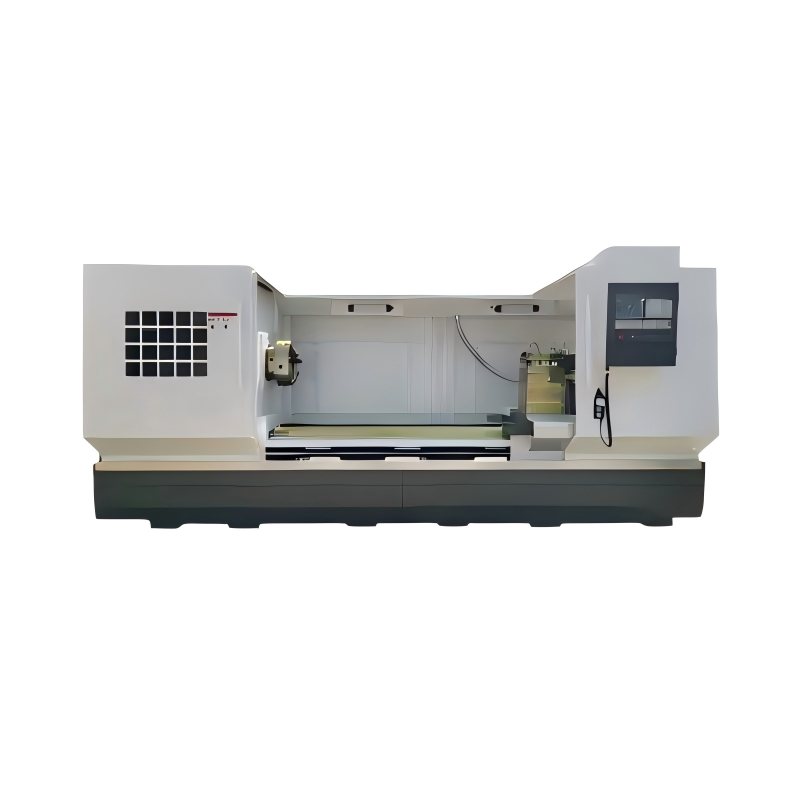
Despite the rapid advancement of automation and computer-aided manufacturing (CAM) technologies, manual lathe machines continue to play a vital role in modern manufacturing. These versatile tools, which have been around for centuries, offer unique advantages that make them indispensable even in today's highly digitalized production environments. This report explores the enduring importance of manual lathes, focusing on their adaptability, cost-effectiveness, and educational value.
The Unmatched Adaptability of Manual Lathes
One of the most significant advantages of using a manual lathe machine is its ability to handle a wide variety of tasks with ease. Unlike automated systems, which often require specialized programming and setup, manual lathes can be quickly adjusted to accommodate different materials, sizes, and shapes. This flexibility is particularly valuable in small-batch or custom manufacturing, where the need for rapid changes and adjustments is common. Furthermore, manual lathes excel in situations where precision and attention to detail are paramount. Skilled operators can achieve high levels of accuracy and finish quality, making these machines ideal for crafting intricate parts and prototypes. The adaptability of manual lathes also extends to their maintenance and repair. Because they have fewer electronic components, they are generally easier and less expensive to maintain than their CNC counterparts. This simplicity means that downtime is minimized, and the overall productivity of the workshop is enhanced.
Cost-Effectiveness in Small-Scale Production
For many small and medium-sized enterprises (SMEs), the initial investment in advanced machinery can be prohibitively expensive. In contrast, manual lathes represent a more affordable option, especially for businesses that do not require high-volume production. The lower upfront costs, combined with minimal operational expenses, make manual lathes an attractive choice for startups and smaller manufacturers. Additionally, the energy consumption of manual lathes is typically lower compared to automated systems, leading to further savings over time. This cost-effectiveness is not just limited to the financial aspect; it also extends to the human capital. Training operators to use a manual lathe is relatively straightforward, and the skills acquired can be easily transferred to other manual machining processes. This reduces the need for extensive and costly training programs, allowing companies to allocate resources more efficiently. Moreover, the ability to perform a wide range of tasks with a single machine reduces the need for multiple specialized tools, further lowering the overall equipment costs. For businesses operating in competitive markets, the cost savings associated with manual lathes can provide a significant advantage, enabling them to offer more competitive pricing while maintaining high-quality standards.
Educational Value and Skill Development
In addition to their practical applications, manual lathes play a crucial role in the education and skill development of future machinists and engineers. Many vocational schools and technical colleges use manual lathes as a fundamental part of their curriculum, providing students with hands-on experience and a deep understanding of the principles of machining. By learning to operate a manual lathe machine, students develop essential skills such as precision, problem-solving, and attention to detail. These skills are not only valuable in the context of machining but are also transferable to other areas of engineering and manufacturing. Furthermore, the tactile and visual feedback provided by manual lathes allows students to gain a more intuitive understanding of the machining process. This hands-on approach fosters a deeper appreciation for the craft and helps to build a solid foundation for more advanced techniques. As the manufacturing industry continues to evolve, the demand for skilled labor remains high. Manual lathes serve as a gateway to developing the necessary skills and knowledge, ensuring that the next generation of machinists and engineers is well-prepared to meet the challenges of the future. Additionally, the experience gained from working with manual lathes can be a stepping stone to more advanced roles, such as CNC programming and operation, where a strong foundational understanding is essential.
In conclusion, while the manufacturing landscape is increasingly dominated by automated and computer-controlled systems, the role of manual lathes remains significant. Their adaptability, cost-effectiveness, and educational value make them an invaluable tool in modern manufacturing. As long as there is a need for precision, flexibility, and skill development, manual lathes will continue to be a cornerstone of the industry.
 27/06/2026



