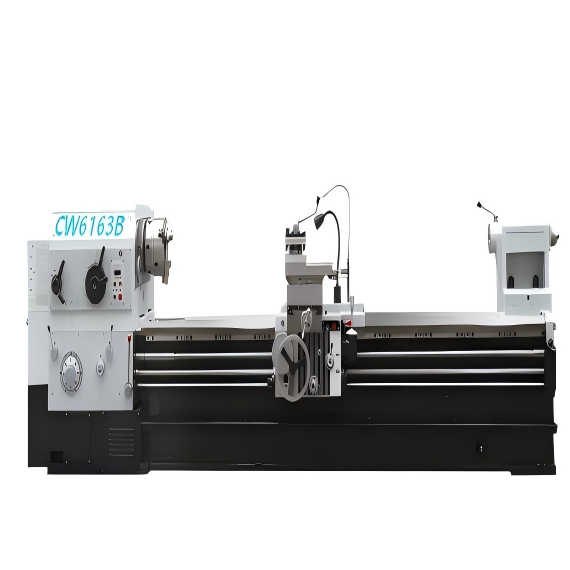
The manufacturing industry is constantly seeking ways to improve the efficiency and accuracy of its processes. One area where significant advancements can be made is in the turning of long shafts using conventional lathes. This report explores how enhancing the setup, tooling, and process optimization can lead to substantial improvements in both productivity and quality when working with a Conventional lathe for long shaft.
Optimizing Setup for Long Shaft Turning
Setting up a conventional lathe for long shaft requires careful consideration to ensure that the workpiece is securely held while minimizing deflection and vibration. The use of steady rests and tailstocks plays a crucial role in this regard. Steady rests, placed at intervals along the length of the shaft, provide additional support, reducing the likelihood of bending or twisting during the machining process. It’s important to position these supports strategically to maintain balance and stability. Additionally, employing a live center in the tailstock can help in achieving better concentricity, which is essential for maintaining dimensional accuracy throughout the length of the part.
Advanced Tooling Solutions for Enhanced Performance
Tool selection significantly impacts the outcome of any machining operation, and this is especially true when dealing with long shafts on a conventional lathe for long shaft. High-speed steel (HSS) tools have been traditionally used; however, modern carbide inserts offer superior wear resistance and can handle higher cutting speeds, leading to faster production times without compromising on surface finish. Another key aspect is the geometry of the cutting tool. Tools designed specifically for high-feed rates and efficient chip evacuation are preferable as they reduce the risk of tool breakage and improve overall machine utilization. Furthermore, coolant application methods, such as through-tool cooling, can enhance tool life and part quality by keeping the cutting zone at an optimal temperature.
Process Optimization Through Automation and Monitoring
To truly maximize the potential of a conventional lathe for long shaft, integrating automation and real-time monitoring systems becomes indispensable. Automated loading and unloading mechanisms not only speed up the cycle time but also minimize operator intervention, thereby reducing human error and increasing consistency. In terms of monitoring, advanced sensors can track various parameters like spindle load, tool wear, and workpiece dimensions, providing valuable data that can be used to make adjustments on the fly. Implementing predictive maintenance strategies based on this data helps in preventing unexpected downtime and ensures that the machine operates at peak performance levels. Moreover, adopting lean manufacturing principles, such as just-in-time (JIT) production, can further streamline operations, making the entire process more efficient and cost-effective.
In conclusion, improving the efficiency of long shaft turning on a conventional lathe for long shaft involves a multi-faceted approach. By focusing on optimizing the setup, utilizing advanced tooling solutions, and incorporating automation and real-time monitoring, manufacturers can achieve significant gains in productivity, quality, and operational reliability. These enhancements not only benefit the immediate production environment but also contribute to the overall competitiveness and sustainability of the manufacturing sector.

 25/06/2026



