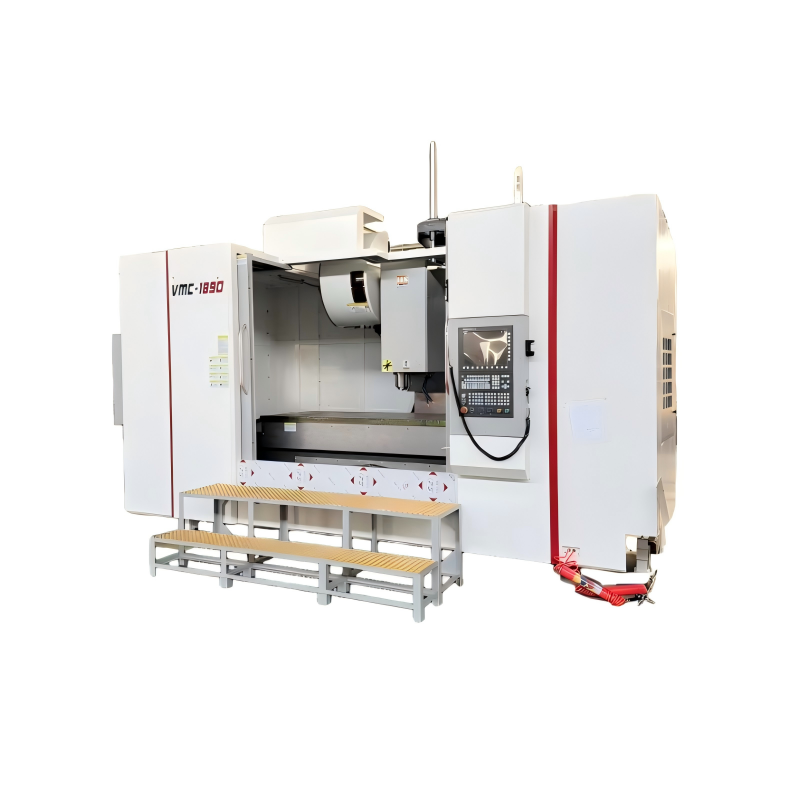
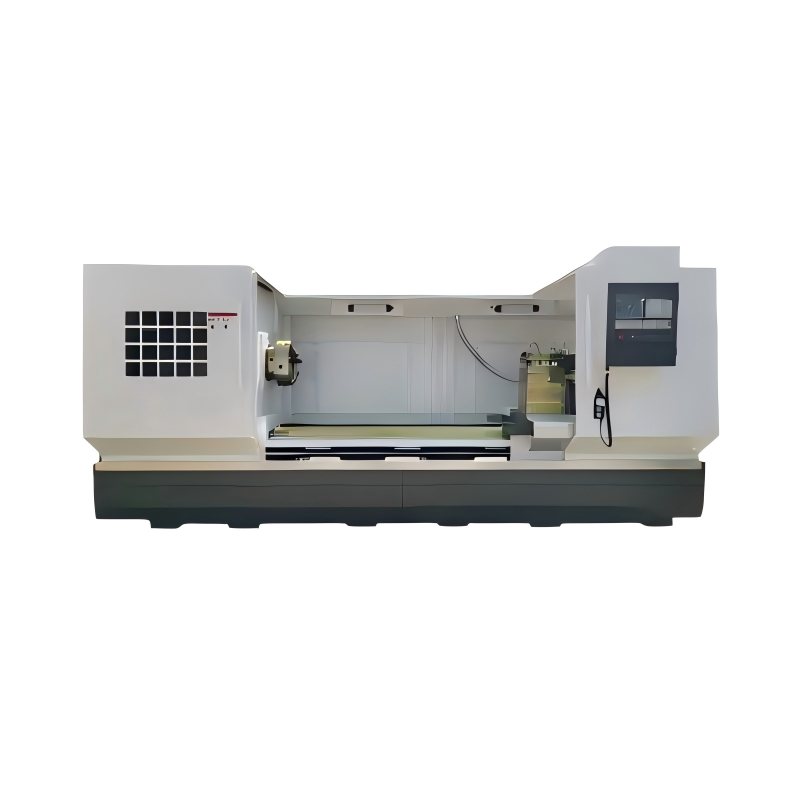
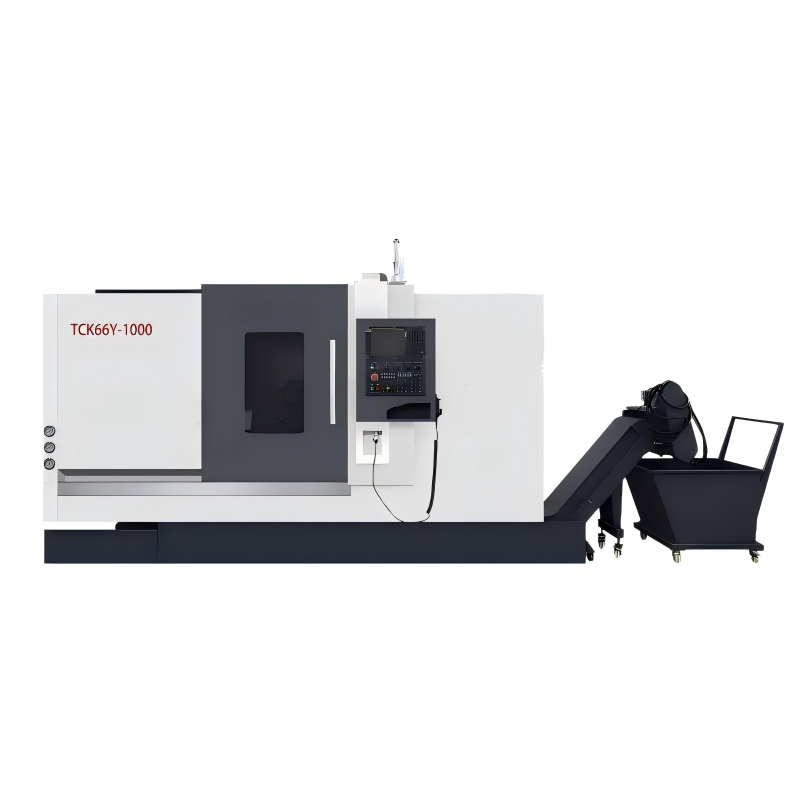
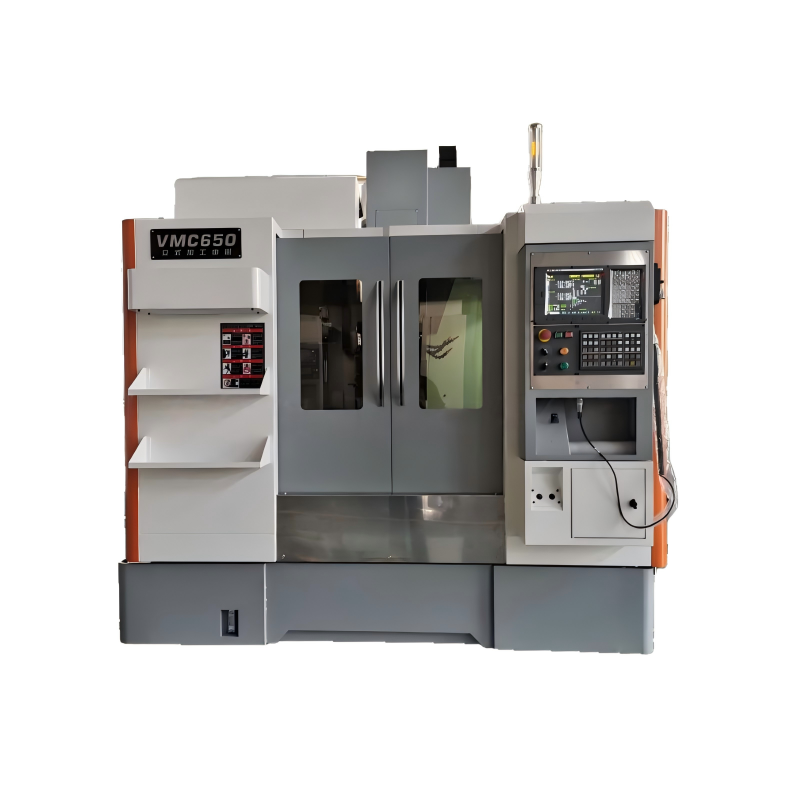
In the realm of modern manufacturing, the pursuit of efficiency, precision, and productivity has led to the adoption of advanced technologies. One such technology that stands out is the High Speed VMC (Vertical Machining Center). This article delves into the advantages of High Speed VMCs in contemporary manufacturing environments, highlighting their impact on production processes, cost-effectiveness, and overall quality.
The primary advantage of a High Speed VMC lies in its ability to significantly increase the speed of machining operations. These machines are designed with high-speed spindles, rapid traverse rates, and advanced control systems, enabling them to complete tasks much faster than traditional VMCs. The increased speed not only reduces cycle times but also allows for higher throughput, making it possible to produce more parts in less time. This is particularly beneficial in industries where large volumes of components need to be manufactured quickly, such as automotive, aerospace, and consumer electronics. By reducing the time required for each operation, High Speed VMCs help manufacturers meet tight deadlines and respond more effectively to market demands.
High Speed VMCs are equipped with advanced features that enhance precision and surface finish. The use of high-precision linear guides, ball screws, and servo motors ensures smooth and accurate movements, resulting in tighter tolerances and better part quality. Additionally, the high-speed spindles can achieve higher RPMs, which, when combined with fine tooling, can produce superior surface finishes. This is crucial in applications where the aesthetic and functional properties of the final product are paramount. For example, in the medical industry, where precision is critical, High Speed VMCs can produce intricate and highly detailed components with exceptional accuracy. The improved surface finish also reduces the need for secondary operations, such as polishing or grinding, thereby saving time and resources.
While the initial investment in a High Speed VMC may be higher compared to traditional VMCs, the long-term cost savings and energy efficiency make it a worthwhile investment. High Speed VMCs are designed to minimize energy consumption through optimized motor controls and efficient power management systems. This results in lower operating costs over the machine's lifespan. Moreover, the reduced cycle times and higher productivity translate into lower per-part costs, as more parts can be produced in the same amount of time. The ability to perform multiple operations in a single setup also reduces the need for additional machines and setups, further lowering overall production costs. Additionally, the extended tool life and reduced wear on the machine due to the precise and controlled movements contribute to lower maintenance and replacement costs.
High Speed VMCs offer a high degree of flexibility and versatility, making them suitable for a wide range of manufacturing applications. These machines can handle various materials, including metals, plastics, and composites, and can perform a variety of operations such as milling, drilling, tapping, and contouring. The ability to switch between different tools and operations quickly and easily allows for the production of complex and multi-featured parts. This flexibility is particularly valuable in industries where customization and rapid prototyping are essential, such as in the development of new products or in small-batch production runs. The advanced control systems and software integration in High Speed VMCs also enable easy programming and reprogramming, allowing manufacturers to adapt to changing production requirements and market demands swiftly.
The integration of High Speed VMCs with Industry 4.0 technologies is another significant advantage. These machines can be connected to the Internet of Things (IoT) and other smart manufacturing systems, enabling real-time monitoring, data collection, and analysis. This connectivity allows for predictive maintenance, where the machine can detect potential issues before they become critical, reducing downtime and extending the machine's operational life. Additionally, the data collected from the High Speed VMC can be used to optimize production processes, improve quality control, and enhance overall efficiency. The integration with Industry 4.0 also facilitates seamless communication between different stages of the manufacturing process, from design and engineering to production and logistics, leading to a more integrated and efficient manufacturing ecosystem.
In conclusion, the High Speed VMC offers numerous advantages that make it an indispensable tool in modern manufacturing. From enhanced productivity and precision to cost-effectiveness and flexibility, these machines are at the forefront of technological advancements in the industry. As manufacturing continues to evolve, the integration of High Speed VMCs with Industry 4.0 technologies will play a crucial role in driving innovation and competitiveness. Manufacturers who invest in these advanced machines will be well-positioned to meet the challenges and opportunities of the future.
 30/06/2026
The Evolution of VMC TechnologyVertical Machining Centers (VMC) have long been a staple in the manufacturing industry, providing high-precision and efficient machining capabilities. However, with the advent of High Speed VMC, the landscape of rapid protot
Read More30/06/2026High Speed VMC, or High Speed Vertical Machining Center, has become a game changer in the manufacturing industry. This technology not only accelerates production processes but also enhances precision and efficiency. In this report, we will explore how Hig
Read More30/06/2026China, a country renowned for its manufacturing prowess, has been making significant strides in the global market, particularly in the realm of machine tools. Among these, the High Speed VMC (Vertical Machining Center) and lathes have emerged as key playe
Read More30/06/2026In the rapidly evolving landscape of manufacturing, where precision, efficiency, and speed are not just desired but required, High Speed VMCs (Vertical Machining Centers) have emerged as indispensable tools. These machines represent a significant leap for
Read More29/06/2026High Speed VMC (Vertical Machining Center) technology represents a significant advancement in the field of industrial manufacturing. By integrating high-speed capabilities with precision machining, this technology not only accelerates production processes
Read More29/06/2026In the realm of advanced manufacturing, the aerospace industry stands out as a field that constantly pushes the boundaries of engineering and precision. One key technology enabling this advancement is the 4 Axis Heavy Horizontal Machining Center (HMC). Th
Read More29/06/2026In the realm of precision machining, slant bed lathes have emerged as a crucial tool for achieving high-precision tasks. These machines, with their unique design and capabilities, offer significant advantages over traditional lathes. This report will expl
Read More29/06/2026In today’s fast-paced manufacturing environment, the demand for high precision and efficiency has never been more critical. One of the key technologies that have revolutionized the industry is the High Speed VMC (Vertical Machining Center). This article d
Read More29/06/2026In the realm of advanced manufacturing, the integration of high-speed VMC (Vertical Machining Center) technology has revolutionized the production processes for complex components. This report delves into the capabilities and advantages that high-speed VM
Read More28/06/2026High Speed VMC, or High Speed Vertical Machining Center, represents a significant leap in the evolution of manufacturing technology. This advancement not only enhances the efficiency and accuracy of machining processes but also opens up new possibilities
Read More27/06/2026High Speed VMC, or Vertical Machining Center, represents a significant leap in the field of precision machining. This technology has revolutionized how components are manufactured, offering unparalleled speed, accuracy, and efficiency. In this report, we
Read More27/06/2026High Speed VMC, or High-Speed Vertical Machining Centers, have emerged as a game-changer in the manufacturing industry, particularly when it comes to surface finishing techniques. These advanced machines are designed to deliver exceptional precision, spee
Read More27/06/2026High Speed VMC (Vertical Machining Center) has become an indispensable tool in modern manufacturing, particularly for high-demand industries such as aerospace, automotive, and medical. These industries require not only precision but also speed to meet the
Read More27/06/2026Introduction to High Speed VMC in Medical Device ManufacturingIn the rapidly evolving landscape of medical device manufacturing, precision and speed are paramount. The advent of high-speed vertical machining centers (VMC) has significantly transformed thi
Read More26/06/2026High Speed VMC, or High-Speed Vertical Machining Center, represents a significant advancement in the field of manufacturing and machining. These machines are designed to operate at higher speeds than their traditional counterparts, offering improved effic
Read More26/06/2026The Evolution of Tool and Die Making with High Speed VMC In the rapidly evolving world of manufacturing, tool and die making has undergone significant transformations. One such transformation is the adoption of high-speed Vertical Machining Centers (VMC).
Read More26/06/2026Introduction to High Speed VMC TechnologyThe evolution of manufacturing technology has led to the development of more efficient, precise, and versatile machines. Among these, the High Speed VMC (Vertical Machining Center) stands out as a critical tool for
Read More26/06/2026High Speed VMC (Vertical Machining Center) has become an indispensable tool in modern manufacturing, offering unparalleled precision and efficiency. This comprehensive guide aims to explore the various aspects of maximizing output with a High Speed VMC, f
Read More25/06/2026High speed VMC, or Vertical Machining Center, technology has emerged as a transformative force in the manufacturing and production industries. This advanced machining solution is characterized by its exceptional speed, precision, and versatility, making i
Read More25/06/2026High Speed VMC, or High-Speed Vertical Machining Centers, have emerged as a transformative force in the automotive industry. These advanced machines are designed to perform high-precision machining at exceptionally fast speeds, making them indispensable f
Read More25/06/2026Introduction to High Speed VMC in AerospaceThe advent of high-speed Vertical Machining Centers (VMC) has significantly transformed the manufacturing landscape, especially within the aerospace industry. These advanced machines are designed to handle comple
Read More25/06/2026Understanding the Evolution of High Speed VMC in CNC MachiningIn the realm of manufacturing, the integration of advanced technologies has always been a driving force behind progress. One such advancement that stands out is the High Speed VMC (Vertical Mac
Read More24/06/2026The Evolution of High Speed VMCsHigh speed vertical machining centers (VMCs) have become a cornerstone in the modern manufacturing industry, offering unparalleled precision and efficiency. The evolution of these machines has been driven by advancements in
Read More24/06/2026IntroductionThe advent of High Speed VMC (Vertical Machining Center) solutions has revolutionized the manufacturing industry, enabling businesses to achieve unprecedented levels of productivity and efficiency. This report delves into the transformative im
Read More24/06/2026High-speed VMCs (Vertical Machining Centers) have become an indispensable part of modern industrial manufacturing, thanks to their ability to deliver precision, speed, and efficiency. This report delves into the advanced features of high-speed VMCs, highl
Read More24/06/2026The advent of the High Speed VMC (Vertical Machining Center) has ushered in a new era for precision engineering, transforming the way industries approach machining processes. This technical report delves into the impact and significance of High Speed VMCs
Read More23/06/2026High Speed VMC (Vertical Machining Center) technologies are revolutionizing the landscape of modern manufacturing, offering unparalleled precision, efficiency, and productivity. This report delves into the transformative impact of High Speed VMC innovatio
Read More23/06/2026High-speed Vertical Machining Centers (VMC) represent a significant leap forward in the world of manufacturing, offering unprecedented levels of productivity and precision. This technology has been pivotal in transforming traditional machining processes,
Read More23/06/2026In the ever-evolving landscape of manufacturing, the introduction and continuous improvement of High Speed VMC (Vertical Machining Centers) have been pivotal in transforming the efficiency and precision of machining processes. This report delves into the
Read More23/06/2026High Speed VMC, or High Speed Vertical Machining Center, represents a significant leap in the evolution of manufacturing technology. This advancement not only improves upon the traditional vertical machining center but also sets new standards for precisio
Read MoreOur professional sales team is always ready to assist you.