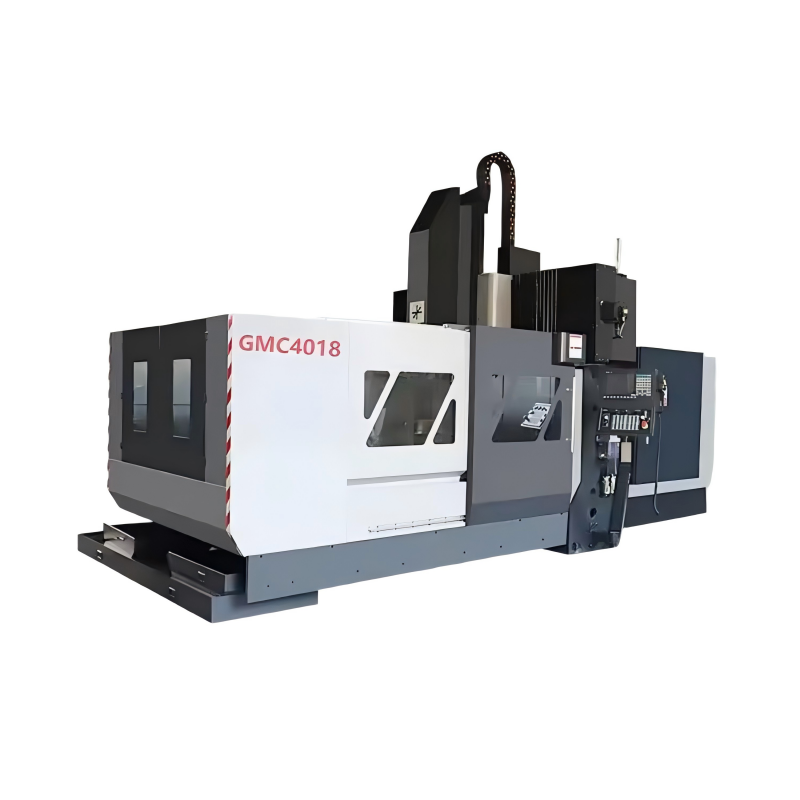
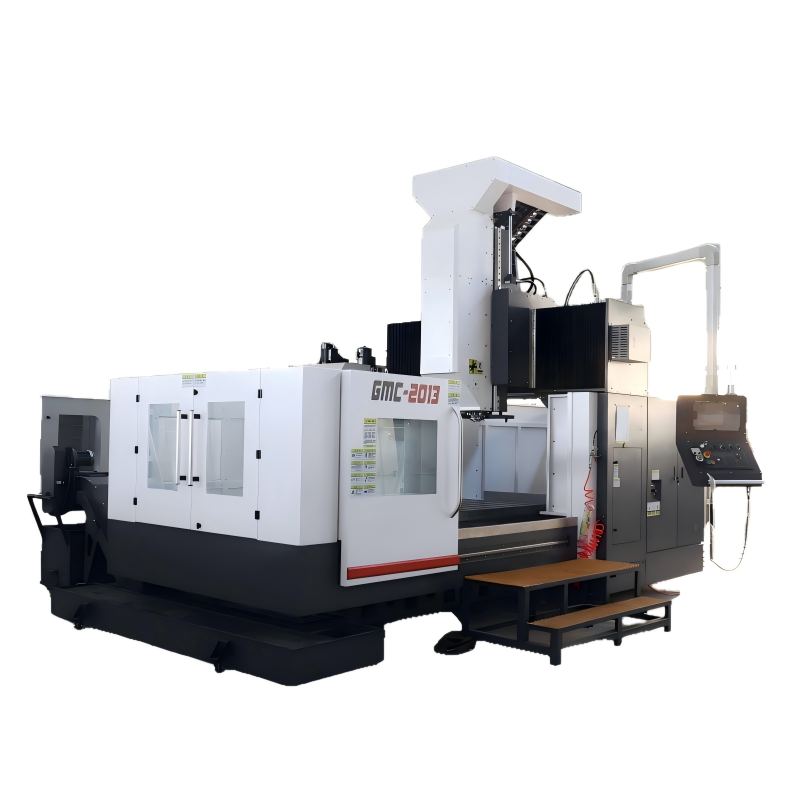
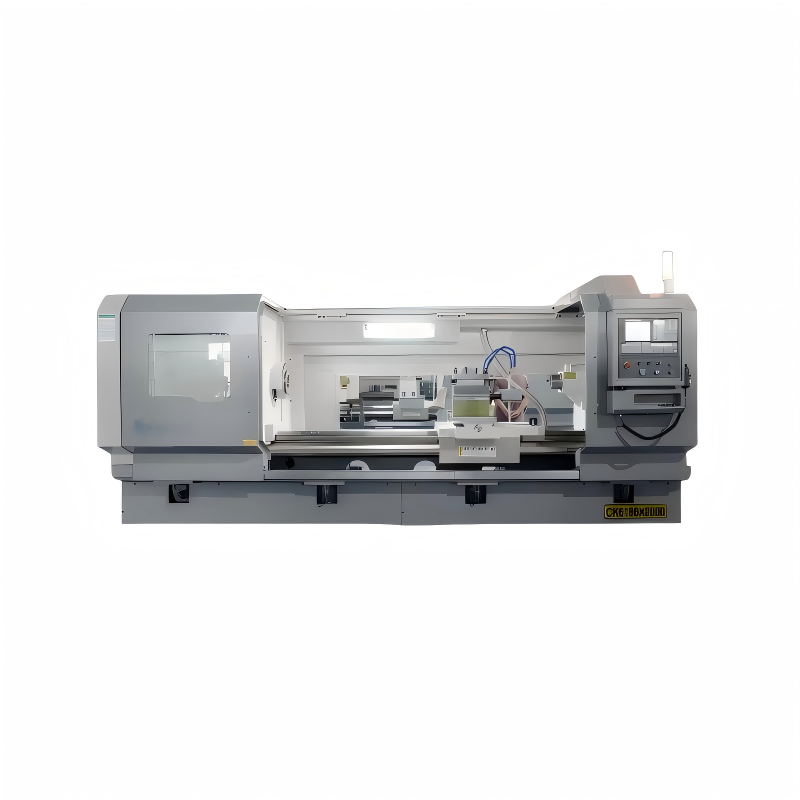
The 4 Axis Vertical Machining Center (VMC) has seen significant advancements in recent years, particularly in terms of precision and accuracy. These improvements are largely due to the integration of advanced servo motors and feedback systems, which allow for finer control over the machine's movements. High-resolution encoders and linear scales provide real-time data on the position and velocity of the axes, enabling the VMC to achieve micron-level accuracy. This level of precision is crucial for industries such as aerospace, automotive, and medical device manufacturing, where even the slightest deviation can result in defective parts.
Moreover, the use of advanced materials in the construction of the 4 Axis VMC, such as high-strength alloys and composites, contributes to increased stability and reduced vibration. This, in turn, enhances the overall accuracy and surface finish of the machined parts. The combination of these technological advancements has made the 4 Axis VMC a preferred choice for high-precision machining applications.
Another key area of innovation in the 4 Axis Vertical Machining Center is the enhancement of productivity and efficiency. Modern 4 Axis VMCs are equipped with features that significantly reduce setup times and increase throughput. For example, the incorporation of automatic tool changers (ATCs) allows for rapid and seamless switching between different tools, minimizing downtime and maximizing production capacity. Additionally, the use of pallet changers and workpiece handling systems enables continuous operation by allowing the machine to load and unload parts automatically, further boosting productivity.
Advanced software solutions, such as computer-aided manufacturing (CAM) and machine learning algorithms, also play a crucial role in optimizing the machining process. CAM software can generate highly efficient toolpaths, reducing the time required for programming and ensuring optimal use of the 4 Axis VMC's capabilities. Machine learning algorithms, on the other hand, can analyze data from the machining process to identify patterns and make real-time adjustments, leading to improved performance and reduced scrap rates.
The integration of smart manufacturing technologies is transforming the 4 Axis Vertical Machining Center into a more intelligent and connected system. Internet of Things (IoT) sensors and devices are being used to monitor various parameters of the VMC, such as temperature, vibration, and wear, in real-time. This data is then transmitted to a central control system, where it can be analyzed to predict potential issues and schedule maintenance proactively. This predictive maintenance approach helps to minimize unplanned downtime and extend the lifespan of the 4 Axis VMC.
Furthermore, the 4 Axis VMC can be integrated into a broader smart manufacturing ecosystem, where it can communicate and collaborate with other machines and systems. For instance, the VMC can receive instructions and updates from a manufacturing execution system (MES), ensuring that it is always operating with the latest information and parameters. This connectivity also enables the 4 Axis VMC to participate in Industry 4.0 initiatives, such as digital twins and augmented reality, which can further enhance its capabilities and flexibility.
One of the most significant advantages of the 4 Axis Vertical Machining Center is its ability to be customized and adapted to specific manufacturing needs. Modern 4 Axis VMCs offer a wide range of configurations and options, allowing manufacturers to tailor the machine to their unique requirements. For example, the addition of a fourth axis, typically a rotary table or trunnion, provides the capability to machine complex geometries and perform multi-sided operations in a single setup. This not only improves the quality and consistency of the parts but also reduces the need for multiple setups, saving time and resources.
Additionally, the 4 Axis VMC can be equipped with specialized tooling and accessories, such as high-speed spindles, coolant systems, and probing devices, to enhance its functionality and versatility. These customizations enable the 4 Axis VMC to handle a diverse range of materials and applications, from soft plastics to hard metals, and from simple to intricate designs. The flexibility of the 4 Axis VMC makes it a versatile solution for a wide array of manufacturing environments.
The 4 Axis Vertical Machining Center continues to evolve, driven by innovations in precision, productivity, smart manufacturing, and customization. These advancements have not only enhanced the capabilities of the 4 Axis VMC but also expanded its applications across various industries. As technology continues to advance, the 4 Axis VMC is poised to play an even more critical role in the future of manufacturing, delivering high-quality, efficient, and flexible solutions to meet the ever-changing demands of the industry.
 26/06/2026
The rapid advancements in manufacturing technology have propelled the industry into a new era, characterized by increased efficiency, precision, and versatility. One of the key technologies driving this transformation is the 4 Axis Vertical Machining Cent
Read More26/06/2026The Evolution of 4 Axis Vertical Machining Centers in ManufacturingThe 4 axis vertical machining center has become a cornerstone in the manufacturing industry, offering an enhanced level of precision and efficiency over its predecessors. These machines ar
Read More26/06/2026Introduction to 4 Axis Vertical Machining CentersThe 4 axis vertical machining center is a critical tool in modern manufacturing, offering an enhanced level of precision and flexibility compared to traditional 3-axis machines. This type of machine adds an
Read More25/06/2026Understanding the Basics of 4 Axis Vertical Machining CentersA 4 Axis Vertical Machining Center (VMC) is a sophisticated piece of machinery that has significantly advanced the capabilities of modern manufacturing. Unlike its 3-axis counterpart, which oper
Read More25/06/2026When it comes to investing in a 4 Axis Vertical Machining Center, the decision requires careful consideration of multiple factors. This type of machining center is designed to provide precision and efficiency, making it a critical asset for many manufactu
Read More25/06/2026The evolution of machining technology has led to the development of advanced systems capable of performing complex operations with high precision. Among these, the 4 Axis Vertical Machining Center stands out as a versatile and efficient solution for vario
Read More25/06/2026Vertical machining centers, especially those with 4-axis capabilities, have become indispensable in modern manufacturing environments. These machines are designed to offer a high degree of precision and flexibility, making them suitable for a wide range o
Read More24/06/2026In the realm of modern manufacturing, precision and efficiency are paramount. The 4 Axis Vertical Machining Center (VMC) has emerged as a pivotal tool in achieving these goals. This report delves into how a 4 Axis VMC can be leveraged to maximize efficien
Read More24/06/2026Understanding the Capabilities of a 4 Axis Vertical Machining CenterA 4 axis vertical machining center represents a significant leap in the capabilities of traditional 3-axis machines, adding an additional rotational axis that allows for more complex part
Read More24/06/2026The advent of 4 Axis Vertical Machining Centers (VMCs) has revolutionized the manufacturing industry, especially in high-volume production environments. These advanced machines are capable of performing complex operations with high precision and efficienc
Read More24/06/2026In the realm of precision engineering, advancements in technology have consistently pushed the boundaries of what is possible. Among these technological marvels, the 4 Axis Vertical Machining Center stands out as a revolutionary tool that has transformed
Read More23/06/2026Vertical machining centers (VMCs) have long been a staple in the manufacturing industry, providing precision, efficiency, and versatility. Among these, the 4 Axis Vertical Machining Center stands out as a highly advanced and capable machine, designed to h
Read More23/06/2026Understanding the Basics of 4 Axis Vertical Machining CentersA 4 axis vertical machining center represents a significant leap in the capabilities of traditional CNC (Computer Numerical Control) machines. Unlike its 3-axis counterpart, which can only move
Read More23/06/2026Understanding the 4 Axis Vertical Machining Center The advent of advanced manufacturing technologies has significantly transformed the production landscape, with the 4 Axis Vertical Machining Center (VMC) standing out as a pivotal tool in modern manufactu
Read More23/06/2026IntroductionThe 4 Axis Vertical Machining Center (VMC) represents a significant advancement in the field of manufacturing, particularly when it comes to the production of complex parts. This technology has revolutionized the way intricate components are m
Read MoreOur professional sales team is always ready to assist you.