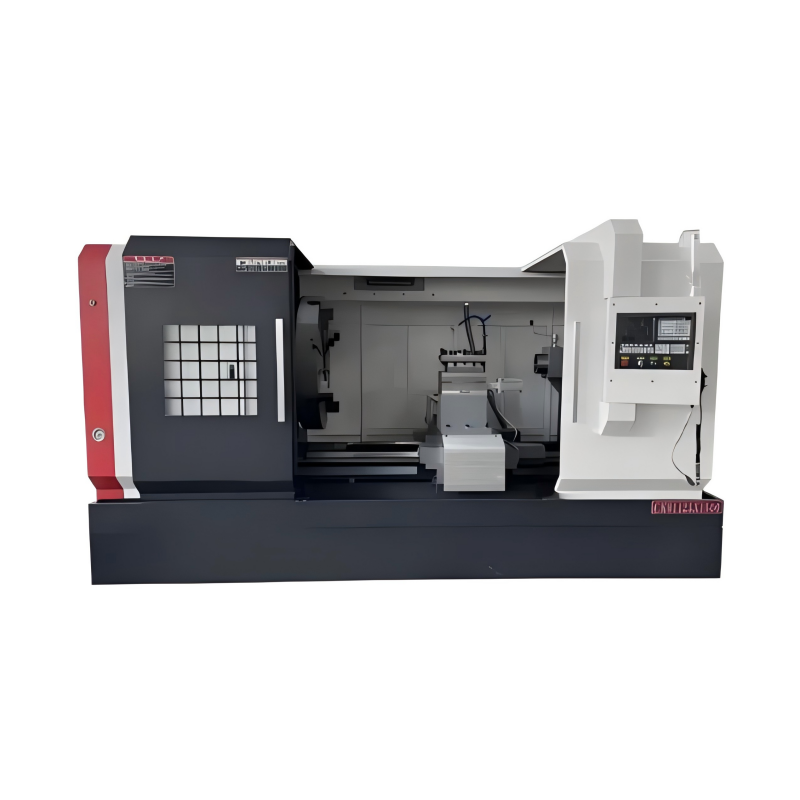
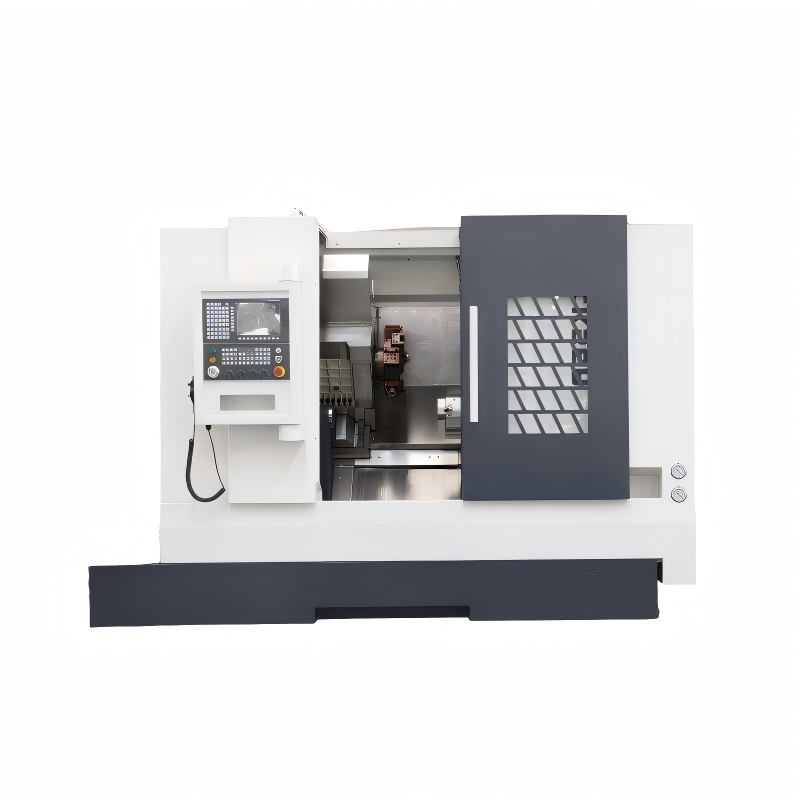
The precision and efficiency of CNC (Computer Numerical Control) lathes are crucial for manufacturing processes, especially in industries requiring high accuracy. Among the various factors influencing a CNC Lathe's performance, adjustments along the Z-axis play an essential role. This report explores how modifications to the Z-axis can significantly affect the overall efficiency of an X-Z Axis CNC Lathe, focusing on specific aspects such as speed, accuracy, and tool life. Through a detailed examination, it aims to provide insights into optimizing these machines for better productivity.
In the context of an X-Z Axis CNC Lathe, the Z-axis is responsible for the linear movement along the length of the workpiece. It enables the cutting tool to move towards or away from the spindle, which holds the material being worked on. The ability to precisely control this axis is fundamental to achieving the desired dimensions and finishes. Unlike the X-axis, which handles movements across the width of the piece, the Z-axis deals with depth and length, making it critical for tasks like threading, drilling, and facing operations. Its impact on the final product quality and production time cannot be overstated, underscoring the importance of proper adjustment and calibration.
The speed at which the Z-axis operates directly affects the cycle time of machining operations, thereby influencing the overall efficiency of the CNC lathe. Faster speeds can reduce the time required for each operation, potentially increasing the number of parts produced per hour. However, there is a balance to be struck; excessively high speeds may lead to vibrations, reduced accuracy, and increased wear on both the tools and the machine itself. Therefore, optimizing the Z-axis speed involves finding the sweet spot that maximizes throughput without compromising on the quality of the finished product. Techniques such as feed rate optimization, where the speed is adjusted based on the material properties and the specific requirements of the job, can help achieve this balance, ensuring that the CNC lathe operates at its most efficient.
Precision in machining is paramount, and the Z-axis plays a key role in achieving tight tolerances. By fine-tuning the Z-axis settings, operators can minimize errors and deviations, leading to more accurate parts. One effective method to enhance accuracy is by implementing micro-adjustment capabilities, allowing for incremental changes in position down to fractions of a millimeter. Additionally, using high-resolution encoders and feedback systems can further improve the positioning accuracy of the Z-axis, reducing backlash and ensuring consistent results. Regular maintenance, including checking and adjusting the alignment and lubrication of the axis, also contributes to maintaining high levels of precision over time. These measures not only enhance the quality of the output but also reduce scrap rates, contributing to cost savings and improved operational efficiency.
The longevity of cutting tools is another factor that is heavily influenced by Z-axis parameters. Properly configured Z-axis settings can significantly extend tool life, reducing the frequency of replacements and associated downtime. For instance, adjusting the feed rate and depth of cut can minimize stress on the tool, preventing premature wear. Implementing adaptive control technologies, which automatically adjust the Z-axis speed based on real-time monitoring of the cutting process, can also help in maintaining optimal conditions for the tool. Furthermore, using advanced coatings and materials for the cutting tools themselves, in conjunction with appropriate Z-axis settings, can further enhance their durability. By extending tool life, these strategies contribute to a more sustainable and cost-effective manufacturing process, ultimately improving the overall efficiency of the X-Z Axis CNC Lathe.
In conclusion, the Z-axis is a critical component in the operation of an X-Z Axis CNC Lathe, impacting everything from the speed of production to the accuracy of the final product and the lifespan of the tools used. By carefully calibrating and optimizing the Z-axis, manufacturers can significantly enhance the efficiency of their machining processes, leading to higher productivity, better quality, and lower costs. As technology continues to advance, the integration of smart systems and automation in Z-axis management will likely become even more prevalent, further driving improvements in CNC lathe performance.
 29/06/2026
The integration of advanced X-axis features in CNC lathes, particularly in the X-Z Axis CNC Lathe, has revolutionized the manufacturing process. This report delves into how these enhancements contribute to increased productivity, efficiency, and precision
Read More28/06/2026The X-Z Axis CNC Lathe is a powerful tool in the world of precision machining, offering unparalleled control over the manufacturing process. This article delves into mastering Z-Axis techniques to achieve superior results with your CNC lathe. By focusing
Read More27/06/2026The world of manufacturing has seen significant advancements with the integration of CNC (Computer Numerical Control) technology. One such critical piece of machinery in this domain is the X-Z Axis CNC Lathe, which plays a pivotal role in producing high-p
Read More26/06/2026Introduction to X-Z Axis CNC Lathes The world of manufacturing is constantly evolving, with new technologies and innovations pushing the boundaries of what's possible. One such innovation that has been redefining the capabilities of CNC (Computer Numerica
Read More26/06/2026The evolution of manufacturing technology has been nothing short of revolutionary, with X-Z Axis CNC Lathes playing a pivotal role in shaping the future of precision engineering. As we look ahead, it becomes increasingly important to understand not only h
Read More26/06/2026In the realm of precision manufacturing, an X-Z Axis CNC Lathe is a fundamental tool that allows for the creation of complex and accurate parts. This type of machine is particularly useful in industries where high precision and repeatability are critical,
Read More25/06/2026In the realm of modern manufacturing, the precision and efficiency of machinery play a pivotal role in determining the quality and productivity of the output. One such critical piece of equipment is the X-Z Axis CNC Lathe, which has become an indispensabl
Read More25/06/2026Understanding the Importance of Precision in X-Z Axis CNC Lathe SelectionIn today’s manufacturing landscape, the precision and accuracy of parts produced are critical factors that can make or break a business. An X-Z Axis CNC Lathe is a versatile machine
Read More25/06/2026Introduction to X-Z Axis CNC Lathe InnovationsThe evolution of manufacturing technologies, especially in the domain of Computer Numerical Control (CNC) lathes, has significantly transformed production processes. The X-Z axis CNC lathe, a pivotal piece of
Read More24/06/2026The evolution of manufacturing technology has seen a significant shift towards precision and efficiency, with CNC (Computer Numerical Control) lathes playing an increasingly pivotal role. Among the various components that contribute to the effectiveness o
Read More24/06/2026The X-Z Axis CNC Lathe is a vital piece of equipment in many manufacturing and machining environments, offering precision and versatility that traditional lathes cannot match. However, like all machinery, it requires regular maintenance to ensure optimal
Read More24/06/2026In the world of precision manufacturing, advancements in technology have continually pushed the boundaries of what is possible. One such innovation that stands out is the X-Z Axis CNC Lathe, a machine that has been making waves in the industry due to its
Read More23/06/2026The advent of Computer Numerical Control (CNC) lathes has revolutionized the manufacturing industry, allowing for unprecedented precision and efficiency in part production. Among the various components that contribute to the performance of a CNC lathe, th
Read More23/06/2026The development and application of X-Z Axis CNC Lathes have significantly influenced modern manufacturing processes, particularly in terms of efficiency, precision, and versatility. This report aims to explore the impact of X-Z Axis CNC Lathes on industri
Read More23/06/2026The field of manufacturing is continually evolving, with new technologies and techniques being developed to enhance efficiency, precision, and productivity. Among these, the X-Z Axis CNC Lathe stands out as a critical piece of machinery, capable of produc
Read More22/06/2026In the realm of precision manufacturing, the X-Z Axis CNC Lathe stands out as a versatile tool for creating intricate and accurate parts. This technical report delves into the critical role of the Z axis in CNC lathe operations, providing an in-depth unde
Read More22/06/2026In the ever-evolving landscape of modern manufacturing, the integration of advanced technologies has become a cornerstone for achieving unparalleled precision and efficiency. One such technological marvel is the X-Z Axis CNC Lathe, which stands out as a p
Read MoreOur professional sales team is always ready to assist you.