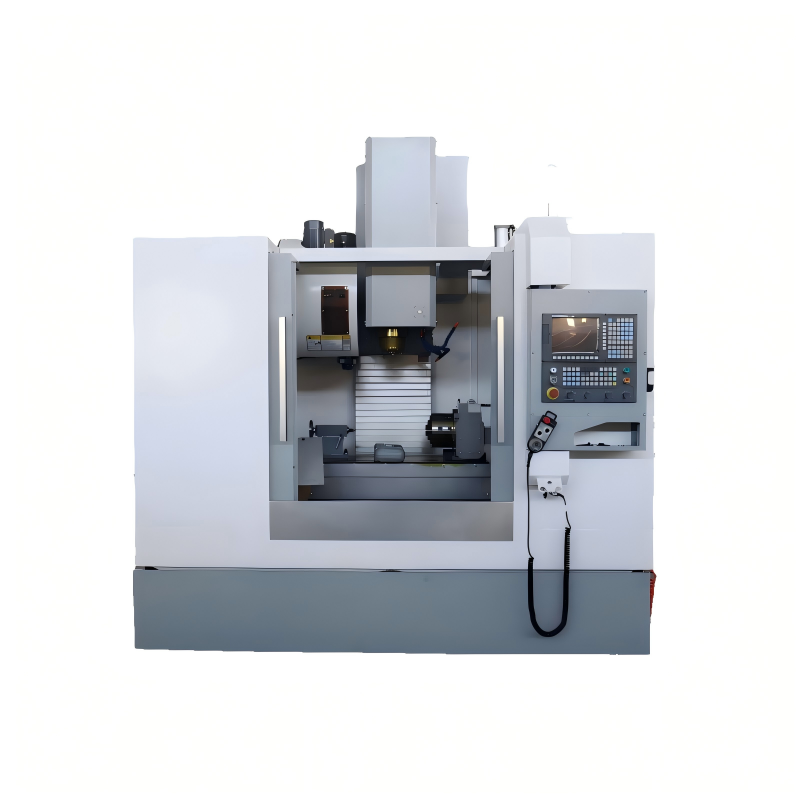
Linear guideways play a crucial role in the performance and efficiency of Vertical Machining Centers (VMCs). These components are essential for ensuring smooth, precise, and repeatable motion, which is fundamental to the machining process. In this technical report, we will explore how linear guideways contribute to the overall performance and efficiency of VMCs, focusing on their design, benefits, and maintenance.
Linear guideways, also known as linear guides or linear bearings, are mechanical components that guide and support linear motion. They are designed to provide low-friction, high-precision movement along a single axis. In VMCs, linear guideways are typically used to support the movement of the machine's axes, such as the X, Y, and Z axes. The design of these guideways is critical to the overall performance of the VMC.
There are several types of linear guideways, including ball screw guideways, roller guideways, and linear motor guideways. Each type has its own advantages and is suited to different applications. For example, ball screw guideways are known for their high precision and repeatability, making them ideal for applications requiring fine control. Roller guideways, on the other hand, offer higher load capacity and rigidity, which is beneficial for heavy-duty machining operations.
The choice of linear guideway depends on the specific requirements of the VMC, such as the desired level of precision, the expected loads, and the operating environment. Proper selection and integration of linear guideways can significantly enhance the performance and efficiency of the VMC.
One of the primary benefits of using linear guideways in VMCs is the enhancement of precision and repeatability. Linear guideways are designed to minimize friction and provide smooth, consistent motion, which is essential for achieving high-quality machined parts. The low-friction nature of these guideways reduces wear and tear, leading to longer service life and reduced maintenance costs.
High-precision linear guideways, such as those with recirculating ball or roller elements, can achieve sub-micron levels of accuracy. This level of precision is critical in industries such as aerospace, automotive, and medical device manufacturing, where tolerances are extremely tight. The ability to consistently produce parts with high accuracy and repeatability is a key factor in the success of these industries.
Additionally, linear guideways help to reduce backlash, which is the amount of play or looseness in a mechanism. Backlash can lead to inaccuracies in the machining process, but well-designed linear guideways can minimize this issue, resulting in more precise and reliable machining operations.
Linear guideways not only enhance precision but also contribute to increased speed and productivity in VMCs. High-speed machining is becoming increasingly important in modern manufacturing, as it allows for faster production cycles and higher throughput. Linear guideways with low-friction designs enable rapid and smooth movement of the machine's axes, allowing for faster cutting speeds and feed rates.
For example, linear motor guideways, which use electromagnetic forces to move the machine's axes, can achieve very high acceleration and deceleration rates. This results in shorter cycle times and increased productivity. Moreover, the absence of mechanical contact in linear motor guideways reduces wear and extends the lifespan of the system, further contributing to long-term efficiency.
Another aspect of improving speed and productivity is the reduction of downtime. Linear guideways that are well-maintained and properly lubricated can operate for extended periods without requiring significant maintenance. This reduces the need for frequent stops and adjustments, leading to more continuous and efficient operation of the VMC.
To ensure the optimal performance and longevity of linear guideways in VMCs, regular maintenance is essential. Proper maintenance includes regular cleaning, lubrication, and inspection of the guideways. Contaminants such as dust, chips, and debris can accumulate on the guideways, leading to increased friction and wear. Regular cleaning and the use of appropriate lubricants can help to prevent these issues.
Lubrication is particularly important for maintaining the low-friction properties of linear guideways. Different types of lubricants, such as oils and greases, are available, and the choice of lubricant should be based on the specific requirements of the VMC and the operating environment. For example, in high-temperature environments, special heat-resistant lubricants may be required.
Inspection of the guideways is also crucial to identify any signs of wear or damage. Early detection of issues can prevent more serious problems and extend the lifespan of the guideways. Regular maintenance and inspection can help to ensure that the VMC operates at peak performance and efficiency, minimizing downtime and maximizing productivity.
Linear guideways are a critical component in the performance and efficiency of VMCs. Their design and functionality, combined with their ability to enhance precision, repeatability, speed, and productivity, make them indispensable in modern machining operations. By selecting the right type of linear guideway and implementing proper maintenance practices, manufacturers can achieve optimal performance and longevity in their VMCs, ultimately leading to higher quality and more efficient production.
 01/07/2026
IntroductionIn the realm of precision machining, Vertical Machining Centers (VMCs) play a pivotal role in achieving high accuracy and efficiency. A key component that significantly influences the performance of VMCs is the linear guideway. This technical
Read More30/06/2026Introduction to Linear Guideway VMC TechnologyThe integration of linear guideways into Vertical Machining Centers (VMC) has marked a significant leap in the precision and efficiency of modern machining processes. A Linear Guideway VMC, characterized by it
Read More30/06/2026IntroductionIn the realm of precision machining, the Linear Guideway VMC (Vertical Machining Center) stands out as a critical tool for achieving high-accuracy and reliable performance. The integration of linear guideways in VMCs has significantly enhanced
Read More29/06/2026Linear guideways have become a standard in the manufacturing industry, providing precision and reliability to machine tools. In this report, we will explore how integrating Linear Guideway VMC (Vertical Machining Centers) with Double Pallet Heavy HMC (Hor
Read More29/06/2026In the realm of precision manufacturing, the application of advanced machinery is crucial for achieving high accuracy and efficiency. One such innovation that has significantly impacted the industry is the Linear Guideway Vertical Machining Center (VMC).
Read More29/06/2026Vertical Machining Centers (VMCs) have become an indispensable part of modern manufacturing, offering precision and efficiency in a wide range of applications. One of the key components that significantly enhances the performance of VMCs is the Linear Gui
Read More28/06/2026Introduction to Linear Guideways in VMC Linear guideways, a critical component of modern Vertical Machining Centers (VMCs), play an essential role in ensuring precision, stability, and longevity. These components are designed to provide smooth, accurate,
Read More27/06/2026Linear Guideway VMC, or Vertical Machining Center, is a type of machine tool that plays an essential role in the manufacturing industry. It is designed to perform a variety of machining operations with high precision and efficiency. One of the key compone
Read More27/06/2026In the modern manufacturing landscape, precision and speed are critical factors that determine the competitiveness of a business. One technology that has significantly contributed to achieving these goals is the Linear Guideway VMC. This report delves int
Read More27/06/2026Understanding the Importance of Linear Guideways in VMC PerformanceLinear guideways play a crucial role in the overall performance and precision of Vertical Machining Centers (VMC). These components are responsible for guiding the movement of machine part
Read More27/06/2026Linear guideways are an essential component in the design and operation of Vertical Machining Centers (VMC), providing precision, stability, and efficiency. This report delves into the advanced features of linear guideways that significantly enhance the p
Read More26/06/2026Introduction to Linear Guideways in VMC Linear guideways play a crucial role in the performance and efficiency of Vertical Machining Centers (VMC). These components are responsible for guiding and supporting the movement of machine parts, ensuring smooth,
Read More26/06/2026Linear guideways are a critical component in the operation and performance of Vertical Machining Centers (VMCs), providing the necessary precision, stability, and durability for high-accuracy machining processes. However, like any mechanical system, they
Read More26/06/2026Linear guideways are a critical component in the design and operation of vertical machining centers (VMC). They provide the necessary support and guidance for the movement of the machine's components, ensuring precision, stability, and longevity. This rep
Read More26/06/2026Linear guideways are critical components in the design and operation of Vertical Machining Centers (VMCs), playing a pivotal role in ensuring precision, stability, and longevity. The choice of linear guideway can significantly impact the overall performan
Read More25/06/2026In the world of manufacturing, precision and efficiency are paramount. Vertical Machining Centers (VMCs) play a crucial role in achieving these goals, and one of the key components that enhance their performance is the linear guideway. This report explore
Read More25/06/2026Linear Guideway VMCs (Vertical Machining Centers) are a staple in the modern manufacturing industry, offering unparalleled precision and efficiency. This report aims to explore best practices for utilizing linear guideways within VMCs to maximize producti
Read More25/06/2026Linear guideways have become a cornerstone in the advancement of Vertical Machining Centers (VMCs), significantly influencing their performance, precision, and overall efficiency. As we look towards the future, it is essential to understand the current tr
Read More25/06/2026Linear guideways play a crucial role in the performance and longevity of Vertical Machining Centers (VMCs). These components are responsible for ensuring smooth, precise, and repeatable motion along the X, Y, and Z axes. This comprehensive guide aims to p
Read More24/06/2026Linear guideways play a crucial role in the performance and efficiency of Vertical Machining Centers (VMC). These components are essential for ensuring smooth, precise, and reliable motion in VMCs, which are widely used in various manufacturing processes.
Read More24/06/2026The evolution of manufacturing technologies has led to significant advancements in the design and functionality of machine tools. Among these, the Linear Guideway Vertical Machining Center (VMC) stands out as a critical component for precision machining o
Read More24/06/2026Understanding the Importance of Linear Guideways in VMCsWhen it comes to the performance and longevity of a Vertical Machining Center (VMC), the choice of Linear Guideway VMC can significantly influence both. A linear guideway is an essential component th
Read More24/06/2026The advancement in manufacturing technology has brought about significant improvements in the efficiency and performance of various machine tools. One such innovation, the Linear Guideway, when integrated into Vertical Machining Centers (VMCs), demonstrat
Read More23/06/2026Linear guideways play a crucial role in the precision and performance of Vertical Machining Centers (VMCs). As manufacturing industries continue to demand higher accuracy, faster processing speeds, and longer machine life, the enhancements made to linear
Read More23/06/2026Understanding the Role of Linear Guideways in VMCsIn the realm of precision engineering, the Vertical Machining Center (VMC) stands out as a versatile and indispensable tool. A key component contributing to its accuracy and efficiency is the linear guidew
Read More23/06/2026In the realm of modern manufacturing, precision and efficiency are paramount. One technology that significantly contributes to achieving these goals is the Vertical Machining Center (VMC) equipped with linear guideways. This report delves into how VMCs, p
Read More23/06/2026The evolution of manufacturing technologies has led to significant improvements in the efficiency, precision, and durability of machining processes. One such advancement is the integration of linear guideways into Vertical Machining Centers (VMCs). This t
Read MoreOur professional sales team is always ready to assist you.