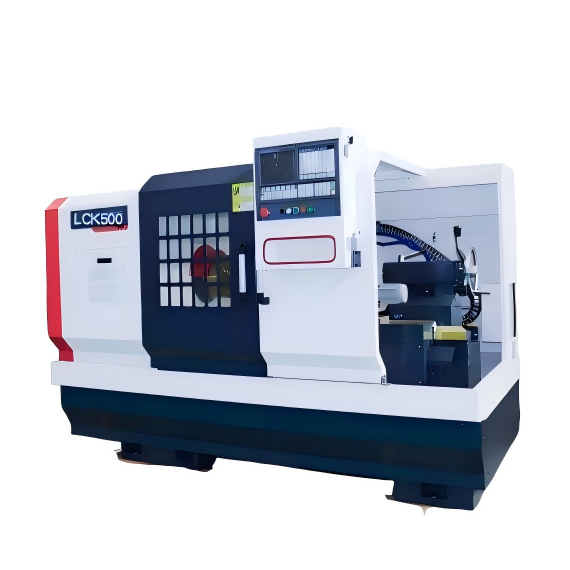
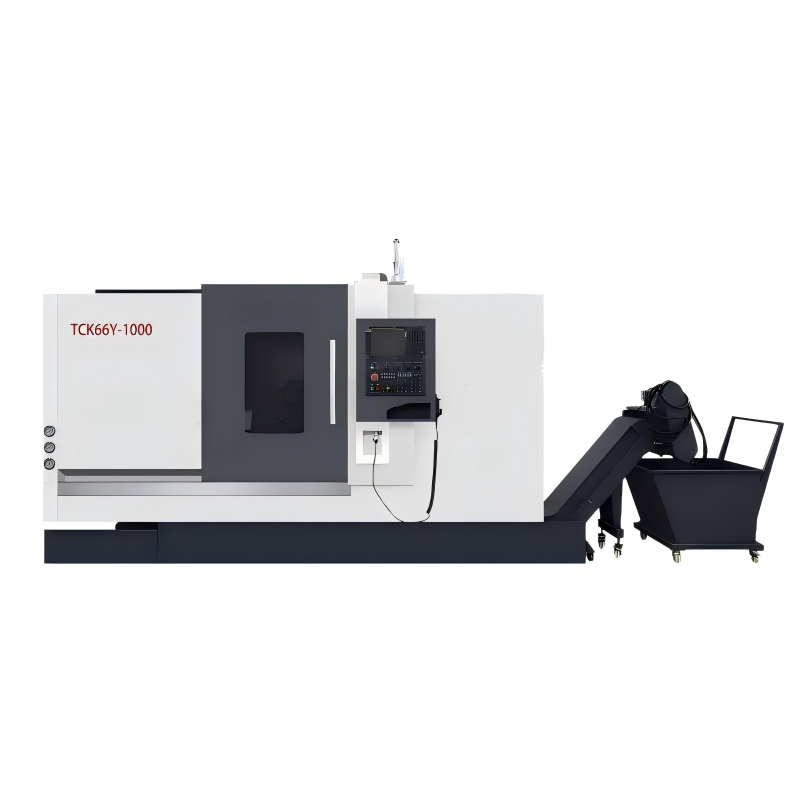
In the annals of manufacturing history, the industrial lathe machine has been a cornerstone in the evolution of precision engineering. Its origins can be traced back to ancient civilizations where rudimentary lathes were used for woodworking and metalworking. However, it was not until the Industrial Revolution that the industrial lathe machine began to take on its modern form. Innovations such as the steam engine and the advent of interchangeable parts by Eli Whitney in the late 18th century laid the groundwork for the development of more advanced and efficient lathes. These early machines were primarily manual, requiring skilled operators to turn the workpiece and control the cutting tool. The introduction of belt-driven systems and the use of cast iron for the bed and headstock improved the durability and accuracy of these machines, setting the stage for further advancements.
The mid-20th century marked a significant turning point in the evolution of the industrial lathe machine. The invention of numerical control (NC) in the 1940s and 1950s, followed by the development of computer numerical control (CNC) in the 1960s, revolutionized the manufacturing industry. CNC Lathes allowed for the automation of the machining process, enabling the production of complex and precise parts with minimal human intervention. This shift from manual to automated operations significantly increased productivity, reduced errors, and enhanced the overall quality of machined components. The integration of microprocessors and software in the 1970s and 1980s further refined CNC technology, allowing for more sophisticated programming and real-time monitoring of the machining process. Today, CNC lathes are equipped with advanced features such as multi-axis capabilities, live tooling, and high-speed spindles, making them indispensable in modern manufacturing environments.
The continuous improvement in materials science and design principles has also played a crucial role in the evolution of the industrial lathe machine. The use of high-strength alloys, such as stainless steel and titanium, has led to the development of lathes capable of handling more demanding applications, including those in the aerospace and medical industries. Additionally, the incorporation of composite materials and advanced ceramics has contributed to the reduction of weight and the enhancement of wear resistance in critical components. Modern lathes are designed with modular architectures, allowing for easy customization and upgrades. This flexibility enables manufacturers to adapt their machinery to meet the specific needs of their production processes, thereby optimizing efficiency and reducing downtime. Furthermore, the integration of smart sensors and predictive maintenance systems has enabled real-time monitoring and proactive maintenance, ensuring the longevity and reliability of the industrial lathe machine.
The advent of Industry 4.0 and the digital transformation of the manufacturing sector have brought about a new era for the industrial lathe machine. The integration of Internet of Things (IoT) technologies, artificial intelligence (AI), and big data analytics has transformed the way lathes operate and interact with other manufacturing systems. IoT-enabled lathes can collect and transmit data on various performance metrics, such as spindle speed, tool wear, and temperature, to centralized control systems. This data can then be analyzed to optimize machine settings, predict maintenance needs, and improve overall operational efficiency. AI algorithms can be employed to detect anomalies and potential failures, enabling proactive measures to prevent downtime. Additionally, the use of augmented reality (AR) and virtual reality (VR) in training and simulation has enhanced the skills and knowledge of machine operators, leading to better utilization of the industrial lathe machine. As the manufacturing landscape continues to evolve, the industrial lathe machine remains at the forefront of technological innovation, driving the future of precision engineering.
As the world becomes increasingly conscious of environmental sustainability, the design and operation of the industrial lathe machine have also evolved to address these concerns. Modern lathes are designed with energy-efficient motors and drives, reducing power consumption and lowering the carbon footprint of manufacturing operations. The use of regenerative braking systems and energy recovery technologies has further enhanced the energy efficiency of these machines. Additionally, the adoption of eco-friendly coolants and lubricants has minimized the environmental impact of the machining process. Manufacturers are also focusing on the recyclability of machine components and the use of sustainable materials in the construction of lathes. These efforts not only contribute to a greener manufacturing environment but also align with the growing demand for sustainable practices in the industry. The future of the industrial lathe machine is likely to see even more innovations in this area, as manufacturers continue to prioritize sustainability and environmental responsibility.
 25/06/2026
Industrial lathe machines have been a cornerstone of manufacturing processes for centuries, evolving from simple hand-operated devices to sophisticated, automated systems. In today's fast-paced industrial landscape, the transition towards automation is no
Read More25/06/2026Understanding the Basics of an Industrial Lathe MachineAn industrial lathe machine is a fundamental tool in the manufacturing industry, used for shaping materials by rotating them against a cutting tool. This process, known as turning, can create complex
Read More25/06/2026The evolution of industrial lathe machines has been a significant driving force behind the advancement of manufacturing processes, enabling more precise, efficient, and versatile production capabilities. This report delves into the historical development
Read More24/06/2026Industrial lathe machines play a crucial role in manufacturing processes, providing the precision and efficiency needed for turning, facing, and threading operations. Proper maintenance of these machines is essential to ensure their longevity, performance
Read More24/06/2026The industrial lathe machine stands as a cornerstone in the world of manufacturing, playing an indispensable role in shaping materials with precision and efficiency. As technology advances, so too does the potential for optimizing these machines to delive
Read More24/06/2026IntroductionSelecting the right industrial lathe machine is a critical decision for any workshop, as it directly impacts productivity, precision, and overall efficiency. An industrial lathe machine is an essential tool in manufacturing, capable of perform
Read More23/06/2026The industrial lathe machine has long been a cornerstone of manufacturing, providing the precision and versatility needed to shape materials into intricate parts. As technology advances, these machines continue to evolve, incorporating new features that e
Read More23/06/2026Industrial Lathe Machines play a crucial role in the manufacturing industry, particularly when it comes to creating cylindrical parts with high precision. The importance of precision cannot be overstated, as even the slightest deviation can result in subs
Read More23/06/2026Industrial lathe machines are essential tools in the manufacturing and engineering sectors, playing a crucial role in shaping and machining various materials. These machines are designed to rotate a workpiece on its axis to perform operations such as cutt
Read More23/06/2026In the realm of modern manufacturing, the Industrial Lathe Machine stands as a cornerstone, enabling precise and efficient production processes. This versatile tool has evolved significantly over the years, adapting to the changing demands of the industry
Read MoreOur professional sales team is always ready to assist you.