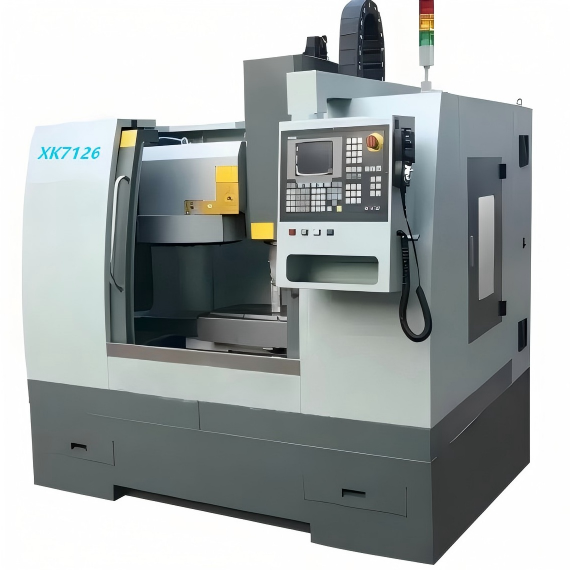
In the realm of modern manufacturing, the adoption and integration of advanced technologies play a pivotal role in enhancing efficiency, precision, and productivity. Among these technologies, the 3 Axis Vertical Machining Center stands out as a versatile and indispensable tool. This report delves into the significance of 3 Axis Vertical Machining Centers (VMCs) in contemporary manufacturing, exploring their applications, advantages, and the impact they have on production processes.
The Versatility of 3 Axis VMCs in Diverse Manufacturing Applications
One of the most significant advantages of 3 Axis VMCs is their versatility. These machines are capable of performing a wide range of operations, including milling, drilling, tapping, and boring. The three axes—X, Y, and Z—allow for precise movement and positioning, enabling the machining of complex geometries with high accuracy. This versatility makes 3 Axis VMCs suitable for various industries, from automotive and aerospace to medical and consumer goods. For instance, in the automotive industry, 3 Axis VMCs are used to manufacture engine components, transmission parts, and other critical assemblies. In the aerospace sector, they are essential for producing intricate parts such as turbine blades and structural components. The ability to handle diverse materials, including metals, plastics, and composites, further enhances their utility across different manufacturing environments.
Enhancing Precision and Quality in Production Processes
Precision is a critical factor in modern manufacturing, and 3 Axis VMCs excel in this area. These machines are equipped with advanced control systems and high-precision spindles, ensuring that parts are machined to exact specifications. The use of computer-aided manufacturing (CAM) software allows for the creation of detailed toolpaths, which are then executed with high accuracy. This level of precision is particularly important in industries where tolerances are tight, such as in the production of medical devices or electronic components. Additionally, 3 Axis VMCs often feature automatic tool changers, which minimize downtime and ensure consistent quality throughout the production process. The combination of precision and automation results in higher part quality, reduced scrap rates, and increased overall efficiency.
Boosting Productivity and Reducing Lead Times
Efficiency is another key benefit of 3 Axis VMCs. These machines are designed to maximize productivity by minimizing setup times and optimizing machining processes. Features such as rapid traverse rates, high spindle speeds, and powerful cutting capabilities enable faster material removal and shorter cycle times. Furthermore, the integration of automated systems, such as pallet changers and robotic loading, allows for continuous operation, even during unattended shifts. This not only increases throughput but also reduces lead times, making it possible to meet tight deadlines and respond quickly to market demands. In a competitive manufacturing landscape, the ability to deliver high-quality products in a timely manner is crucial, and 3 Axis VMCs play a vital role in achieving this goal.
Cost-Effectiveness and Return on Investment
While the initial investment in a 3 Axis VMC can be significant, the long-term cost savings and return on investment (ROI) make them a worthwhile addition to any manufacturing facility. The high precision and efficiency of these machines reduce waste and rework, leading to lower production costs. Additionally, the ability to perform multiple operations in a single setup minimizes the need for additional equipment and labor, further contributing to cost savings. Maintenance costs are also relatively low, as 3 Axis VMCs are built to be durable and reliable. Regular maintenance, such as lubrication and calibration, ensures that the machine remains in optimal condition, extending its lifespan and maximizing its value over time. The combination of reduced operating costs, increased productivity, and improved product quality makes 3 Axis VMCs a cost-effective solution for modern manufacturing.
Integration with Industry 4.0 and Smart Manufacturing
The advent of Industry 4.0 and smart manufacturing has brought about a new era of connectivity and data-driven decision-making. 3 Axis VMCs are well-suited for integration into these advanced manufacturing systems. Many modern 3 Axis VMCs come equipped with features such as real-time monitoring, predictive maintenance, and data analytics. Real-time monitoring allows operators to track the performance of the machine and identify potential issues before they become critical. Predictive maintenance uses data analysis to anticipate when maintenance is needed, reducing downtime and extending the life of the machine. Data analytics provide valuable insights into production processes, enabling continuous improvement and optimization. By integrating 3 Axis VMCs with Industry 4.0 technologies, manufacturers can achieve greater flexibility, efficiency, and responsiveness, positioning themselves for success in a rapidly evolving industrial landscape.
In conclusion, the 3 Axis Vertical Machining Center is a cornerstone of modern manufacturing, offering versatility, precision, and efficiency. Its ability to handle a wide range of applications, enhance product quality, boost productivity, and integrate with advanced manufacturing systems makes it an essential tool for manufacturers across various industries. As technology continues to advance, the role of 3 Axis VMCs will only become more prominent, driving innovation and growth in the manufacturing sector.

 27/06/2026



