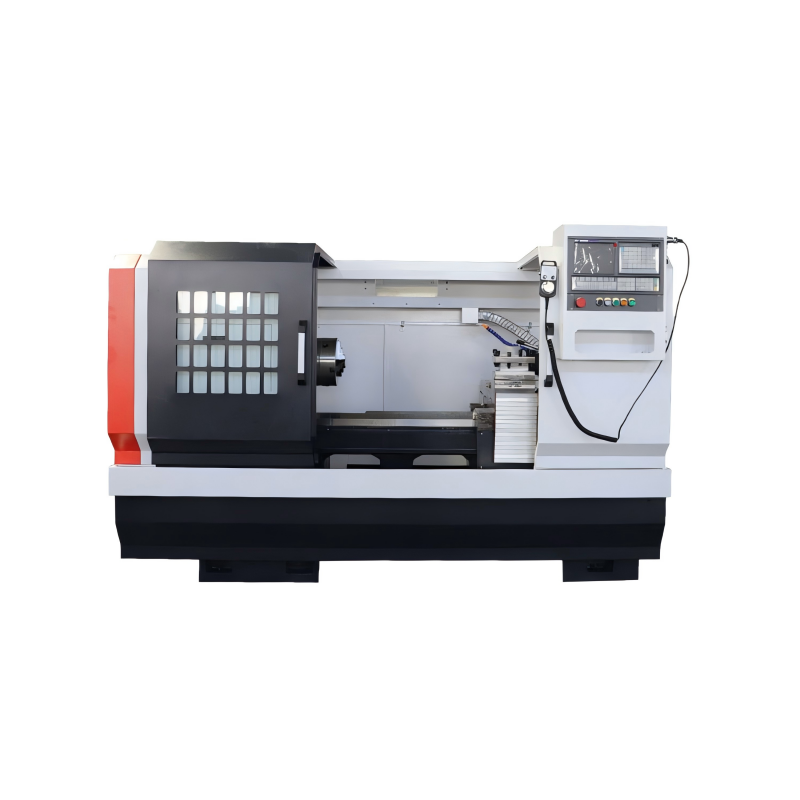
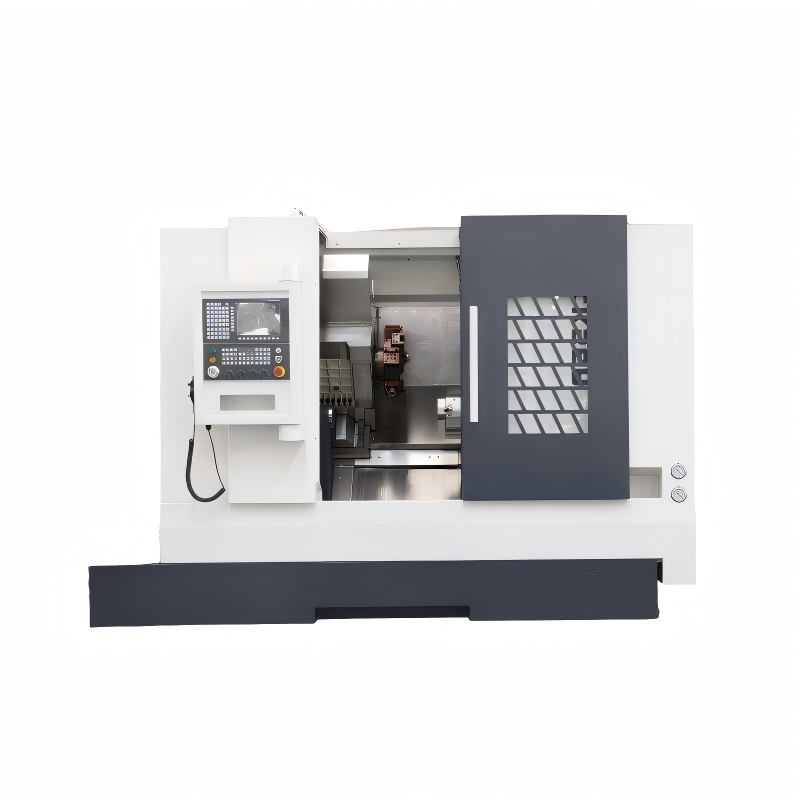
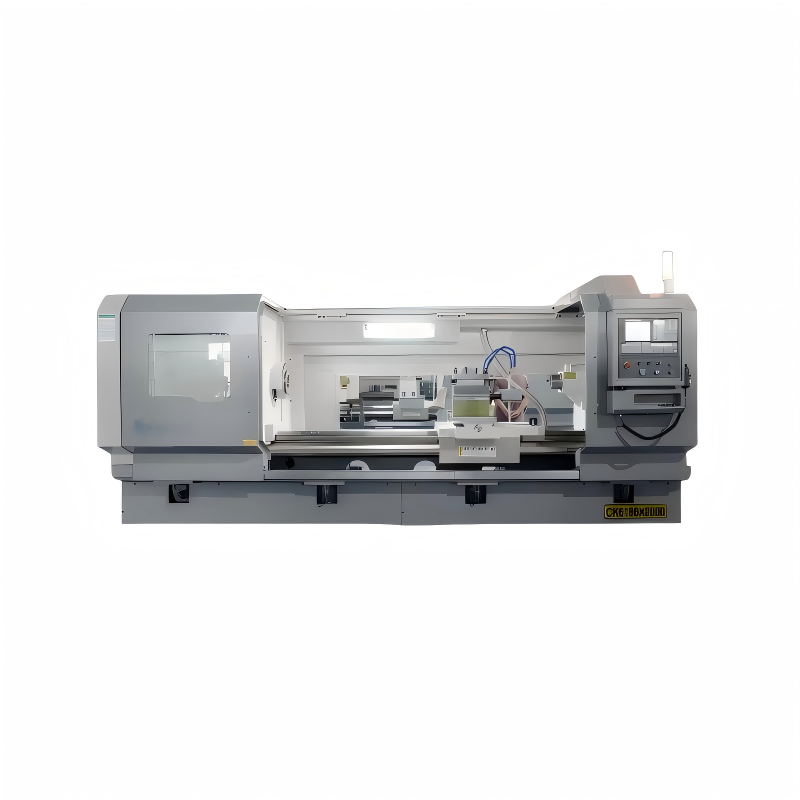
In the realm of precision engineering, the Horizontal 2-Axis CNC Lathe plays an indispensable role in manufacturing processes that require high accuracy and repeatability. This type of lathe is particularly favored for its ability to produce complex parts with tight tolerances, making it a cornerstone in industries such as aerospace, automotive, and medical devices. The versatility and precision of the Horizontal 2-Axis CNC Lathe are attributed to its advanced control systems, which enable operators to execute intricate machining operations with minimal human intervention. This report delves into the pivotal functions of the Horizontal 2-Axis CNC Lathe within precision engineering, highlighting key areas where this technology excels.
Enhancing Production Efficiency Through Automation
The integration of automation features in the Horizontal 2-Axis CNC Lathe significantly enhances production efficiency by reducing cycle times and minimizing setup changes. Automated tool changers, for instance, allow for seamless transitions between different cutting tools, thereby decreasing downtime associated with manual adjustments. Moreover, the programmable nature of these lathes means that once a part program is developed, it can be reused multiple times, ensuring consistency across large batches of components. This not only speeds up the manufacturing process but also reduces the likelihood of errors that might arise from repetitive manual setups. In essence, the automation capabilities of the Horizontal 2-Axis CNC Lathe contribute to a more streamlined and efficient production environment, enabling companies to meet stringent delivery schedules without compromising on quality.
Improving Part Accuracy and Consistency
One of the most significant advantages offered by the Horizontal 2-Axis CNC Lathe is its unparalleled ability to maintain high levels of accuracy and consistency throughout the machining process. Modern CNC lathes come equipped with sophisticated feedback mechanisms, including encoders and sensors, which continuously monitor and adjust the position of the cutting tool relative to the workpiece. These real-time corrections ensure that deviations from the programmed path are minimized, resulting in parts that closely match the design specifications. Furthermore, the use of computer-aided design (CAD) and computer-aided manufacturing (CAM) software allows engineers to simulate the entire machining operation before any material is cut, identifying potential issues and optimizing the process for maximum efficiency. By leveraging these technologies, manufacturers can achieve extremely tight tolerances, often within microns, which is crucial for applications where dimensional accuracy is paramount, such as in the production of engine components or surgical instruments.
Flexibility in Material Handling and Machining Operations
The Horizontal 2-Axis CNC Lathe stands out for its flexibility in handling a wide range of materials and performing diverse machining operations. Whether working with metals like steel, aluminum, and titanium, or non-metallic substances such as plastics and composites, this lathe can be configured to deliver optimal results. The adaptability of the machine is further enhanced by its modular design, which allows for easy incorporation of additional accessories and attachments, such as live tooling and sub-spindles. Live tooling, for example, enables the lathe to perform milling, drilling, and tapping operations alongside turning, effectively transforming it into a multi-functional Machining Center. Sub-spindles, on the other hand, facilitate the simultaneous processing of both ends of a workpiece, increasing throughput and reducing the need for secondary operations. This level of flexibility makes the Horizontal 2-Axis CNC Lathe an ideal choice for shops that deal with a variety of projects, each requiring specific machining parameters and material properties.
Reducing Labor Costs and Operator Skill Requirements
Another critical benefit of adopting the Horizontal 2-Axis CNC Lathe is the reduction in labor costs and operator skill requirements. Traditional manual lathes demand highly skilled machinists who possess years of experience and a deep understanding of the machining process. In contrast, CNC lathes are designed to be user-friendly, with intuitive interfaces and graphical displays that simplify programming and operation. While some knowledge of G-code and basic machine maintenance is still necessary, the learning curve is considerably less steep compared to conventional machines. Additionally, because much of the machining process is automated, fewer operators are required to oversee the production, leading to lower labor expenses. This shift towards a more automated workforce also mitigates the risks associated with human error, contributing to a safer and more reliable manufacturing environment. As a result, businesses can allocate their resources more efficiently, focusing on value-added activities such as design and quality control, rather than on the day-to-day operation of the machinery.
Enabling Complex Geometries and Multi-Tasking Capabilities
Perhaps one of the most compelling reasons to invest in a Horizontal 2-Axis CNC Lathe is its capability to produce complex geometries and perform multiple tasks in a single setup. Advanced CNC lathes feature powerful controllers and robust algorithms that can handle intricate part programs, allowing for the creation of components with challenging shapes and contours. Features such as Y-axis functionality, C-axis indexing, and synchronized spindles enable the lathe to execute a wide array of operations, including off-center milling, cross-drilling, and engraving, all within the same machine. This multifunctionality not only simplifies the overall manufacturing process but also reduces the need for transferring parts between different machines, which can introduce errors and increase lead times. For example, in the aerospace industry, where components often have complex internal and external profiles, a Horizontal 2-Axis CNC Lathe can complete the entire machining sequence in a single pass, ensuring that the final product meets the exacting standards of the sector. This level of sophistication and versatility positions the Horizontal 2-Axis CNC Lathe as a vital asset in the pursuit of innovation and excellence in precision engineering.
In conclusion, the Horizontal 2-Axis CNC Lathe is a transformative tool in the field of precision engineering, offering numerous benefits that enhance the efficiency, accuracy, and flexibility of modern manufacturing processes. Its ability to automate routine tasks, improve part consistency, handle a variety of materials, reduce labor costs, and enable the production of complex geometries makes it an essential piece of equipment for any shop looking to stay competitive in today’s fast-paced industrial landscape. As technology continues to evolve, it is likely that the capabilities of the Horizontal 2-Axis CNC Lathe will only become more advanced, further cementing its role as a cornerstone of precision engineering.
 25/06/2026



