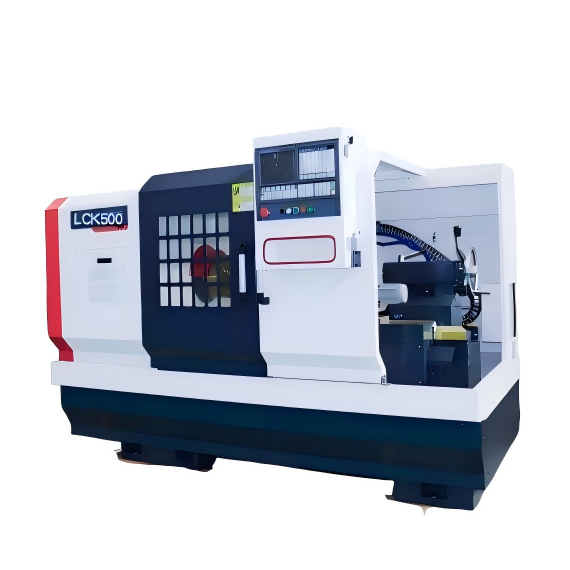
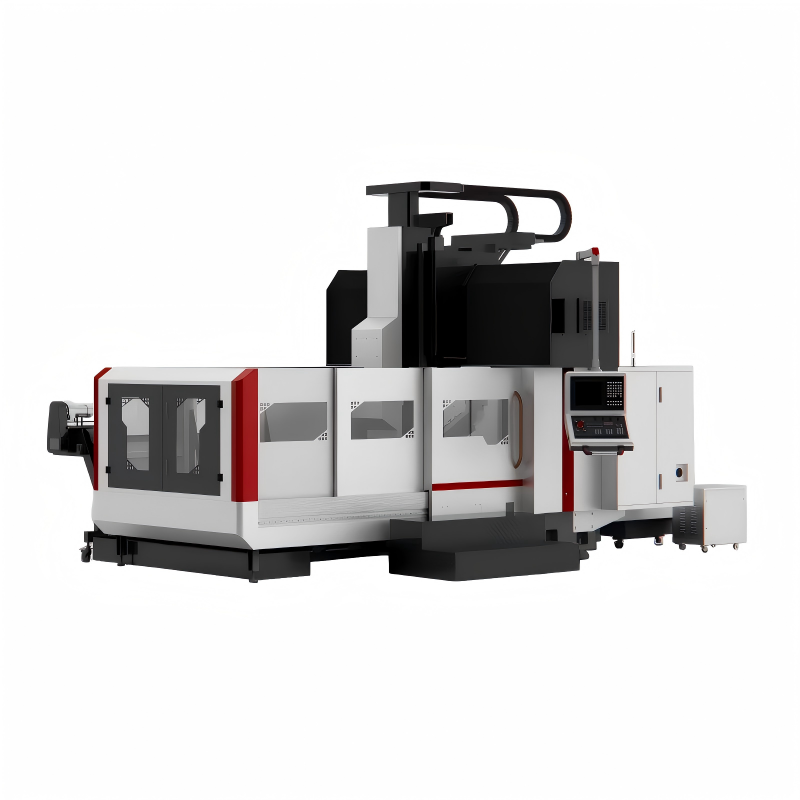
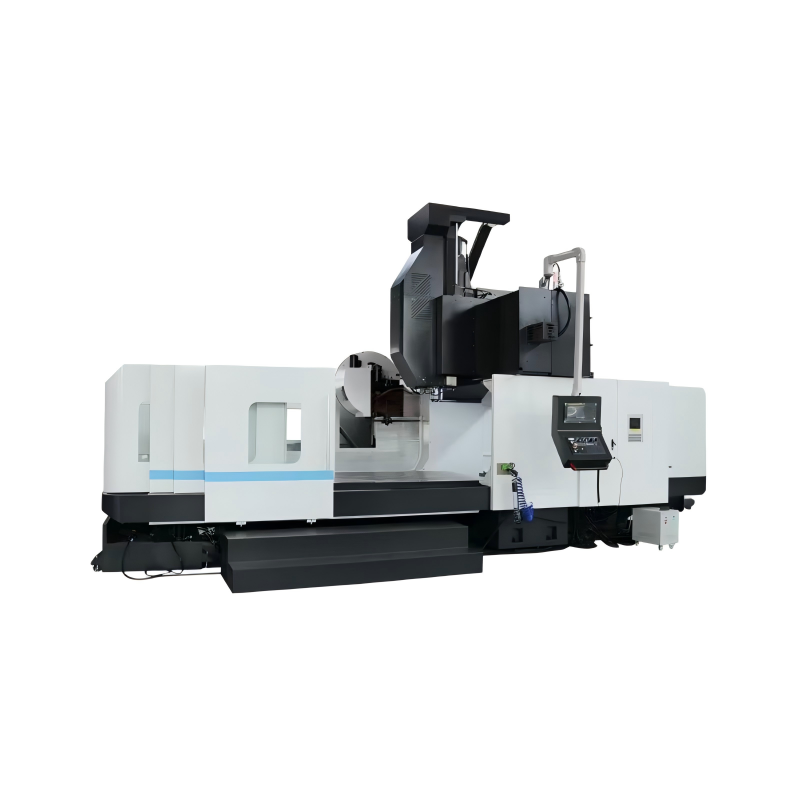
A 4 Axis Vertical Machining Center represents a significant advancement in machining technology, providing manufacturers with an efficient and versatile solution for producing complex parts. At its core, this machine operates on four axes: X, Y, Z, and A (or B), allowing for intricate workpiece manipulation that is beyond the capabilities of traditional 3-axis machines. The X, Y, and Z axes correspond to the standard Cartesian coordinate system, facilitating movement along the length, width, and height. The additional A or B axis, typically found around the spindle or table, enables rotational movement, greatly enhancing the machine's ability to handle more complicated geometries without manual intervention between operations.
The inclusion of the fourth axis significantly improves productivity by reducing setup times and enabling continuous multi-sided machining. This feature is particularly advantageous when working with cylindrical or irregularly shaped components where access to all sides is required. Moreover, modern 4 Axis Vertical Machining Centers are equipped with advanced control systems that simplify programming, making them accessible even to operators with limited experience in CNC (Computer Numerical Control) technologies.
One of the primary benefits of employing a 4 Axis Vertical Machining Center lies in its enhanced flexibility and precision. Unlike their 3-axis counterparts, these machines can perform simultaneous milling, drilling, and turning operations, which not only increases efficiency but also reduces the need for multiple setups. This capability is especially beneficial in industries such as aerospace, automotive, and medical device manufacturing, where high-precision and tight tolerances are critical.
Another significant advantage is the reduction in production time. By eliminating the necessity to reposition the workpiece manually, 4 Axis Vertical Machining Centers can complete jobs faster, thereby lowering labor costs and increasing overall throughput. Additionally, the ability to produce complex shapes in a single operation leads to higher quality outputs, as it minimizes the potential for errors associated with repeated setups and adjustments.
Furthermore, the integration of sophisticated software solutions into 4 Axis Vertical Machining Centers allows for easier and more intuitive programming. Modern CAD/CAM (Computer-Aided Design/Computer-Aided Manufacturing) systems provide powerful tools for designing and simulating part programs, ensuring optimal tool paths and minimizing material waste. These features, combined with the machine’s inherent versatility, make it an indispensable asset for any manufacturing facility aiming to stay competitive in today’s fast-paced market.
Selecting the appropriate 4 Axis Vertical Machining Center requires careful consideration of several factors, including the specific requirements of your projects, budget constraints, and long-term goals. First and foremost, it is essential to evaluate the size and type of materials you will be working with. Larger machines are better suited for handling big, heavy parts, while smaller, more compact units may offer sufficient capacity for lighter, more intricate components. Additionally, the maximum speed and power of the spindle should align with the demands of your applications; high-speed spindles are ideal for achieving fine finishes and rapid material removal rates.
Another critical aspect to consider is the accuracy and repeatability of the machine. High-precision 4 Axis Vertical Machining Centers, often featuring linear scales and thermal compensation systems, deliver consistent results across multiple runs, which is vital for maintaining product quality and meeting stringent industry standards. It is also advisable to assess the machine’s automation capabilities, such as automatic tool changers and pallet changers, as these features can further enhance productivity and reduce downtime.
Lastly, the support and training provided by the manufacturer play a crucial role in maximizing the utilization and longevity of your investment. Comprehensive training programs ensure that operators are proficient in using the machine, while reliable after-sales service guarantees prompt resolution of any technical issues. By carefully evaluating these criteria, you can select a 4 Axis Vertical Machining Center that not only meets your current needs but also supports future growth and innovation.
Beyond their conventional use in machining, 4 Axis Vertical Machining Centers have found innovative applications across various sectors, pushing the boundaries of what is possible in manufacturing. In the field of prototyping, these machines enable rapid iteration and testing of new designs, accelerating the development process and bringing products to market faster. For example, in the automotive industry, 4 Axis Vertical Machining Centers are used to create highly detailed and accurate prototypes of engine components, allowing engineers to validate performance and make necessary adjustments before mass production.
In the realm of custom manufacturing, 4 Axis Vertical Machining Centers provide the flexibility needed to produce one-of-a-kind, high-value items. This is particularly evident in the jewelry and watchmaking industries, where intricate patterns and precise engravings are essential. The ability to rotate the workpiece and apply tools from multiple angles ensures that even the most delicate and complex designs can be executed with unparalleled accuracy.
Moreover, 4 Axis Vertical Machining Centers are increasingly being utilized in the fabrication of medical implants and prosthetics. The precision and control offered by these machines are crucial for creating customized, patient-specific devices that fit perfectly and function optimally. In the context of additive manufacturing, 4 Axis Vertical Machining Centers can be integrated with 3D printing technologies to achieve hybrid manufacturing processes, combining the strengths of both methods to produce parts with superior mechanical properties and surface finishes.
These innovative applications highlight the versatility and adaptability of 4 Axis Vertical Machining Centers, demonstrating their value in driving technological advancements and meeting the evolving demands of diverse industries.
To ensure the optimal performance and longevity of a 4 Axis Vertical Machining Center, regular maintenance and upkeep are essential. One of the key aspects of maintenance is the routine inspection and cleaning of the machine. Dust, debris, and metal shavings can accumulate over time, potentially causing damage to sensitive components and affecting the machine’s accuracy. Regular cleaning, including the removal of chips and swarf, helps to maintain a clean working environment and prevents wear and tear.
Lubrication is another critical component of maintenance. Proper lubrication of moving parts, such as bearings, slides, and spindles, reduces friction and heat, extending the life of these components and ensuring smooth operation. It is important to follow the manufacturer’s recommendations for the type and frequency of lubricants, as well as the specific points that require attention.
Additionally, regular calibration and alignment checks are necessary to maintain the machine’s precision. Over time, the machine’s axes can drift out of alignment due to wear, temperature changes, and other factors. Calibration involves checking and adjusting the position and orientation of the axes to ensure they are within the specified tolerances. This process is typically performed using specialized tools and software, and it is recommended to conduct these checks at regular intervals, as specified by the manufacturer.
Finally, proactive replacement of worn or damaged parts is crucial for preventing unexpected downtime and maintaining the machine’s reliability. Components such as cutting tools, belts, and filters should be inspected regularly and replaced as needed. Keeping a stock of commonly used spare parts can help minimize delays and ensure that the machine is always ready for operation.
By adhering to a comprehensive maintenance schedule and following best practices, you can maximize the uptime and performance of your 4 Axis Vertical Machining Center, ensuring that it remains a valuable and reliable asset in your manufacturing operations.
 27/06/2026
The evolution of manufacturing technologies has led to the development of advanced machining solutions, with 4 Axis Vertical Machining Centers (VMCs) standing out as a significant advancement. These machines are designed to handle complex and precise mach
Read More27/06/2026Understanding the Importance of Regular MaintenanceMaintaining a 4 Axis Vertical Machining Center is crucial for ensuring its optimal performance and longevity. These sophisticated machines, which are designed to handle complex and precise machining tasks
Read More27/06/2026Understanding the Capabilities of 4 Axis Vertical Machining CentersThe introduction of 4 Axis Vertical Machining Centers (VMCs) has revolutionized the manufacturing industry, offering a versatile and efficient solution for producing complex parts. A 4 Axi
Read More26/06/2026The rapid advancements in manufacturing technology have propelled the industry into a new era, characterized by increased efficiency, precision, and versatility. One of the key technologies driving this transformation is the 4 Axis Vertical Machining Cent
Read More26/06/2026Advancements in Precision and AccuracyThe 4 Axis Vertical Machining Center (VMC) has seen significant advancements in recent years, particularly in terms of precision and accuracy. These improvements are largely due to the integration of advanced servo mo
Read More26/06/2026The Evolution of 4 Axis Vertical Machining Centers in ManufacturingThe 4 axis vertical machining center has become a cornerstone in the manufacturing industry, offering an enhanced level of precision and efficiency over its predecessors. These machines ar
Read More26/06/2026Introduction to 4 Axis Vertical Machining CentersThe 4 axis vertical machining center is a critical tool in modern manufacturing, offering an enhanced level of precision and flexibility compared to traditional 3-axis machines. This type of machine adds an
Read More25/06/2026Understanding the Basics of 4 Axis Vertical Machining CentersA 4 Axis Vertical Machining Center (VMC) is a sophisticated piece of machinery that has significantly advanced the capabilities of modern manufacturing. Unlike its 3-axis counterpart, which oper
Read More25/06/2026When it comes to investing in a 4 Axis Vertical Machining Center, the decision requires careful consideration of multiple factors. This type of machining center is designed to provide precision and efficiency, making it a critical asset for many manufactu
Read More25/06/2026The evolution of machining technology has led to the development of advanced systems capable of performing complex operations with high precision. Among these, the 4 Axis Vertical Machining Center stands out as a versatile and efficient solution for vario
Read More25/06/2026Vertical machining centers, especially those with 4-axis capabilities, have become indispensable in modern manufacturing environments. These machines are designed to offer a high degree of precision and flexibility, making them suitable for a wide range o
Read More24/06/2026In the realm of modern manufacturing, precision and efficiency are paramount. The 4 Axis Vertical Machining Center (VMC) has emerged as a pivotal tool in achieving these goals. This report delves into how a 4 Axis VMC can be leveraged to maximize efficien
Read More24/06/2026Understanding the Capabilities of a 4 Axis Vertical Machining CenterA 4 axis vertical machining center represents a significant leap in the capabilities of traditional 3-axis machines, adding an additional rotational axis that allows for more complex part
Read More24/06/2026The advent of 4 Axis Vertical Machining Centers (VMCs) has revolutionized the manufacturing industry, especially in high-volume production environments. These advanced machines are capable of performing complex operations with high precision and efficienc
Read More24/06/2026In the realm of precision engineering, advancements in technology have consistently pushed the boundaries of what is possible. Among these technological marvels, the 4 Axis Vertical Machining Center stands out as a revolutionary tool that has transformed
Read More23/06/2026Vertical machining centers (VMCs) have long been a staple in the manufacturing industry, providing precision, efficiency, and versatility. Among these, the 4 Axis Vertical Machining Center stands out as a highly advanced and capable machine, designed to h
Read More23/06/2026Understanding the Basics of 4 Axis Vertical Machining CentersA 4 axis vertical machining center represents a significant leap in the capabilities of traditional CNC (Computer Numerical Control) machines. Unlike its 3-axis counterpart, which can only move
Read More23/06/2026Understanding the 4 Axis Vertical Machining Center The advent of advanced manufacturing technologies has significantly transformed the production landscape, with the 4 Axis Vertical Machining Center (VMC) standing out as a pivotal tool in modern manufactu
Read More23/06/2026IntroductionThe 4 Axis Vertical Machining Center (VMC) represents a significant advancement in the field of manufacturing, particularly when it comes to the production of complex parts. This technology has revolutionized the way intricate components are m
Read MoreOur professional sales team is always ready to assist you.