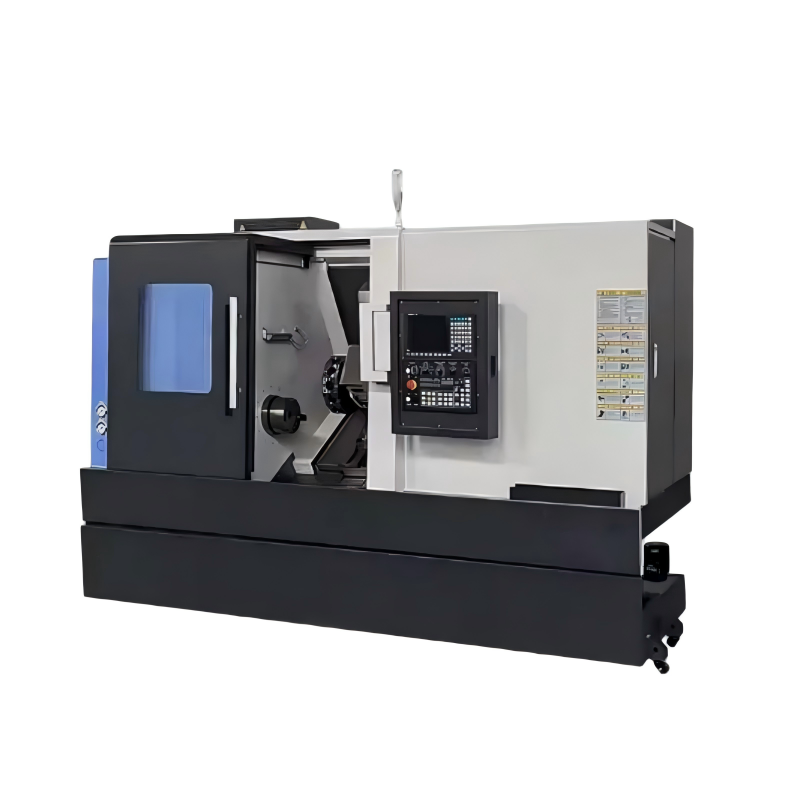
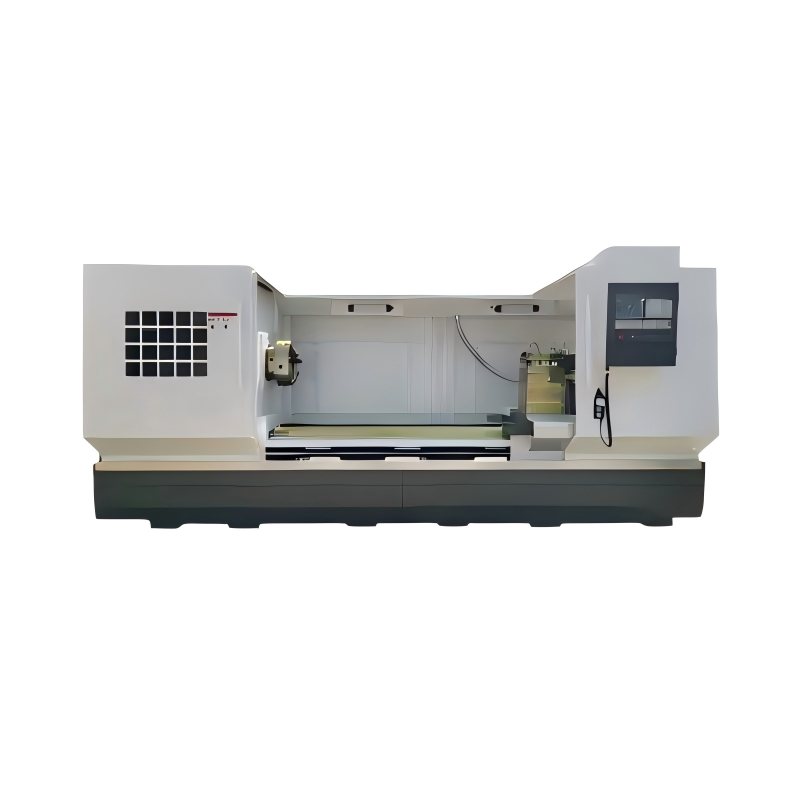
Maintaining a 4 Axis Vertical Machining Center is crucial for ensuring its optimal performance and longevity. These sophisticated machines, which are designed to handle complex and precise machining tasks, require regular care to function at their best. The importance of maintenance can be seen in several key areas: preventing unexpected downtime, reducing repair costs, and maintaining the quality of the work produced.
Regular maintenance helps identify potential issues before they become serious problems, thereby minimizing the risk of unscheduled machine downtime. This not only keeps the production line running smoothly but also prevents costly delays. Furthermore, by keeping the machine in good condition, you reduce the likelihood of major repairs, which can be both time-consuming and expensive. Finally, a well-maintained 4 Axis Vertical Machining Center will produce higher-quality parts, as it operates within its designed specifications, leading to better overall product outcomes.
When performing maintenance on a 4 Axis Vertical Machining Center, there are several critical components that should be inspected and serviced regularly. These include the spindle, tool changer, linear guides, and control system. Each of these elements plays a vital role in the machine's operation, and neglecting any one of them can lead to suboptimal performance or even failure.
The spindle is the heart of the machining center, responsible for rotating the cutting tools. It must be kept clean and properly lubricated to prevent wear and ensure smooth operation. The tool changer, which automates the process of switching between different tools, needs to be checked for alignment and wear. Misalignment or worn-out parts can cause errors during the tool change, leading to poor machining results. Linear guides, which guide the movement of the machine's axes, should be inspected for signs of wear and debris. Properly functioning linear guides are essential for achieving accurate and repeatable movements. Lastly, the control system, including the software and hardware, should be updated and calibrated to ensure that the machine operates according to the programmed instructions. Regular inspection and servicing of these components will help maintain the machine's precision and reliability.
To ensure that your 4 Axis Vertical Machining Center remains in top condition, it is essential to implement a preventive maintenance schedule. A well-structured maintenance plan should include daily, weekly, monthly, and annual tasks, each designed to address specific aspects of the machine's operation. By following a systematic approach, you can significantly extend the life of the machine and avoid costly breakdowns.
Daily maintenance tasks typically involve cleaning the machine, checking for leaks, and inspecting the tool holder and cutting tools for any damage. Weekly tasks may include lubricating moving parts, checking the coolant level, and verifying the alignment of the tool changer. Monthly tasks often involve more thorough inspections, such as checking the condition of the belts and bearings, and testing the accuracy of the linear guides. Annual maintenance, on the other hand, should include a comprehensive review of the entire machine, including the spindle, electrical systems, and control software. By adhering to this schedule, you can ensure that all critical components are regularly checked and maintained, thus maximizing the machine's performance and lifespan.
Effective maintenance of a 4 Axis Vertical Machining Center requires a well-trained and knowledgeable maintenance team. Providing regular training and access to detailed documentation is essential for ensuring that the team has the skills and information needed to perform their tasks correctly. Training should cover the operation, maintenance, and troubleshooting of the machine, as well as safety procedures and best practices.
Documentation, such as maintenance manuals, service logs, and troubleshooting guides, should be readily available to the maintenance team. These documents provide step-by-step instructions and reference materials that can help the team address common issues and perform routine maintenance tasks efficiently. Additionally, maintaining a detailed service log can help track the history of the machine, identify recurring issues, and plan for future maintenance activities. By investing in training and documentation, you can ensure that your maintenance team is well-equipped to keep the 4 Axis Vertical Machining Center running at its best.
Advancements in technology have made it possible to monitor and diagnose the condition of a 4 Axis Vertical Machining Center more effectively than ever before. Utilizing advanced monitoring and diagnostic tools can help detect potential issues early, allowing for timely intervention and preventing major failures. These tools can include vibration analysis, thermal imaging, and predictive maintenance software.
Vibration analysis involves measuring the vibrations of the machine's components to identify any irregularities that may indicate wear or misalignment. Thermal imaging can be used to detect hot spots in the machine, which can be a sign of mechanical or electrical issues. Predictive maintenance software uses data from sensors and other sources to predict when maintenance is required, based on the actual condition of the machine rather than a fixed schedule. By integrating these advanced tools into your maintenance strategy, you can achieve a higher level of machine reliability and efficiency.
 27/06/2026
Understanding the Core Components of a 4 Axis Vertical Machining CenterA 4 Axis Vertical Machining Center represents a significant advancement in machining technology, providing manufacturers with an efficient and versatile solution for producing complex
Read More27/06/2026The evolution of manufacturing technologies has led to the development of advanced machining solutions, with 4 Axis Vertical Machining Centers (VMCs) standing out as a significant advancement. These machines are designed to handle complex and precise mach
Read More27/06/2026Understanding the Capabilities of 4 Axis Vertical Machining CentersThe introduction of 4 Axis Vertical Machining Centers (VMCs) has revolutionized the manufacturing industry, offering a versatile and efficient solution for producing complex parts. A 4 Axi
Read More26/06/2026The rapid advancements in manufacturing technology have propelled the industry into a new era, characterized by increased efficiency, precision, and versatility. One of the key technologies driving this transformation is the 4 Axis Vertical Machining Cent
Read More26/06/2026Advancements in Precision and AccuracyThe 4 Axis Vertical Machining Center (VMC) has seen significant advancements in recent years, particularly in terms of precision and accuracy. These improvements are largely due to the integration of advanced servo mo
Read More26/06/2026The Evolution of 4 Axis Vertical Machining Centers in ManufacturingThe 4 axis vertical machining center has become a cornerstone in the manufacturing industry, offering an enhanced level of precision and efficiency over its predecessors. These machines ar
Read More26/06/2026Introduction to 4 Axis Vertical Machining CentersThe 4 axis vertical machining center is a critical tool in modern manufacturing, offering an enhanced level of precision and flexibility compared to traditional 3-axis machines. This type of machine adds an
Read More25/06/2026Understanding the Basics of 4 Axis Vertical Machining CentersA 4 Axis Vertical Machining Center (VMC) is a sophisticated piece of machinery that has significantly advanced the capabilities of modern manufacturing. Unlike its 3-axis counterpart, which oper
Read More25/06/2026When it comes to investing in a 4 Axis Vertical Machining Center, the decision requires careful consideration of multiple factors. This type of machining center is designed to provide precision and efficiency, making it a critical asset for many manufactu
Read More25/06/2026The evolution of machining technology has led to the development of advanced systems capable of performing complex operations with high precision. Among these, the 4 Axis Vertical Machining Center stands out as a versatile and efficient solution for vario
Read More25/06/2026Vertical machining centers, especially those with 4-axis capabilities, have become indispensable in modern manufacturing environments. These machines are designed to offer a high degree of precision and flexibility, making them suitable for a wide range o
Read More24/06/2026In the realm of modern manufacturing, precision and efficiency are paramount. The 4 Axis Vertical Machining Center (VMC) has emerged as a pivotal tool in achieving these goals. This report delves into how a 4 Axis VMC can be leveraged to maximize efficien
Read More24/06/2026Understanding the Capabilities of a 4 Axis Vertical Machining CenterA 4 axis vertical machining center represents a significant leap in the capabilities of traditional 3-axis machines, adding an additional rotational axis that allows for more complex part
Read More24/06/2026The advent of 4 Axis Vertical Machining Centers (VMCs) has revolutionized the manufacturing industry, especially in high-volume production environments. These advanced machines are capable of performing complex operations with high precision and efficienc
Read More24/06/2026In the realm of precision engineering, advancements in technology have consistently pushed the boundaries of what is possible. Among these technological marvels, the 4 Axis Vertical Machining Center stands out as a revolutionary tool that has transformed
Read More23/06/2026Vertical machining centers (VMCs) have long been a staple in the manufacturing industry, providing precision, efficiency, and versatility. Among these, the 4 Axis Vertical Machining Center stands out as a highly advanced and capable machine, designed to h
Read More23/06/2026Understanding the Basics of 4 Axis Vertical Machining CentersA 4 axis vertical machining center represents a significant leap in the capabilities of traditional CNC (Computer Numerical Control) machines. Unlike its 3-axis counterpart, which can only move
Read More23/06/2026Understanding the 4 Axis Vertical Machining Center The advent of advanced manufacturing technologies has significantly transformed the production landscape, with the 4 Axis Vertical Machining Center (VMC) standing out as a pivotal tool in modern manufactu
Read More23/06/2026IntroductionThe 4 Axis Vertical Machining Center (VMC) represents a significant advancement in the field of manufacturing, particularly when it comes to the production of complex parts. This technology has revolutionized the way intricate components are m
Read MoreOur professional sales team is always ready to assist you.