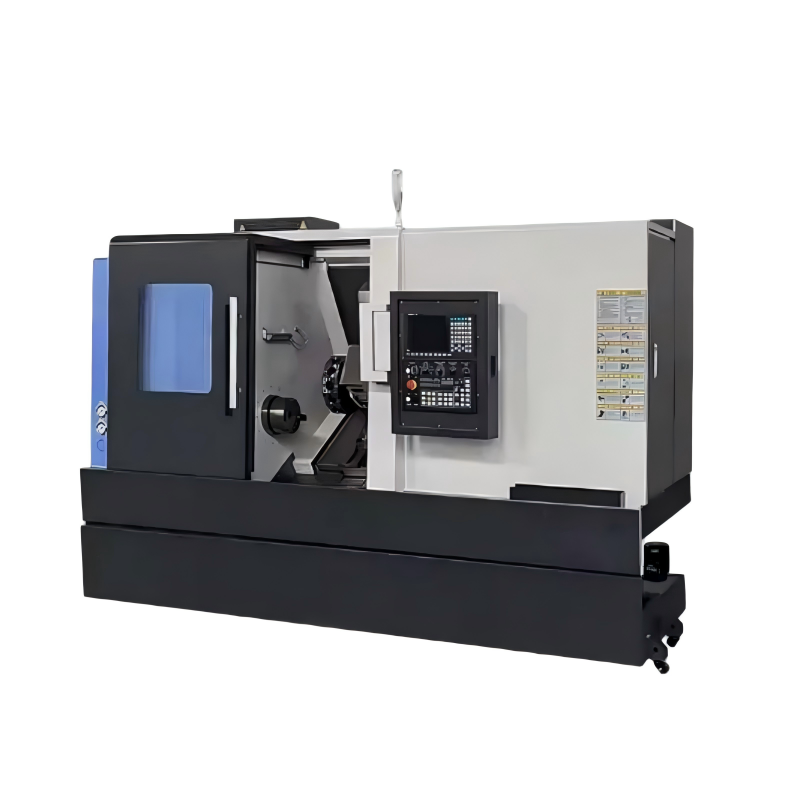
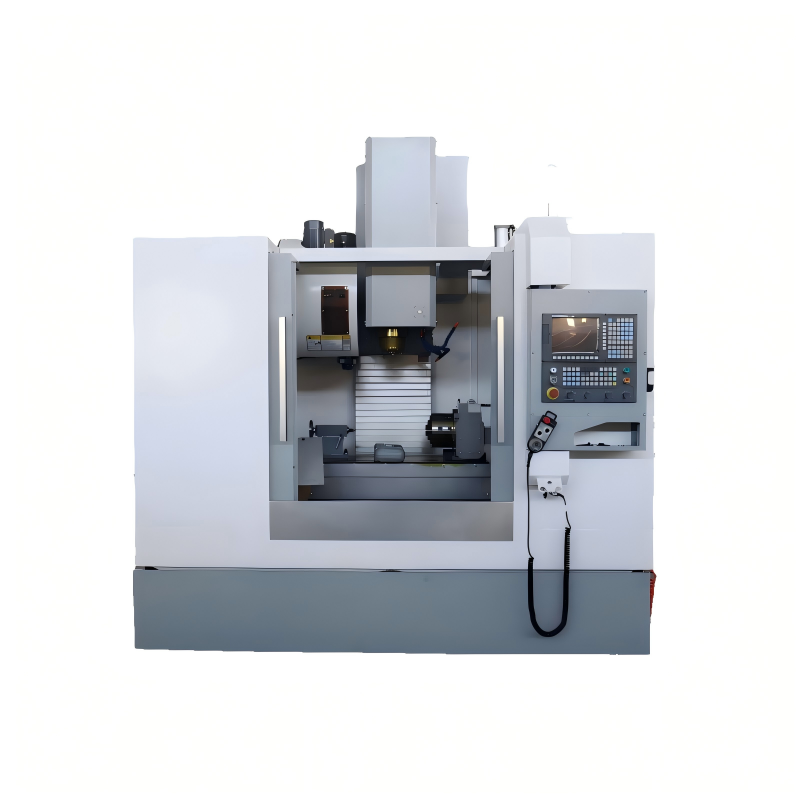
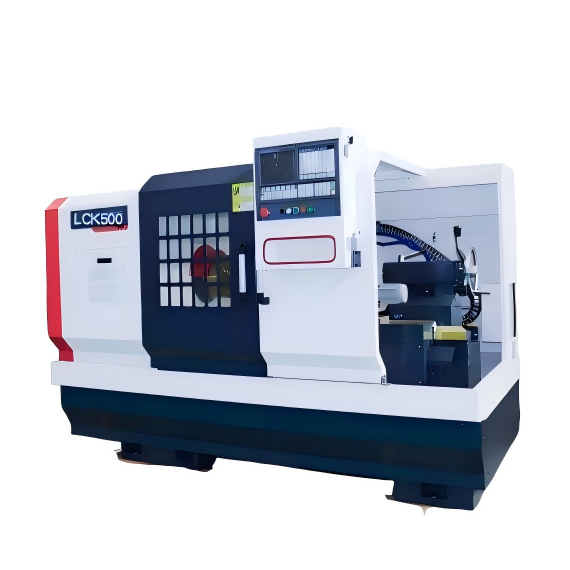
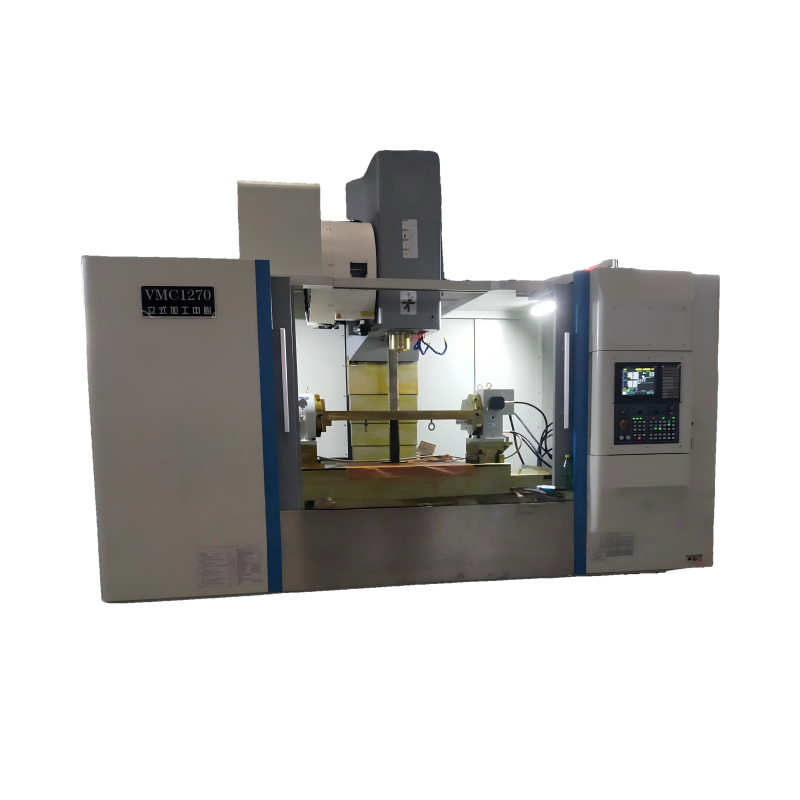
The industrial lathe machine plays a crucial role in today's manufacturing processes, serving as an essential tool for shaping and turning various materials with high precision. This section delves into how these machines have evolved over time to meet the increasing demands for accuracy and efficiency. From their basic function of rotating a workpiece against a cutting tool to more sophisticated operations involving multiple axes, lathes are indispensable in industries ranging from automotive to aerospace.
Recent advancements in industrial lathe machine technology have significantly enhanced their capabilities, making them more versatile and efficient than ever before. One of the most notable developments is the integration of computer numerical control (CNC) systems, which allows for automated and highly precise machining. Additionally, improvements in material science, such as the use of advanced alloys and ceramics, have led to longer-lasting and more durable cutting tools. These technological leaps not only increase productivity but also reduce waste and operational costs, benefiting both manufacturers and end consumers.
The incorporation of advanced features in modern industrial lathe machines has had a profound impact on improving both precision and productivity. For instance, live tooling options enable complex shapes to be machined without removing the part from the chuck, reducing setup times and increasing throughput. Furthermore, the ability to perform multiple operations simultaneously, such as milling and drilling, through multi-tasking lathes, represents another significant step forward in optimizing production workflows. Such enhancements ensure that even the most intricate designs can be produced efficiently, maintaining high standards of quality and consistency.
While the benefits of adopting advanced industrial lathe machine technologies are clear, there are also challenges that must be addressed. One major issue is the initial investment cost, which can be substantial for small and medium-sized enterprises. However, many manufacturers offer financing options and flexible leasing agreements to make these technologies more accessible. Another challenge lies in training operators to effectively utilize new equipment; comprehensive training programs provided by suppliers help mitigate this concern. Lastly, ensuring seamless integration with existing manufacturing processes requires careful planning and often, collaboration between different departments within a company. By addressing these challenges proactively, businesses can fully leverage the potential of advanced lathe machines to drive innovation and growth.
Looking ahead, several trends are expected to shape the future development of industrial lathe machines. The rise of Industry 4.0 and the Internet of Things (IoT) will likely lead to even smarter, more connected machines capable of real-time data analysis and predictive maintenance. This connectivity will enable better decision-making and further optimize production processes. Moreover, sustainability will become increasingly important, driving the adoption of eco-friendly materials and energy-efficient designs. As the demand for customization grows, we may see more flexible and adaptable lathes that can quickly switch between different tasks, catering to the needs of a rapidly changing market. These advancements promise to keep industrial lathe machines at the forefront of manufacturing technology, supporting continued progress across all sectors.
 26/06/2026
When it comes to precision machining, the industrial lathe machine is an indispensable tool in manufacturing. This versatile piece of equipment can be found in various industries, from automotive and aerospace to medical and electronics. However, with so
Read More26/06/2026Industrial lathe machines, also known as metal lathes, are essential tools in manufacturing processes across various industries. These machines play a crucial role in shaping and machining parts with high precision. Over the years, advancements in technol
Read More26/06/2026Industrial Lathe Machines play a crucial role in manufacturing, allowing for the precise shaping of metal and other materials. However, with their powerful capabilities comes the necessity for stringent safety protocols to ensure the well-being of operato
Read More25/06/2026The Emergence and Early Development of Industrial Lathe MachinesIn the annals of manufacturing history, the industrial lathe machine has been a cornerstone in the evolution of precision engineering. Its origins can be traced back to ancient civilizations
Read More25/06/2026Industrial lathe machines have been a cornerstone of manufacturing processes for centuries, evolving from simple hand-operated devices to sophisticated, automated systems. In today's fast-paced industrial landscape, the transition towards automation is no
Read More25/06/2026Understanding the Basics of an Industrial Lathe MachineAn industrial lathe machine is a fundamental tool in the manufacturing industry, used for shaping materials by rotating them against a cutting tool. This process, known as turning, can create complex
Read More25/06/2026The evolution of industrial lathe machines has been a significant driving force behind the advancement of manufacturing processes, enabling more precise, efficient, and versatile production capabilities. This report delves into the historical development
Read More24/06/2026Industrial lathe machines play a crucial role in manufacturing processes, providing the precision and efficiency needed for turning, facing, and threading operations. Proper maintenance of these machines is essential to ensure their longevity, performance
Read More24/06/2026The industrial lathe machine stands as a cornerstone in the world of manufacturing, playing an indispensable role in shaping materials with precision and efficiency. As technology advances, so too does the potential for optimizing these machines to delive
Read More24/06/2026IntroductionSelecting the right industrial lathe machine is a critical decision for any workshop, as it directly impacts productivity, precision, and overall efficiency. An industrial lathe machine is an essential tool in manufacturing, capable of perform
Read More23/06/2026The industrial lathe machine has long been a cornerstone of manufacturing, providing the precision and versatility needed to shape materials into intricate parts. As technology advances, these machines continue to evolve, incorporating new features that e
Read More23/06/2026Industrial Lathe Machines play a crucial role in the manufacturing industry, particularly when it comes to creating cylindrical parts with high precision. The importance of precision cannot be overstated, as even the slightest deviation can result in subs
Read More23/06/2026Industrial lathe machines are essential tools in the manufacturing and engineering sectors, playing a crucial role in shaping and machining various materials. These machines are designed to rotate a workpiece on its axis to perform operations such as cutt
Read More23/06/2026In the realm of modern manufacturing, the Industrial Lathe Machine stands as a cornerstone, enabling precise and efficient production processes. This versatile tool has evolved significantly over the years, adapting to the changing demands of the industry
Read MoreOur professional sales team is always ready to assist you.