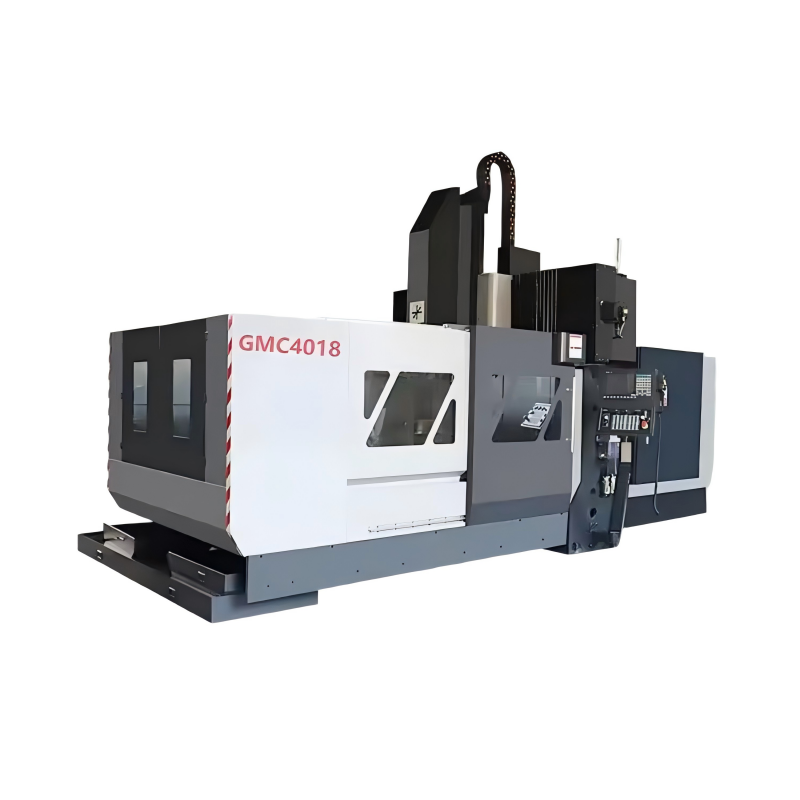
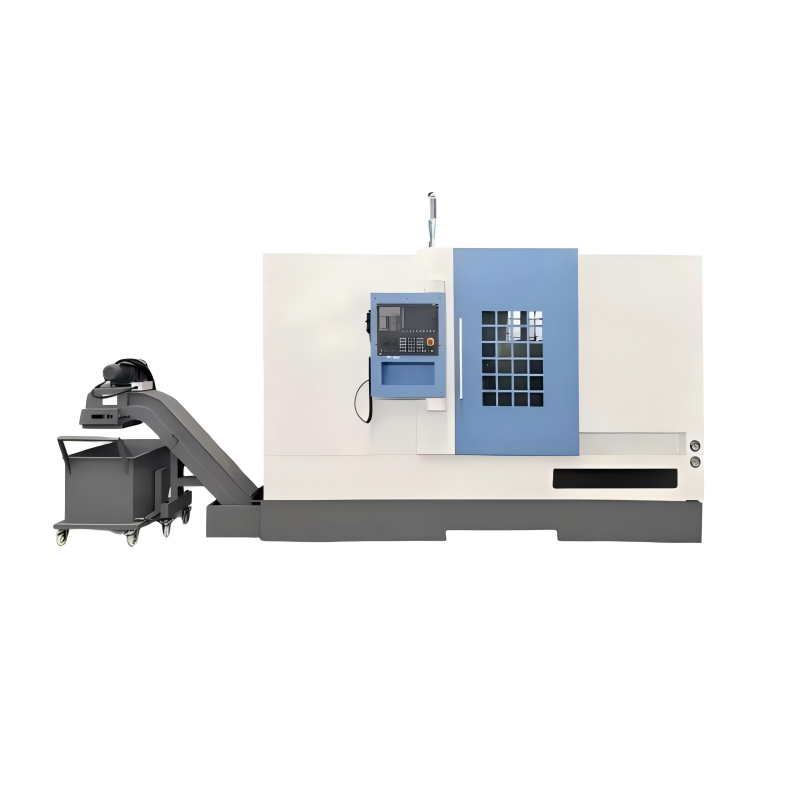
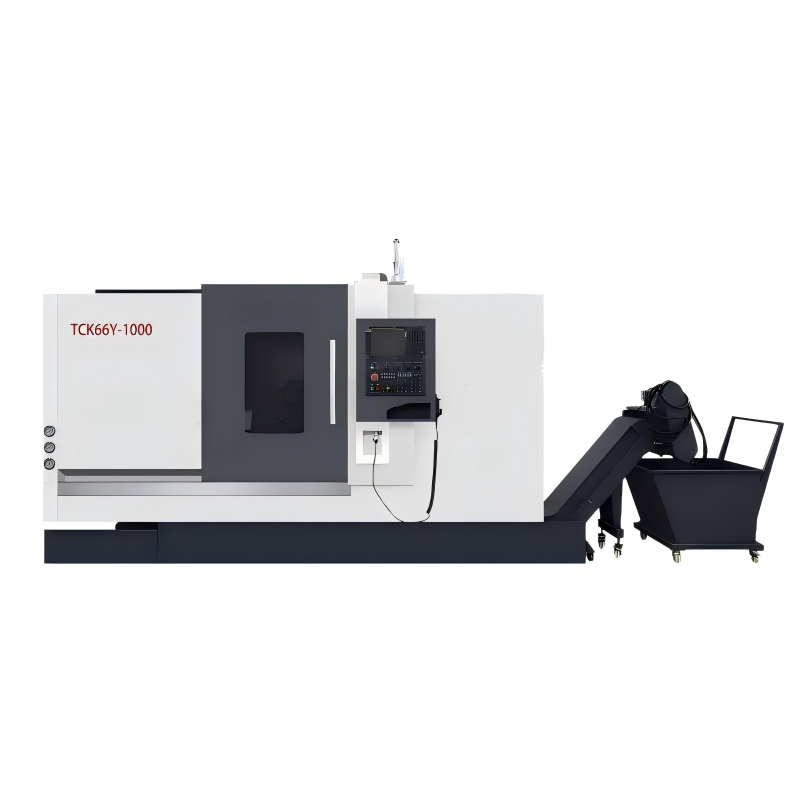
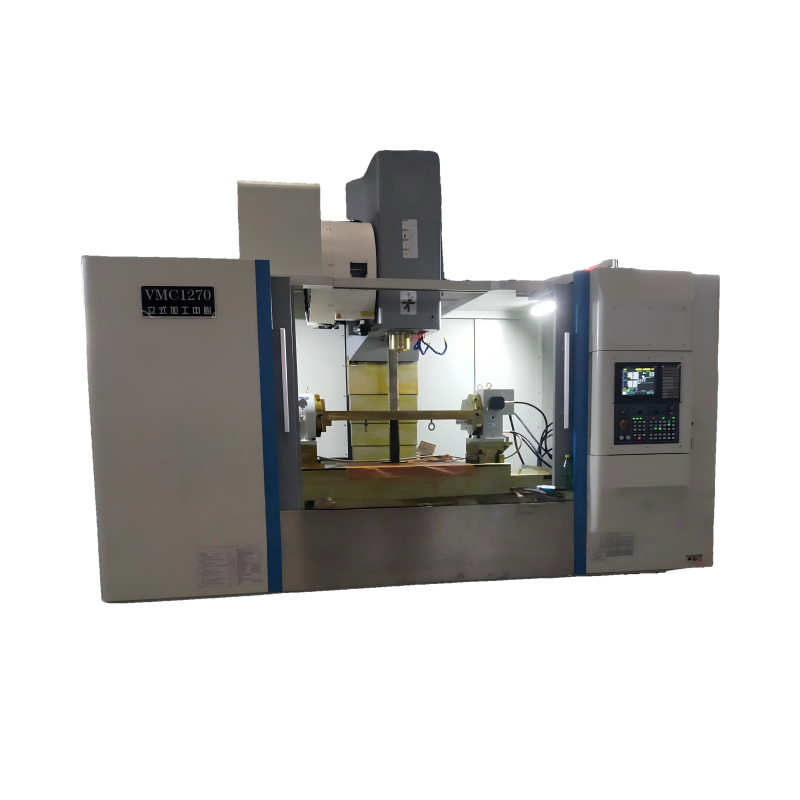
The foundation of maximizing efficiency on a two-axis CNC Lathe lies in understanding its fundamental operations and capabilities. A Two-Axis CNC Lathe primarily operates along the X and Z axes, where the X axis controls the cross-slide movement (radial) and the Z axis manages the carriage motion (longitudinal). This setup allows for precise turning, facing, and threading operations, making it an essential tool in manufacturing processes that require high precision and repeatability. Understanding how to fully utilize these axes can significantly enhance your machine's productivity. Proper training and familiarization with the control software are crucial steps towards achieving this goal.
One key aspect of enhancing performance on a two-axis CNC lathe is through optimal tool selection and management. The choice of cutting tools directly impacts machining time, surface finish, and overall part quality. High-quality carbide or ceramic inserts, designed specifically for the material being machined, should be prioritized. Additionally, employing quick-change tooling systems can drastically reduce setup times between jobs, thereby increasing the machine's uptime. Regular maintenance of tools, including timely replacement of worn-out components, also plays a critical role in maintaining consistent output quality and minimizing downtime. By carefully selecting and managing your tools, you can ensure that your two-axis CNC lathe operates at peak efficiency.
To further optimize the performance of a two-axis CNC lathe, advanced programming techniques must be considered. Utilizing modern CAM (Computer-Aided Manufacturing) software, operators can generate highly efficient G-code programs that take full advantage of the machine's capabilities. Features such as adaptive machining, which automatically adjusts feed rates based on the material's hardness and tool load, can lead to significant reductions in cycle times while improving tool life. Another technique, trochoidal milling, involves using a circular path to remove material, which is particularly effective for deep pockets and hard materials. It reduces stress on the tool and minimizes heat generation, leading to better finishes and longer tool life. Implementing these advanced programming strategies not only enhances the speed and accuracy of your machining process but also contributes to the longevity of both the machine and its components.
A streamlined workflow and reduced setup times are vital for maximizing the efficiency of a two-axis CNC lathe. One effective way to achieve this is by standardizing workholding solutions. Using modular fixturing systems, which allow for quick reconfiguration to accommodate different parts, can significantly cut down on changeover times. Preparing all necessary tools, fixtures, and materials before starting a job ensures that there are no delays once the operation begins. Furthermore, implementing a digital twin system, where a virtual model of the machine and its environment is created, enables operators to simulate and optimize processes offline, reducing the need for physical trials and errors. By focusing on these areas, manufacturers can dramatically improve their throughput and responsiveness, ensuring that their two-axis CNC lathe remains a valuable asset in their production line.
Data analytics has become an indispensable tool for continuous improvement in manufacturing, and this applies equally to the operation of a two-axis CNC lathe. By collecting and analyzing data from the machine, operators can gain insights into various aspects of the machining process, such as tool wear, cycle times, and energy consumption. Real-time monitoring systems can alert operators to potential issues before they escalate, allowing for proactive maintenance and minimizing unplanned downtime. Historical data can also be used to identify trends and patterns, helping to optimize future operations. For instance, by analyzing the performance of different tools under various conditions, operators can make informed decisions about tool selection and parameter settings. Additionally, integrating the machine with a broader manufacturing execution system (MES) can provide a comprehensive view of the entire production process, enabling better coordination and resource allocation. Leveraging data analytics not only enhances the efficiency and reliability of a two-axis CNC lathe but also supports the overall goals of lean manufacturing and operational excellence.
 26/06/2026
In the realm of precision manufacturing, Two-Axis CNC Lathes play a pivotal role in producing high-quality components. The selection of materials is a critical factor that influences not only the efficiency of the machining process but also the final prod
Read More26/06/2026In the realm of modern manufacturing, the integration of advanced machinery plays a pivotal role in enhancing productivity, precision, and efficiency. One such piece of equipment that has revolutionized the production process is the Two-Axis CNC Lathe. Th
Read More25/06/2026The advent of computer numerical control (CNC) technology has revolutionized the manufacturing industry, enabling precise and efficient production processes. Among the various types of CNC machines, the Two-Axis CNC Lathe stands out for its versatility an
Read More25/06/2026A Two-Axis CNC Lathe is an essential piece of equipment for many manufacturing processes, offering precision and efficiency in the production of cylindrical parts. This type of lathe operates on two primary axes - X (horizontal) and Z (vertical), allowing
Read More25/06/2026Understanding the Basics of Two-Axis CNC Lathes The two-axis CNC (Computer Numerical Control) lathe is a versatile machine used in manufacturing for turning and shaping metal or plastic parts. It operates on two axes: X, which controls the horizontal move
Read More24/06/2026Two-Axis CNC Lathes have become an indispensable part of modern machining processes, revolutionizing the way we manufacture parts and components. This report aims to explore the critical role of two-axis CNC lathes in contemporary manufacturing, highlight
Read More24/06/2026In the realm of modern manufacturing, Two-Axis CNC Lathes stand out as powerful tools for precision machining. These machines are not only capable of producing highly accurate parts but also offer a range of features that make them indispensable in variou
Read More24/06/2026A Comprehensive Guide to Maintenance for Two-Axis CNC LathesUnderstanding the Basics of a Two-Axis CNC LatheThe foundation of effective maintenance begins with a thorough understanding of the equipment in question. A two-axis CNC lathe is a precision mach
Read More23/06/2026Understanding the Basics of a Two-Axis CNC LatheIn the realm of modern manufacturing, precision and efficiency are paramount. A Two-Axis CNC Lathe represents a significant advancement in machining technology, enabling manufacturers to achieve higher level
Read More23/06/2026In the realm of precision manufacturing, two-axis CNC lathes play a crucial role in producing high-quality components with tight tolerances. These machines are indispensable for industries ranging from automotive to aerospace, where accuracy and repeatabi
Read More23/06/2026In the rapidly evolving landscape of manufacturing, the adoption of advanced machinery plays a pivotal role in enhancing productivity and efficiency. Among these, the Two-Axis CNC Lathe stands out as a versatile tool that can significantly impact producti
Read More22/06/2026Choosing the right tools for your Two-Axis CNC Lathe is a critical step in ensuring both the efficiency and quality of your machining processes. A well-equipped lathe can significantly enhance productivity, reduce downtime, and produce high-precision part
Read More22/06/2026In the realm of precision machining, Two-Axis CNC Lathes play a pivotal role in transforming raw materials into intricate and accurate components. This report aims to provide an in-depth understanding of the basics of Two-Axis CNC Lathe operations, highli
Read MoreOur professional sales team is always ready to assist you.