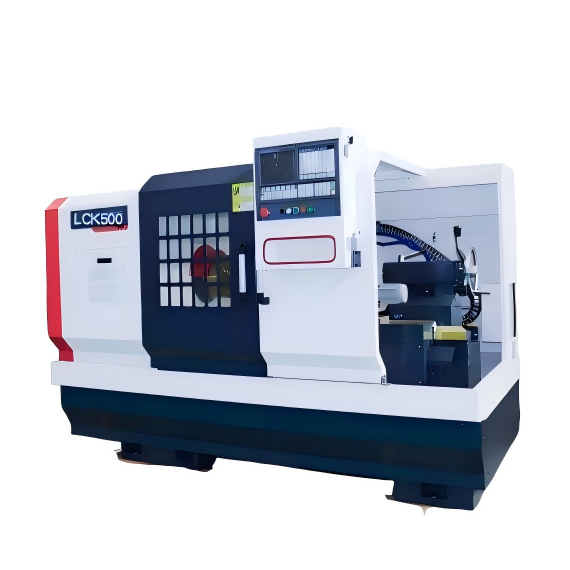
In the realm of modern manufacturing, the integration of advanced technologies has become a cornerstone for enhancing productivity, reducing costs, and improving product quality. One such technology that stands out is the Horizontal 2-Axis CNC Lathe. This machine, with its precision and versatility, offers manufacturers a powerful tool to achieve these goals. In this report, we will explore several innovative techniques that can be employed using a Horizontal 2-Axis CNC Lathe to significantly boost productivity.
Optimizing Tool Paths for Faster Machining
One of the key factors in maximizing the efficiency of a Horizontal 2-Axis CNC Lathe is the optimization of tool paths. By carefully planning and programming the tool movements, manufacturers can reduce the time required for machining operations, thereby increasing overall productivity. Advanced CAM (Computer-Aided Manufacturing) software plays a crucial role in this process, allowing engineers to simulate and refine tool paths before actual machining begins. This not only ensures faster cutting times but also minimizes wear on the tools, leading to longer tool life and reduced maintenance costs.
Additionally, by employing high-speed machining techniques, such as trochoidal milling, manufacturers can further enhance the speed and efficiency of their operations. These techniques involve using a combination of high feed rates and small radial depths of cut, which results in smoother, more efficient material removal. The use of specialized cutting tools, designed specifically for high-speed machining, can also contribute to improved performance and productivity.
Implementing Automated Part Loading and Unloading Systems
Another significant way to boost productivity with a Horizontal 2-Axis CNC Lathe is through the implementation of automated part loading and unloading systems. These systems, often referred to as bar feeders or robotic loaders, can significantly reduce the downtime associated with manual part handling. By automating the process, manufacturers can achieve continuous, uninterrupted production, which is especially beneficial in high-volume manufacturing environments.
Automated systems can be integrated with the CNC lathe to ensure seamless operation. For example, a bar feeder can supply raw material to the lathe continuously, while a robotic arm can unload finished parts and place them in a designated area. This not only reduces the need for human intervention but also minimizes the risk of errors and improves the consistency of the production process. Furthermore, the use of sensors and real-time monitoring can help in detecting any issues early, ensuring that the system operates at peak efficiency.
Leveraging Multi-Tasking Capabilities for Complex Parts
Modern Horizontal 2-Axis CNC Lathes are equipped with multi-tasking capabilities, allowing them to perform multiple operations in a single setup. This feature is particularly valuable when machining complex parts that require a variety of operations, such as turning, milling, drilling, and tapping. By consolidating these operations into one setup, manufacturers can significantly reduce the time and effort required for part production.
For instance, a Horizontal 2-Axis CNC Lathe can be fitted with live tooling, which enables it to perform milling and drilling operations while the part is still mounted on the spindle. This eliminates the need for transferring the part to a separate machine, thereby reducing setup times and minimizing the risk of alignment errors. Additionally, the use of sub-spindles and backworking tools can further enhance the machine's versatility, allowing it to complete both front and back operations in a single pass.
Moreover, the integration of advanced control systems, such as adaptive control and in-process probing, can help in maintaining consistent quality and accuracy throughout the machining process. Adaptive control systems adjust the cutting parameters in real-time based on the load on the tool, ensuring optimal performance and extending tool life. In-process probing, on the other hand, allows for the measurement and inspection of the part during the machining process, enabling immediate corrections and reducing the likelihood of producing defective parts.
Utilizing Advanced Materials and Coatings for Improved Performance
The choice of materials and coatings used in the cutting tools and workholding fixtures can have a significant impact on the performance and productivity of a Horizontal 2-Axis CNC Lathe. Advanced materials, such as carbide and ceramic, offer superior hardness and wear resistance, making them ideal for high-speed and high-precision machining. These materials can withstand the high temperatures and pressures generated during the cutting process, resulting in longer tool life and reduced tool changes.
Furthermore, the application of advanced coatings, such as TiN (Titanium Nitride), TiCN (Titanium Carbonitride), and AlTiN (Aluminum Titanium Nitride), can further enhance the performance of the cutting tools. These coatings provide a hard, lubricious surface that reduces friction and heat generation, leading to improved cutting efficiency and extended tool life. The use of coated tools can also result in better surface finish and dimensional accuracy, which is crucial for meeting the stringent quality requirements of many industries.
Similarly, the use of high-performance workholding solutions, such as hydraulic chucks and collets, can improve the stability and accuracy of the machining process. These fixtures provide a secure and precise grip on the workpiece, reducing the risk of vibration and chatter, which can lead to poor surface finish and dimensional inaccuracies. Additionally, the use of modular workholding systems can offer greater flexibility, allowing for quick and easy reconfiguration of the setup to accommodate different part geometries and sizes.
Implementing Predictive Maintenance for Reliability and Uptime
Maintaining the reliability and uptime of a Horizontal 2-Axis CNC Lathe is essential for achieving consistent productivity. Predictive maintenance, which involves using data and analytics to predict and prevent equipment failures, is a powerful approach to ensuring the long-term performance of the machine. By monitoring key parameters such as temperature, vibration, and power consumption, manufacturers can detect potential issues before they lead to downtime or costly repairs.
Advanced monitoring systems, such as condition-based monitoring (CBM) and predictive analytics, can provide real-time insights into the health of the machine. CBM involves the continuous monitoring of the machine's operating conditions, allowing for the early detection of anomalies and the scheduling of maintenance activities. Predictive analytics, on the other hand, uses historical data and machine learning algorithms to forecast future performance and identify trends that may indicate impending failures.
By implementing a predictive maintenance strategy, manufacturers can minimize unplanned downtime, reduce maintenance costs, and extend the lifespan of the machine. This, in turn, leads to higher overall equipment effectiveness (OEE) and improved productivity. Additionally, the use of remote monitoring and diagnostics can enable manufacturers to respond quickly to any issues, even if they occur outside of regular working hours, ensuring that the machine remains operational and productive.
In conclusion, the Horizontal 2-Axis CNC Lathe is a versatile and powerful tool that can significantly enhance productivity in modern manufacturing. By optimizing tool paths, implementing automated part handling systems, leveraging multi-tasking capabilities, utilizing advanced materials and coatings, and adopting predictive maintenance, manufacturers can unlock the full potential of this machine. These innovative techniques not only improve efficiency and reduce costs but also ensure the production of high-quality parts, making the Horizontal 2-Axis CNC Lathe an indispensable asset in today's competitive manufacturing landscape.
 26/06/2026



