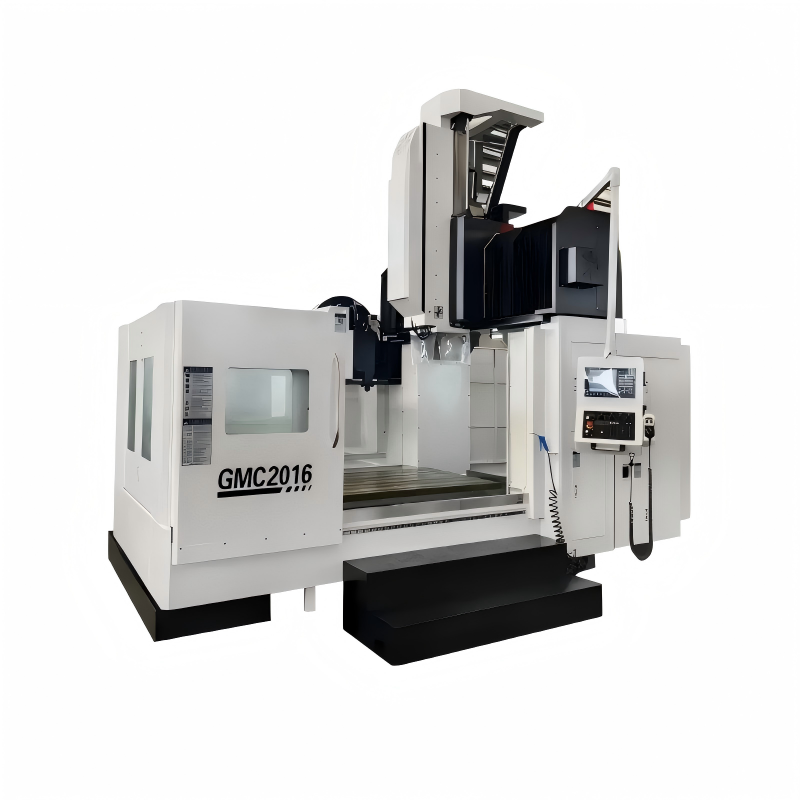
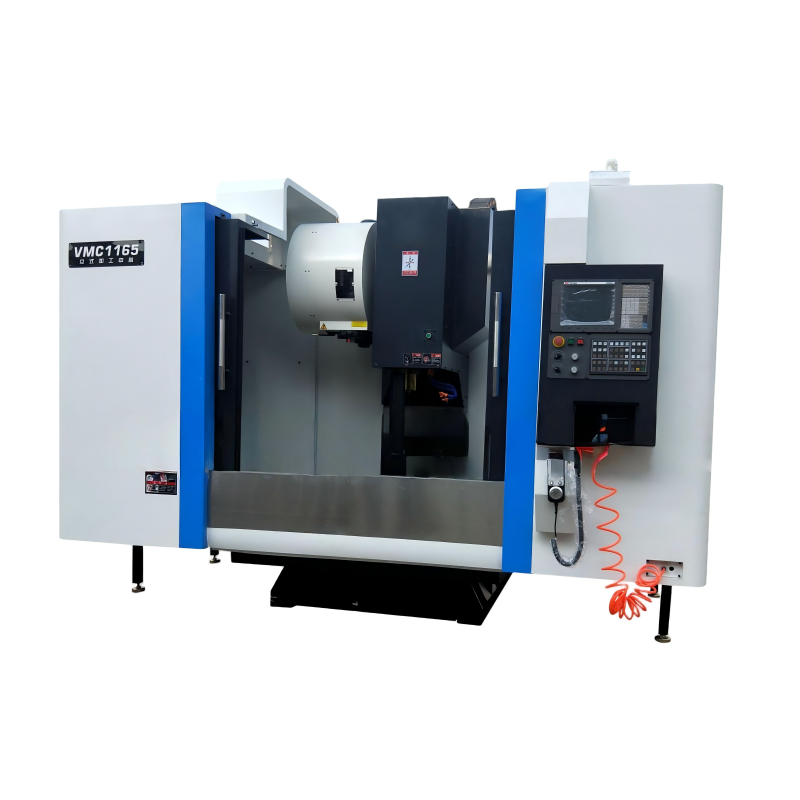
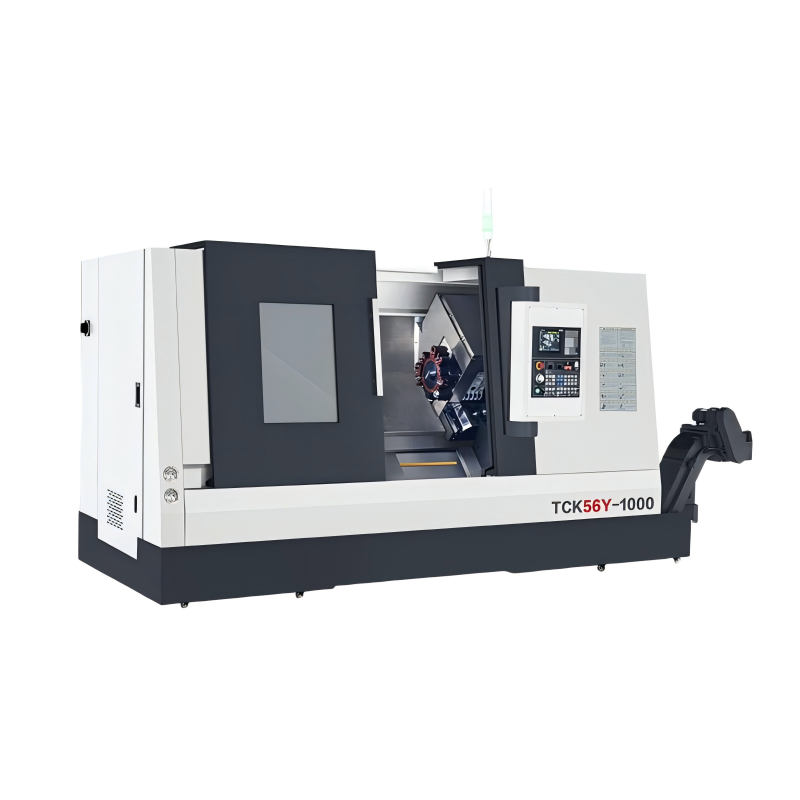
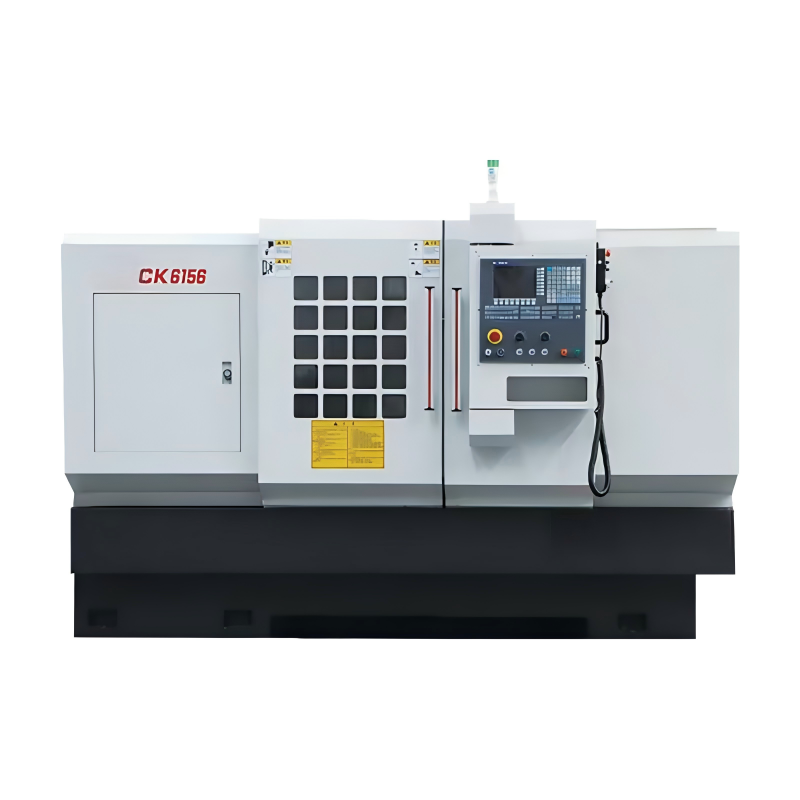
When discussing the realm of machining, one cannot overlook the significance of vertical Machining Centers (VMCs) in achieving precision and efficiency. While 3-axis VMCs are widely used for a variety of applications, 4-axis VMCs offer additional capabilities that can be advantageous in certain scenarios. This technical report aims to explore the essential considerations when selecting a 3-axis Vertical Machining Center, while also touching upon the unique benefits of 4-axis VMCs.
A 3-axis vertical machining center is designed to move along three linear axes: X, Y, and Z. These axes allow for precise movement in the horizontal, vertical, and depth directions, making it suitable for a wide range of machining tasks. The X-axis typically controls the left-to-right movement, the Y-axis controls the front-to-back movement, and the Z-axis controls the up-and-down movement. This configuration is ideal for operations such as milling, drilling, and tapping, where the workpiece remains stationary while the cutting tool moves in three dimensions.
One of the primary advantages of 3-axis VMCs is their simplicity and ease of use. They are generally more affordable and require less complex programming compared to 4-axis or 5-axis machines. Additionally, 3-axis VMCs are well-suited for high-volume production runs, where speed and repeatability are crucial. However, they may have limitations when it comes to more intricate or multi-sided parts, which might require multiple setups or additional manual intervention.
When choosing a 3-axis VMC, several key factors should be considered to ensure that the machine meets your specific needs and operational requirements. These factors include:
While 3-axis VMCs are versatile and effective for many applications, 4-axis VMCs offer additional capabilities that can be highly beneficial in certain scenarios. A 4-axis VMC adds a fourth axis, typically the A-axis, which allows for rotational movement around the X-axis. This additional axis enables the machine to perform operations on multiple sides of the workpiece without the need for manual repositioning, thereby reducing setup times and increasing efficiency.
Some of the key advantages of 4-axis VMCs include:
Selecting the right vertical machining center is a critical decision that can significantly impact the efficiency and quality of your manufacturing processes. 3-axis VMCs are well-suited for a wide range of applications, offering simplicity, affordability, and reliability. However, for more complex and multi-sided parts, 4-axis VMCs provide additional capabilities that can enhance productivity and flexibility. By carefully considering the key factors such as machine size, spindle performance, tool changer capacity, control system, and maintenance support, you can make an informed decision that aligns with your specific needs and operational goals.
In summary, while 3-axis VMCs remain a staple in many manufacturing environments, the added benefits of 4-axis VMCs, such as multi-sided machining and increased flexibility, make them a valuable investment for those looking to expand their machining capabilities and improve overall productivity.
 29/06/2026
With the increasing demand for precision and efficiency in manufacturing, modern machine shops are turning to advanced technologies like the 4 Axis Vertical Machining Center and low noise flat bed CNC lathes. These machines not only offer superior results
Read More29/06/2026A 4 Axis Vertical Machining Center (VMC) is an advanced manufacturing tool designed to provide high precision and efficiency in the production of complex parts. This type of machine adds a fourth axis, typically a rotary table, to the traditional three-ax
Read More29/06/2026In the realm of precision manufacturing, advancements in machine tools continue to push the boundaries of what is possible. The introduction of the low noise flat bed CNC lathe represents a significant leap forward, particularly when considered alongside
Read More29/06/2026In the realm of manufacturing, the adoption of advanced machining technologies plays a pivotal role in enhancing productivity and maintaining a competitive edge. The 4 Axis Vertical Machining Center (VMC) is one such innovation that has revolutionized the
Read More27/06/2026Understanding the Core Components of a 4 Axis Vertical Machining CenterA 4 Axis Vertical Machining Center represents a significant advancement in machining technology, providing manufacturers with an efficient and versatile solution for producing complex
Read More27/06/2026The evolution of manufacturing technologies has led to the development of advanced machining solutions, with 4 Axis Vertical Machining Centers (VMCs) standing out as a significant advancement. These machines are designed to handle complex and precise mach
Read More27/06/2026Understanding the Importance of Regular MaintenanceMaintaining a 4 Axis Vertical Machining Center is crucial for ensuring its optimal performance and longevity. These sophisticated machines, which are designed to handle complex and precise machining tasks
Read More27/06/2026Understanding the Capabilities of 4 Axis Vertical Machining CentersThe introduction of 4 Axis Vertical Machining Centers (VMCs) has revolutionized the manufacturing industry, offering a versatile and efficient solution for producing complex parts. A 4 Axi
Read More26/06/2026The rapid advancements in manufacturing technology have propelled the industry into a new era, characterized by increased efficiency, precision, and versatility. One of the key technologies driving this transformation is the 4 Axis Vertical Machining Cent
Read More26/06/2026Advancements in Precision and AccuracyThe 4 Axis Vertical Machining Center (VMC) has seen significant advancements in recent years, particularly in terms of precision and accuracy. These improvements are largely due to the integration of advanced servo mo
Read More26/06/2026The Evolution of 4 Axis Vertical Machining Centers in ManufacturingThe 4 axis vertical machining center has become a cornerstone in the manufacturing industry, offering an enhanced level of precision and efficiency over its predecessors. These machines ar
Read More26/06/2026Introduction to 4 Axis Vertical Machining CentersThe 4 axis vertical machining center is a critical tool in modern manufacturing, offering an enhanced level of precision and flexibility compared to traditional 3-axis machines. This type of machine adds an
Read More25/06/2026Understanding the Basics of 4 Axis Vertical Machining CentersA 4 Axis Vertical Machining Center (VMC) is a sophisticated piece of machinery that has significantly advanced the capabilities of modern manufacturing. Unlike its 3-axis counterpart, which oper
Read More25/06/2026When it comes to investing in a 4 Axis Vertical Machining Center, the decision requires careful consideration of multiple factors. This type of machining center is designed to provide precision and efficiency, making it a critical asset for many manufactu
Read More25/06/2026The evolution of machining technology has led to the development of advanced systems capable of performing complex operations with high precision. Among these, the 4 Axis Vertical Machining Center stands out as a versatile and efficient solution for vario
Read More25/06/2026Vertical machining centers, especially those with 4-axis capabilities, have become indispensable in modern manufacturing environments. These machines are designed to offer a high degree of precision and flexibility, making them suitable for a wide range o
Read More24/06/2026In the realm of modern manufacturing, precision and efficiency are paramount. The 4 Axis Vertical Machining Center (VMC) has emerged as a pivotal tool in achieving these goals. This report delves into how a 4 Axis VMC can be leveraged to maximize efficien
Read More24/06/2026Understanding the Capabilities of a 4 Axis Vertical Machining CenterA 4 axis vertical machining center represents a significant leap in the capabilities of traditional 3-axis machines, adding an additional rotational axis that allows for more complex part
Read More24/06/2026The advent of 4 Axis Vertical Machining Centers (VMCs) has revolutionized the manufacturing industry, especially in high-volume production environments. These advanced machines are capable of performing complex operations with high precision and efficienc
Read More24/06/2026In the realm of precision engineering, advancements in technology have consistently pushed the boundaries of what is possible. Among these technological marvels, the 4 Axis Vertical Machining Center stands out as a revolutionary tool that has transformed
Read More23/06/2026Vertical machining centers (VMCs) have long been a staple in the manufacturing industry, providing precision, efficiency, and versatility. Among these, the 4 Axis Vertical Machining Center stands out as a highly advanced and capable machine, designed to h
Read More23/06/2026Understanding the Basics of 4 Axis Vertical Machining CentersA 4 axis vertical machining center represents a significant leap in the capabilities of traditional CNC (Computer Numerical Control) machines. Unlike its 3-axis counterpart, which can only move
Read More23/06/2026Understanding the 4 Axis Vertical Machining Center The advent of advanced manufacturing technologies has significantly transformed the production landscape, with the 4 Axis Vertical Machining Center (VMC) standing out as a pivotal tool in modern manufactu
Read More23/06/2026IntroductionThe 4 Axis Vertical Machining Center (VMC) represents a significant advancement in the field of manufacturing, particularly when it comes to the production of complex parts. This technology has revolutionized the way intricate components are m
Read MoreOur professional sales team is always ready to assist you.