The Evolution of CNC Technology and Its Impact on Manufacturing
Computer Numerical Control (CNC) technology has revolutionized the manufacturing sector, enabling higher precision, efficiency, and flexibility in production processes. One of the most widely used types of CNC machines is the horizontal 2-axis CNC Lathe. This machine's design allows for versatile operations, making it a preferred choice for turning applications where high accuracy and repeatability are essential. The evolution from manual lathes to automated CNC lathes represents a significant leap in how manufacturers approach machining tasks.
Key Components and Working Principles of a Horizontal 2-Axis CNC Lathe
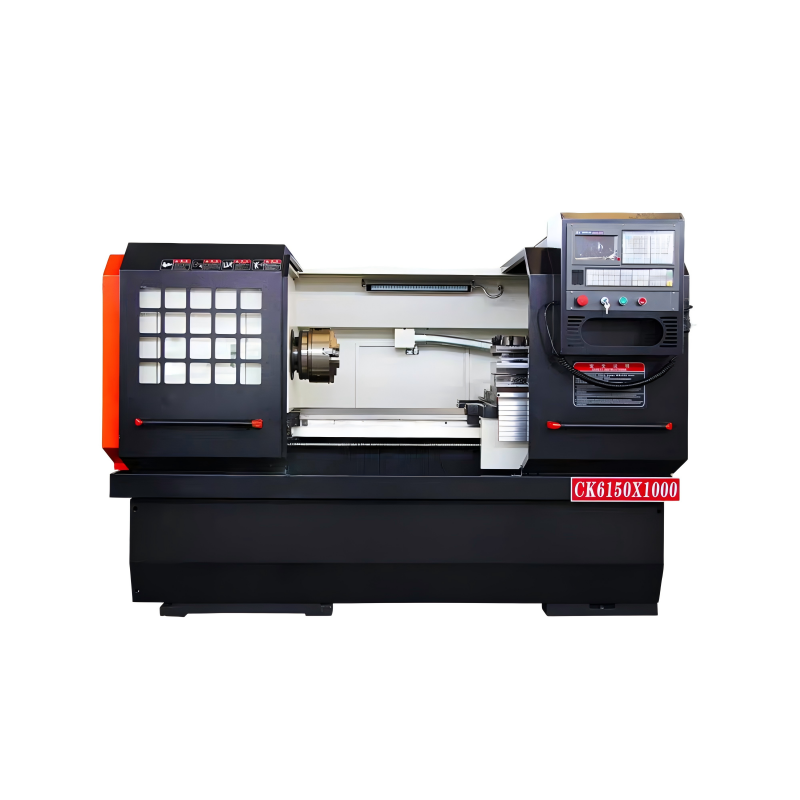
A Horizontal 2-Axis CNC Lathe primarily consists of a spindle, tool turret, X and Z axes, and a control system. The spindle holds and rotates the workpiece, while the tool turret houses various cutting tools that can be automatically selected during the machining process. The X axis controls the cross movement of the tool relative to the workpiece, whereas the Z axis manages the longitudinal motion. Together, these two axes enable the execution of complex shapes and profiles with minimal human intervention. The control system, which is the brain of the machine, interprets the programmed instructions and guides the movements of the axes and spindle, ensuring that each operation is carried out precisely as specified.
Advantages of Using a Horizontal 2-Axis CNC Lathe Over Traditional Lathes
One of the primary advantages of a horizontal 2-axis CNC lathe over traditional lathes is its ability to significantly reduce production time without compromising on quality. By automating the setup and operation processes, CNC lathes minimize the potential for human error, leading to more consistent and accurate parts. Additionally, the flexibility offered by CNC programming allows for easy adjustments and modifications to the part design, supporting rapid prototyping and customization. Another benefit lies in the reduced need for skilled labor; once the machine is set up, it requires less oversight compared to manual lathes, freeing operators to focus on other critical tasks. Furthermore, modern horizontal 2-axis CNC lathes come equipped with advanced features such as automatic tool changers and coolant systems, further enhancing their operational capabilities and extending tool life.
Challenges and Considerations in Implementing Horizontal 2-Axis CNC Lathe Systems
Despite their numerous benefits, there are also challenges associated with implementing horizontal 2-axis CNC lathe systems. One major consideration is the initial investment cost, which includes not only the purchase price of the machine but also the costs related to training, software, and maintenance. Companies must carefully evaluate whether the long-term savings and productivity gains justify this upfront expenditure. Another challenge is the need for skilled programmers and operators who understand both the mechanics behind the machine and the intricacies of CNC programming. While automation reduces the need for continuous operator attention, setting up and optimizing the machine still requires expertise. Lastly, maintaining the precision and performance of a CNC lathe over time demands regular calibration and upkeep, adding to the overall cost of ownership. However, with proper planning and management, these obstacles can be overcome, allowing businesses to fully leverage the capabilities of horizontal 2-axis CNC lathes.
Future Trends in Horizontal 2-Axis CNC Lathe Technology
As technology continues to advance, we can expect to see several trends shaping the future of horizontal 2-axis CNC lathe technology. One such trend is the integration of artificial intelligence (AI) and machine learning (ML) into CNC systems. These technologies have the potential to optimize machining parameters in real-time, improving efficiency and reducing waste. Another emerging trend is the development of more user-friendly interfaces and software, making it easier for operators with varying levels of experience to program and operate CNC lathes. Moreover, the push towards Industry 4.0 and smart manufacturing will likely lead to increased connectivity and data exchange between CNC machines and other factory systems, enabling better monitoring and control of the entire production process. As these advancements unfold, the role of the horizontal 2-axis CNC lathe in modern manufacturing will only become more integral.
 26/06/2026



